
Experiencing one miscarriage is devastating. Experiencing two, three, or more each time allowing hope to build before it is taken away is a different kind of grief entirely. Yet, recurrent miscarriage in Sharjah is more common than most people realize, and more treatable than most patients are told.
In Sharjah, as across the UAE, miscarriage often remains a deeply private grief. It is frequently not spoken about outside the immediate family, and investigations are often delayed until multiple losses have occurred. Sometimes, it is dismissed as “bad luck” or “God’s will” in a way that, while culturally meaningful, can leave treatable medical causes unaddressed.
The real challenge is that most women experiencing recurrent pregnancy loss do not know at what point investigation should begin, what tests are available, or what the realistic outcomes of treatment are. The gap between what is clinically possible and what patients are aware of is significant and it has real consequences for families.
The Facts You Need to Know
- Defining the Condition: Recurrent miscarriage defined as two or more pregnancy losses affects approximately 1–2% of couples trying to conceive.
- Finding Answers: In up to 50% of recurrent miscarriage cases, a treatable or manageable cause is identified through systematic investigation.
- The Outlook: With appropriate investigation and management, the majority of women with a history of recurrent loss go on to have a successful pregnancy.
At ESMC (Erum Saba Medical Center), our gynecology team in Sharjah provides a clear, compassionate, and clinically grounded pathway. We believe in approaching this journey with information, not just hope.
Table of Contents
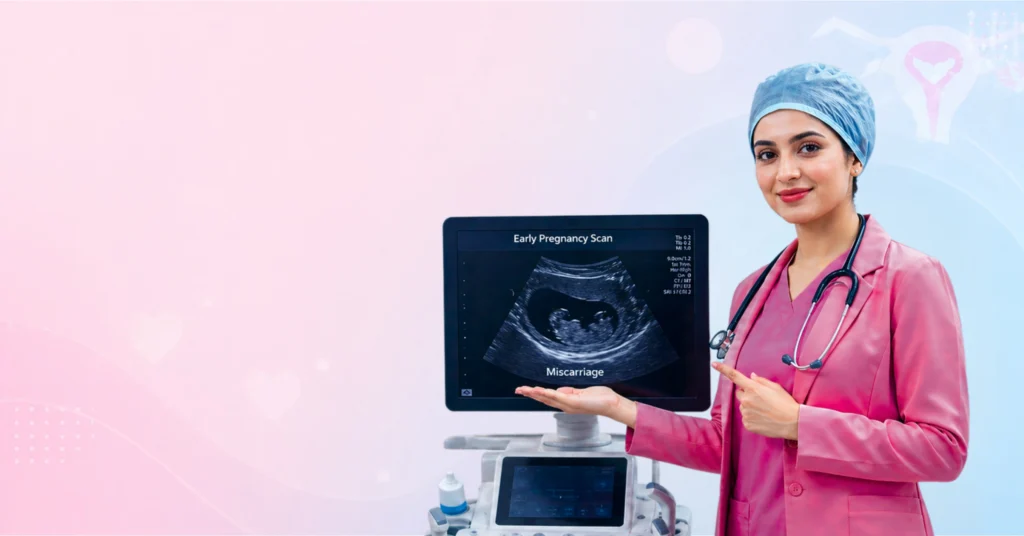
Defining Recurrent Miscarriage: When Does It Become “Clinical”?
The Threshold for Investigation
International bodies like the Royal College of Obstetricians and Gynaecologists (RCOG) and the European Society of Human Reproduction and Embryology (ESHRE) define recurrent miscarriage as two or more consecutive pregnancy losses before 24 weeks.
While some traditional practices wait for a third loss, modern recurrent pregnancy loss specialists in Sharjah begin investigations after two. This is particularly vital for women over 35 or when losses show a specific pattern. It is also important to distinguish between:
- Early Miscarriage: Occurring before 12 weeks (the most common).
- Late Miscarriage: Occurring between 12 and 24 weeks.
Each loss is not necessarily a repeat of the same event. Different losses may have different causes, and a thorough investigation looks at the pattern of your history, not just the most recent event.
The Emotional Weight of Clinical Care
Acknowledging the grief, anxiety, and psychological toll of loss is not a distraction from medical investigation; it is a vital part of it. At ESMC, we recognize that anxiety about future pregnancies often affects care-seeking behavior. A compassionate, unhurried clinical environment matters because the patient is carrying both a medical question and a significant emotional burden.
Known Causes of Recurrent Miscarriage: A Systematic Overview

To find a solution, a gynaecologist in Sharjah must systematically categorize the potential “why” behind repeated losses.
Identifying the underlying cause of repeated loss requires a systematic approach, following the evidence-based protocols set out in the ESHRE clinical guidance on recurrent pregnancy loss to screen for genetic, uterine, and endocrine factors.
1. Genetic and Chromosomal Causes
- Embryonic Abnormalities: This is the most common cause of individual miscarriages. These are usually random events where the embryo has the wrong number of chromosomes, which increases in frequency with maternal age.
- Parental Chromosomal Abnormalities: In about 2–5% of couples, one partner carries a “balanced translocation” , a structural rearrangement of chromosomes that causes no symptoms in the parent but can lead to unbalanced genetic material in the embryo. This is identified through parental karyotyping.
- The Solution: Chromosomal causes do not mean a successful pregnancy is impossible. In many cases, Preimplantation Genetic Testing (PGT-A) during IVF can help select healthy embryos.
2. Uterine Structural Abnormalities
The shape and health of the “nest” are critical for a healthy pregnancy.
- Congenital Anomalies: A septate uterus (a wall of tissue dividing the cavity) is the most common correctable cause.
- Acquired Abnormalities: Fibroids (particularly submucosal ones), polyps, or intrauterine adhesions (Asherman’s Syndrome) can interfere with implantation or blood flow to the placenta.
- Diagnosis: These are identified via 3D ultrasound, hysteroscopy, or MRI. Many are surgically correctable with excellent outcomes.
3. Hormonal and Endocrine Causes
Hormonal causes of miscarriage in the UAE are among the most identifiable and treatable contributors.
- PCOS: Polycystic Ovary Syndrome is highly prevalent in Sharjah. It is linked to miscarriage through insulin resistance and elevated androgens.
- Thyroid Dysfunction: Both hypo- and hyperthyroidism are risks. The presence of thyroid antibodies (anti-TPO) is relevant even when TSH levels are within the normal range.
- Diabetes: Elevated HbA1c in early pregnancy is associated with increased risk.
- Progesterone Deficiency: Often called luteal phase insufficiency, a lack of progesterone can prevent the uterine lining from supporting an early pregnancy.
4. Thrombophilia and Blood Clotting Disorders
- Antiphospholipid Syndrome (APS): This is the most clinically significant acquired thrombophilia. Antibodies cause placental thrombosis (clotting), which leads to pregnancy loss.
- Inherited Thrombophilias: Conditions like Factor V Leiden or Protein S deficiency are more often associated with late miscarriage.
- Treatment: Low-dose aspirin and low molecular weight heparin in confirmed APS is one of the most evidence-supported interventions in modern medicine.
5. Immunological Causes
This is an area of active research, focusing on Natural Killer (NK) cell activity and immune tolerance of the embryo. While some treatments are considered “emerging,” specialized clinics may offer specific protocols for patients who have failed traditional investigations.
6. Unexplained Recurrent Miscarriage
In approximately 50% of cases, tests return normal. While frustrating, “unexplained” does not mean untreatable. Data shows that with supportive care and early pregnancy monitoring, the prognosis for these couples remains very positive.
Investigations: What Tests Are Done and When?

At ESMC Sharjah, we follow a rigorous miscarriage investigation pathway.
The Standard Investigation Pathway
We recommend starting these tests after two consecutive losses:
- Parental Karyotyping: Blood tests for both partners to check for chromosomal structural abnormalities.
- Pelvic Ultrasound (3D): For detailed uterine anatomy assessment.
- Antiphospholipid Antibody Testing: Checking for lupus anticoagulant and anticardiolipin antibodies.
- Endocrine Screen: Thyroid function, anti-TPO antibodies, fasting glucose, and HbA1c.
- Nutritional Baseline: Full blood count, ferritin, and Vitamin D levels.
The Role of the Male Partner
Recurrent miscarriage is a couple’s investigation, not just a woman’s. Emerging evidence links high Sperm DNA Fragmentation to recurrent early loss. A thorough workup should include the male partner from the outset.
Treatment and Management Options
| Cause | Evidence-Based Treatment |
| Confirmed APS | Low-dose aspirin from conception + Heparin from a positive test |
| Uterine Septum | Hysteroscopic resection (surgical correction) |
| Thyroid Issues | Thyroxine replacement and antibody management |
| PCOS | Metformin, weight management, and ovulation induction |
| Progesterone Support | Vaginal progesterone (supported by PRISM/PROMISE trials) |
Supportive Care: The “Tender Loving Care” Effect
Data from the Tommy’s National Centre for Miscarriage Research shows that dedicated early pregnancy surveillance clinics improve live birth rates even in unexplained cases. At ESMC, this means:
- Frequent early pregnancy scans.
- Accessible clinical contact with your team.
- Proactive management from the moment of a positive pregnancy test.
Practical Steps for Couples in Sharjah
- Seek Investigation Early: Do not wait for a third loss. Two losses are enough to warrant a consultation.
- Bring Your History: Dates, gestational ages, and previous test results are vital.
- Test Both Partners: Ensure the male partner is included in the diagnostic plan.
- Ask Specific Questions: Inquire specifically about Antiphospholipid Syndrome (APS) testing.
- Prioritize Support: Seek emotional support alongside medical care. Grief counseling is a vital part of the recovery and preparation process.
Frequently Asked Questions
How many miscarriages do I need to have before getting tested in the UAE?
Modern gynaecological guidelines, including those from the RCOG and ESHRE, recommend beginning investigations after two consecutive pregnancy losses — not three. If you are over 35, or if your losses have shown a pattern (for example, all occurring at the same gestational age), your doctor may investigate even earlier. You do not need to wait for another loss before asking for a referral.
What blood tests are done for recurrent miscarriage?
A standard recurrent miscarriage panel includes antiphospholipid antibody testing (lupus anticoagulant and anticardiolipin antibodies), thyroid function including anti-TPO antibodies, fasting glucose and HbA1c, a full blood count, ferritin, and Vitamin D levels. Parental karyotyping — a chromosomal blood test for both partners — is also part of a complete investigation. At ESMC, our Recurrent Miscarriage Panel covers these key markers in one structured test.
Can Antiphospholipid Syndrome (APS) be treated during pregnancy?
Yes — and this is one of the most important things to know. Confirmed APS is treated with low-dose aspirin started from conception and low molecular weight heparin introduced once a positive pregnancy test is confirmed. This combination is one of the most evidence-supported interventions in recurrent miscarriage medicine and has significantly improved outcomes for women with this diagnosis.
Can PCOS cause recurrent miscarriage?
Yes. PCOS is among the more common hormonal causes of recurrent pregnancy loss, particularly in the UAE where prevalence is high. The link occurs through insulin resistance and elevated androgens, both of which can impair embryo implantation and early development. Management typically involves Metformin, weight management where appropriate, and careful ovulation monitoring. Thyroid antibodies should also be checked alongside PCOS, as the two conditions frequently coexist.
Is recurrent miscarriage related to the father or only the mother?
Both partners should be investigated. In approximately 2 to 5% of couples experiencing recurrent loss, one partner — male or female — carries a balanced chromosomal translocation that causes no symptoms in that parent but can result in unbalanced genetic material in the embryo. Beyond chromosomes, emerging evidence now links high sperm DNA fragmentation in the male partner to repeated early pregnancy loss. A complete investigation always includes both partners.
What does it mean if all my recurrent miscarriage tests come back normal?
It means you fall into the “unexplained” category, which applies to approximately 50% of couples investigated. Frustrating as that sounds, unexplained recurrent miscarriage carries a genuinely positive prognosis. Research from Tommy’s National Centre for Miscarriage Research shows that with dedicated supportive care, frequent early scans, proactive clinical contact, and close monitoring from a positive test, over 70% of couples in this group go on to have a successful pregnancy.
What is a uterine septum and can it be fixed?
A uterine septum is a band of tissue that partially divides the inside of the uterus. It is the most common correctable structural cause of recurrent miscarriage. It is diagnosed through a 3D ultrasound or hysteroscopy and is treated surgically through a procedure called hysteroscopic resection, which is performed through the cervix with no external incisions. Recovery is generally straightforward, and outcomes post-correction are very positive.
At what point in pregnancy is the risk highest for women with recurrent loss?
The majority of recurrent losses are early miscarriages, occurring before 12 weeks. This is typically linked to chromosomal causes or conditions like APS and progesterone deficiency. Late miscarriages, occurring between 12 and 24 weeks, are less common but more often associated with structural uterine abnormalities or inherited thrombophilias like Factor V Leiden. Because different losses can have different underlying causes, your full history, including the gestational age of each loss, is important information for your gynaecologist.
How soon after a miscarriage can I start investigations at ESMC?
You can book a consultation at any point you do not need to wait for your next cycle or a set number of weeks after your loss. In fact, the earlier you come in, the sooner we can build a complete picture of your history and arrange testing for both partners. If you have had two or more losses, we recommend not delaying. Our gynaecology team at ESMC Sharjah is available seven days a week from 8AM to 11:30PM.
Conclusion
Recurrent miscarriage is not simply “bad luck” to be endured; it is a medical condition with identifiable causes in the majority of cases. Most importantly, it is a condition with a genuinely positive prognosis when those causes are addressed.
The most important step is the one most often delayed: seeking investigation. Sharjah women and couples do not need to navigate this journey alone or in silence. Specialist gynaecological care with the clinical depth to investigate and manage recurrent pregnancy loss is available locally.
A future successful pregnancy is not just possible it is the most likely outcome for couples who seek appropriate care.
Seeking answers for recurrent miscarriage in Sharjah?
Take the first step toward clarity. ESMC provides compassionate, evidence-based investigations tailored to your journey. Book your specialist consultation today.