Tooth Pain at Night in UAE: Common Causes, Home Relief, and When You Need an Emergency Dentist

Tooth pain at night in UAE hits differently. There is a specific kind of dread reserved for the moment you realize a dull ache in your jaw is transforming into a throbbing toothache just as you’re turning off the lights for the night. Tooth pain that strikes at night is one of the most disruptive and disorienting experiences in everyday health. It arrives when the world is quiet, dental clinics are closed, and the sensation often escalates the moment you lie down. A sudden ache often requires the immediate attention of an emergency dentist. In UAE, access to after-hours dental care can feel limited. Many residents default to over-the-counter painkillers or traditional home remedies without truly understanding the underlying cause. Unfortunately, delaying treatment for a condition that feels “manageable” at 2:00 AM can lead to complications that worsen significantly by daybreak. Promptly visiting an emergency dentist can prevent a minor issue from becoming a major crisis. The reality is that not all nighttime tooth pain is equal. A mild flare-up of sensitivity from a cold drink is a world away from the deep, agonizing throb of a dental abscess or a fresh vertical crack in a molar. Knowing the difference is more than just a matter of comfort; it is a clinical necessity. According to global health statistics, dental pain is one of the leading reasons for unplanned emergency medical visits. At our Dental Department in Sharjah, we see firsthand how untreated infections can progress into systemic emergencies. If you are experiencing a throbbing ache that prevents sleep, it is time to consult an emergency dentist. In this guide, we break down why your teeth hurt more at night, how to identify the specific cause of your pain, and exactly when you need to call an emergency dentist in UAE. Why Tooth Pain Gets Worse at Night It isn’t just your imagination toothaches genuinely feel more intense after the sun goes down. This phenomenon is driven by both physical changes in your body and psychological factors. The Physiology Behind Nighttime Dental Pain The primary culprit is blood pressure. When you lie down to sleep, blood rushes to your head. This increases the pressure on sensitive areas, such as the dental pulp (the “nerve” of the tooth) and the gums. If a tooth is already inflamed or infected, this extra pressure amplifies the throbbing sensation. Increased blood pressure at night is why many patients seek an emergency dentist. Furthermore, the “Quiet Room Effect” plays a significant role. During the day, your brain is occupied with work, family, and the bustle of UAE life. These distractions provide a natural “noise” that helps dampen pain signals. At night, when those distractions vanish, your brain focuses entirely on the discomfort, making the pain feel much more acute. Increased nocturnal blood pressure is a key reason many patients eventually reach out to an emergency dentist for relief. Why UAE’s Lifestyle Patterns Matter Local lifestyle factors in the UAE often contribute to these midnight dental crises that only an emergency dentist can resolve: Common Causes of Tooth Pain at Night and When to See an Emergency Dentist Identifying the type of pain you are experiencing is the first step toward finding the right solution. 1. Tooth Decay Reaching the Nerve (Pulpitis) When a cavity is left untreated, it eventually eats through the enamel and dentine to reach the pulp. 2. Dental Abscess (The Infection) A dental abscess is a localized collection of pus caused by a bacterial infection. This usually occurs when bacteria find their way into the dental pulp the soft, innermost part of the tooth containing blood vessels and nerves through a deep cavity or a crack in the enamel. An abscess is a serious condition that requires an emergency dentist. What the Pain Feels Like: The pain from an abscess is often described as “excruciating” and “relentless.” Unlike a typical toothache that might come and go, abscess pain is constant and throbbing. It often radiates outward from the site of the infection to the jawbone, neck, or even the ear on the same side of the face. Physical signs include: The Clinical Risk: More Than Just a Toothache An abscess is a genuine dental emergency. Because the infection is trapped within the bone or gum tissue, it cannot heal on its own. If left untreated, the bacteria can erode the surrounding jawbone. More dangerously, the infection can become systemic. Research from Cleveland Clinic Abu Dhabi highlights the link between oral health and heart health, noting that bacteria from a dental abscess can travel through the bloodstream to the heart valves, potentially causing endocarditis. In extreme cases, untreated dental infections in the lower jaw can lead to Ludwig’s Angina, a life-threatening swelling of the floor of the mouth that can block the airway. To avoid systemic infection, you must contact an emergency dentist. Red Flag Symptoms for Immediate Emergency Care: Severe symptoms are signs you need an emergency dentist immediately. If your nighttime tooth pain is accompanied by any of the following, you must seek emergency dental care at ESMC or the nearest hospital immediately: A professional emergency dentist is the only one who can safely drain an abscess. 3. Cracked or Fractured Tooth Cracks can happen due to trauma or simply biting down on something hard (like a stray stone in a meal or a hard nut). 4. Wisdom Tooth Pain (Pericoronitis) As wisdom teeth try to emerge, the gum flap around them can become a trap for bacteria. Pericoronitis is a common reason to visit an emergency dentist. Safe Home Relief Measures While You Wait If your pain is manageable and you don’t have “red flag” symptoms, these evidence-based steps can help you survive the night: What to Avoid: These home measures are temporary solutions while you coordinate your visit with an emergency dentist. When to Seek Emergency Dental Care; Same Night or First Thing The middle of the night is a difficult time to make medical decisions. Often, patients in
Braces, Aligners, and Early Orthodontic Checks in UAE: When Should Children See a Dentist About Crooked Teeth?
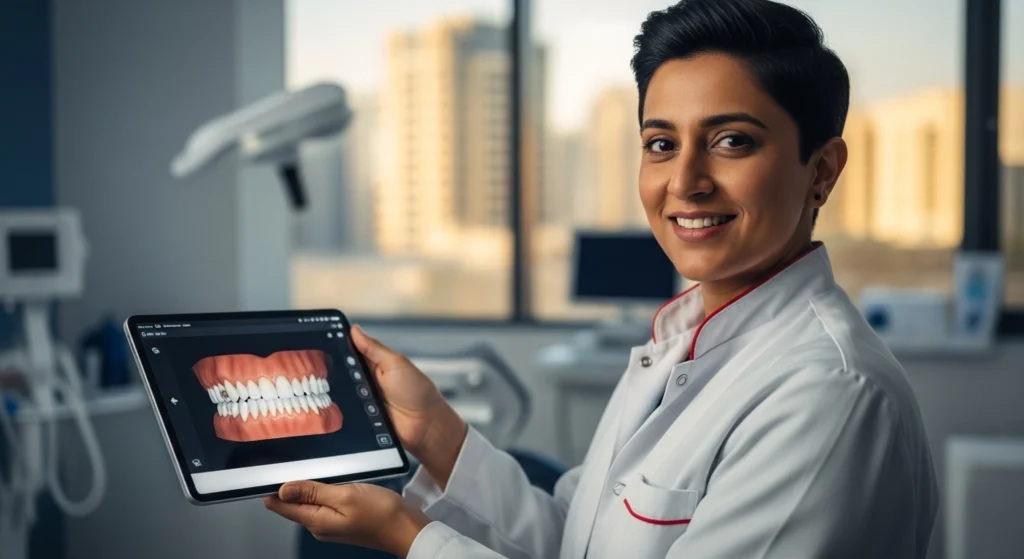
Most parents in UAE assume that orthodontic treatment is strictly a teenage rite of passage, something to be addressed once the last “baby” tooth has fallen out and the permanent smile is fully set. However, the clinical reality is that the optimal window for identifying and intercepting many orthodontic problems opens much earlier than most families realize. In the UAE, children’s dental visits are often reactive, triggered by a sudden toothache or visible decay, rather than proactive. Orthodontic health is rarely on the radar until crowding or misalignment becomes visually pronounced. The challenge for parents is discerning the difference between a natural developmental phase and a functional issue that requires early intervention. Erum Saba Medical Center emphasizes the importance of early evaluation for orthodontic treatment. Key Insights on Pediatric Orthodontics: Understanding these statistics helps parents prepare for their child’s future orthodontic treatment. Understanding Dental Development & Orthodontic Treatment: Why Timing Matters The development of a child’s mouth is a dynamic process involving the coordination of bone growth and tooth eruption. Understanding this timeline helps parents realize why “waiting and seeing” isn’t always the best strategy. How Teeth and Jaws Develop Children typically begin losing their primary teeth around age 6, ushering in the mixed dentition phase. This period, lasting until roughly age 12, is the most diagnostically important window. During this time, the jaw is still growing and is highly “plastic,” meaning it is easier to guide into the correct shape. This plasticity is the primary reason why early clinical intervention is preferred in orthodontic treatment. According to the American Academy of Pediatric Dentistry (AAPD) dental development milestones, these years are a “transition state” where the presence of baby teeth acts as a critical blueprint for the permanent smile. If this blueprint is disrupted by early tooth loss or restricted jaw growth, the adult teeth will lack the necessary guidance to erupt straight. Orthodontists distinguish between two types of issues: Correcting jaw discrepancies is a fundamental goal of early-stage orthodontic treatment. Skeletal issues are far easier to correct while a child is still growing. Once the jawbones fuse in the late teens, correcting a severe underbite or narrow palate may require surgery rather than simple appliances. The Cost of “Wait and See” For Orthodontic Treatment It is a common myth that crooked baby teeth or mild crowding will “straighten out” as the child grows. While some minor shifting is normal, untreated orthodontic problems usually compound. Crowding typically worsens as larger adult molars erupt, pushing existing teeth further out of alignment. At our Sharjah clinic, we frequently see teenagers with complex cases that could have been resolved in half the time if we had seen them at age 8 or 9. Think of it like a growing tree: it is much easier to guide a young sapling with a small stake than it is to straighten a mature trunk once it has grown crooked. Waiting too long can significantly complicate the process and duration of later orthodontic treatment. Age-Wise Orthodontic Milestones For Orthodontic Treatment: What to Watch For Every child develops at their own pace, but there are specific “checkpoints” parents should observe. 1. Toddlers and Preschoolers (2–5 Years) As highlighted by the British Orthodontic Society’s guidance on caring for a child’s teeth, baby teeth are essential placeholders that guide adult teeth into the correct position. What’s Normal: By age 3, all 20 primary teeth should be present. Interestingly, gaps between baby teeth are a good sign; it means there is likely enough room for the much larger adult teeth to follow. What Warrants Attention: Do: Schedule the first general dental visit by age 1. Don’t: Ignore mouth breathing; it can be linked to sleep apnea or tonsil issues. Early habits like thumb sucking can directly influence the complexity of future orthodontic treatment. 2. Early School Age (6–9 Years) What’s Normal: The “Ugly Duckling” stage. This is when the first permanent molars and front incisors arrive. Some temporary asymmetry or minor overlapping is common as the mouth adjusts. What Warrants Attention: Do: Get an orthodontic assessment by age 7. Don’t: Assume a “big” gap between the two front teeth is a permanent problem it often closes as the canine teeth erupt. These early school years are the most effective time to assess a child’s need for orthodontic treatment. 3. Preteen Years (10–12 Years) What’s Normal: Most baby teeth are gone. The “12-year molars” are appearing. This is the peak time for starting traditional braces for many children. What Warrants Attention: Do: Discuss the timing for Phase 2 (full braces) if Phase 1 was completed earlier. Don’t: Delay treatment if your child is self-conscious; social confidence is a major factor at this age. Proper alignment during these years is a cornerstone of comprehensive orthodontic treatment. 4. Teenagers (13–17 Years) What’s Normal: Full adult dentition. This is the “classic” window for braces or clear aligners. What Warrants Attention: Teenagers benefit from the wide range of modern appliances available for orthodontic treatment. Braces vs. Clear Aligners: Choosing for Your Child In UAE, parents are increasingly interested in aesthetic options. However, the choice between fixed braces and clear aligners is primarily a clinical one. Fixed Braces: The Gold Standard Fixed braces (metal or ceramic) remain the most common choice for children and young teens in the UAE. Clear Aligners (Invisalign First/Teen) Aligners are a popular modern alternative, but they come with specific requirements. Early Intervention (Phase 1) Appliances Sometimes, the best “brace” isn’t a brace at all. Every appliance serves a specific clinical purpose within a customized plan for orthodontic treatment. Red Flags: When to Book an Immediate Appointment The WHO Global Oral Health guidelines emphasize that oral health is a key indicator of overall well-being, particularly during a child’s formative years. If you notice any of the following, don’t wait for the next routine check-up: Recognizing these red flags allows for a more timely and effective intervention through orthodontic treatment. Practical Tips for UAE Parents Frequently Asked Questions My child still has all their baby teeth. Is it too early to see an orthodontist? No.