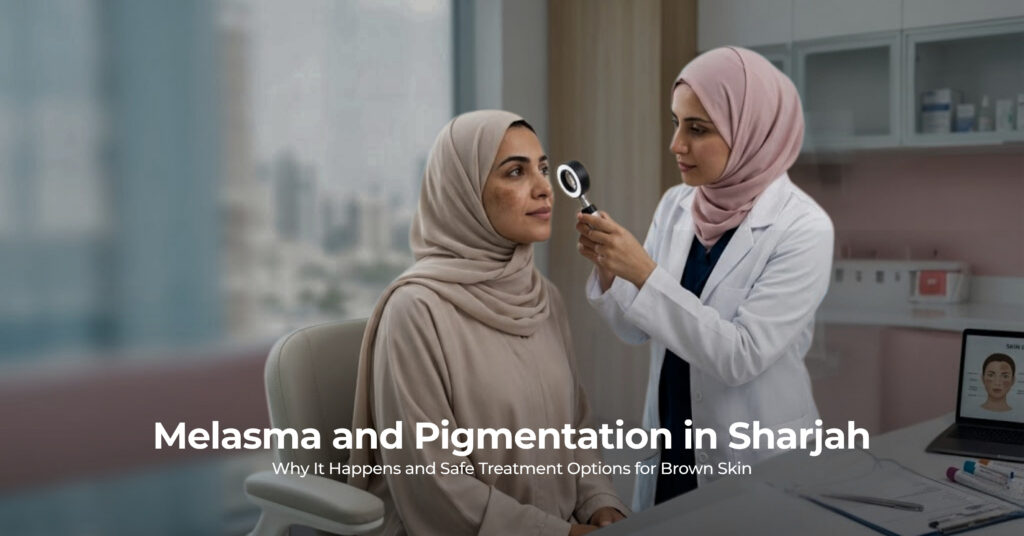
Finding effective melasma and pigmentation treatment in Sharjah requires a deep understanding of how local UV levels and hormones affect brown skin.
Melasma and hyperpigmentation are among the most common skin concerns presenting to dermatology clinics across the UAE and unfortunately, they are among the most frequently mismanaged. In Sharjah, where the majority of residents possess medium to dark skin tones (Fitzpatrick Types III–VI) and year-round UV exposure is intense, the biological triggers for pigmentation are ever-present.
However, the “one-size-fits-all” approach to skincare often fails here. Many treatments designed for fairer skin can be actively harmful to brown skin, leading to a cycle of frustration. Patients often arrive at ESMC after having tried aggressive over-the-counter (OTC) lighteners or incorrectly calibrated laser treatments, presenting with “rebound” pigmentation that is far more complex than their original concern.
The Statistics of Skin of Color
- High Prevalence: Melasma affects an estimated 1 in 4 women in high-UV regions, with significantly higher rates among South Asian, Arab, and East African populations.
- The PIH Factor: Post-inflammatory hyperpigmentation (PIH) dark spots left behind by acne, eczema, or even harsh waxing is disproportionately persistent in darker skin.
- Treatment Risk: Inappropriate laser settings on Fitzpatrick IV–VI skin can cause permanent hypopigmentation (white spots) or worsened darkening.
This guide provides a clinically grounded explanation of why these conditions develop in our local population and outlines the ESMC protocol for safe, effective treatment.
Table of Contents
Understanding Melasma vs. Pigmentation: What is Happening?
The Biology of Melanin in Darker Skin
To treat pigmentation, we must understand the Melanocyte. In Fitzpatrick III–VI skin tones, these cells are not necessarily more numerous than in lighter skin, but they are significantly more active and “reactive.”
When triggered by UV light or heat, these cells produce melanin as a defense mechanism. In brown skin, this response is more pronounced and longer-lasting. Furthermore, pigmentation exists at different depths:
- Epidermal: Surface-level, usually appearing brown. Responds fastest to topicals.
- Dermal: Deep-seated, often appearing blue-gray. Requires advanced clinical intervention.
- Mixed: A combination of both, which is the most common presentation in melasma.
Common Conditions in the Sharjah Population
- Melasma: Characterized by symmetrical, “mask-like” patches on the cheeks, forehead, and upper lip. It is chronic and heavily influenced by hormones.
- Post-Inflammatory Hyperpigmentation (PIH): Dark spots that appear after the skin is “injured.” In Sharjah, this is most commonly seen following acne or aggressive hair removal (threading/waxing).
- Periorbital Hyperpigmentation: Dark circles around the eyes. In South Asian and Middle Eastern demographics, this often has a strong genetic and pigmentation-based component rather than just “tiredness.”
ESMC Clinical Note: Correct classification is non-negotiable. Treating PIH with a melasma protocol or vice versa is the primary reason why many home treatments fail.
Why Melasma is Particularly Challenging in Sharjah
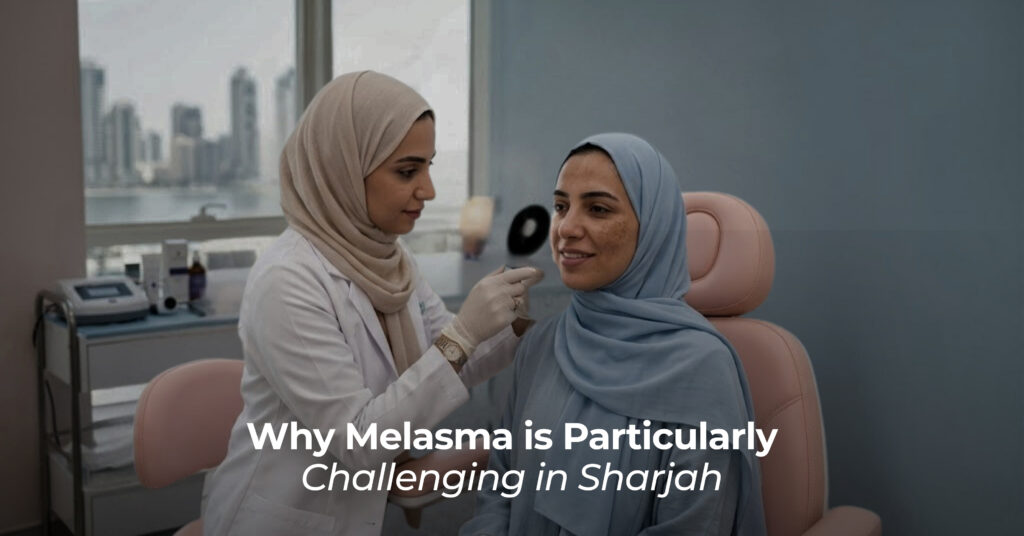
The Role of the Gulf Climate
The Sharjah sun is a relentless trigger. Even “incidental” exposure to the five minutes spent walking to your car or the sun hitting your face through a window during the school run is enough to signal melanocytes to produce pigment.
A common local misconception is that having “tan” or brown skin provides total protection. While melanin does offer a natural SPF of about 13, it does not prevent the signaling pathway that causes melasma to flare. In fact, heat itself (not just UV) can worsen melasma, making the UAE summer particularly difficult for patients.
The Hormonal Connection
In our local patient population, we see a high correlation between melasma and:
- Pregnancy (Chloasma): Often called the “mask of pregnancy,” it frequently first appears during the second trimester for Arab and Asian women.
- Contraceptives: The estrogen in many oral contraceptive pills is a primary driver of melasma relapse.
- Thyroid Function: We often screen for thyroid irregularities in patients whose melasma is resistant to standard clinical treatments.
What to Avoid: The Dangers of “Fast” Results
In the quest for clear skin, many residents turn to high-risk options. In brown skin, inflammation is the enemy.
The Danger of Mercury and Steroids
Some “whitening” creams available in unregulated markets contain mercury or high-potency steroids. While they may show results in days, they cause long-term skin thinning, visible capillaries (telangiectasia), and “Ochronosis” a permanent, soot-like darkening of the skin that is nearly impossible to reverse.
High-Risk Procedures for Brown Skin
- Aggressive Chemical Peels: If a peel is too deep, the “burn” triggers the skin to produce even more pigment as it heals.
- Standard IPL/Lasers: Many “deals” found online use lasers not calibrated for darker skin. These can “cook” the pigment, leading to permanent scarring.
Safe Treatment Options at ESMC Sharjah
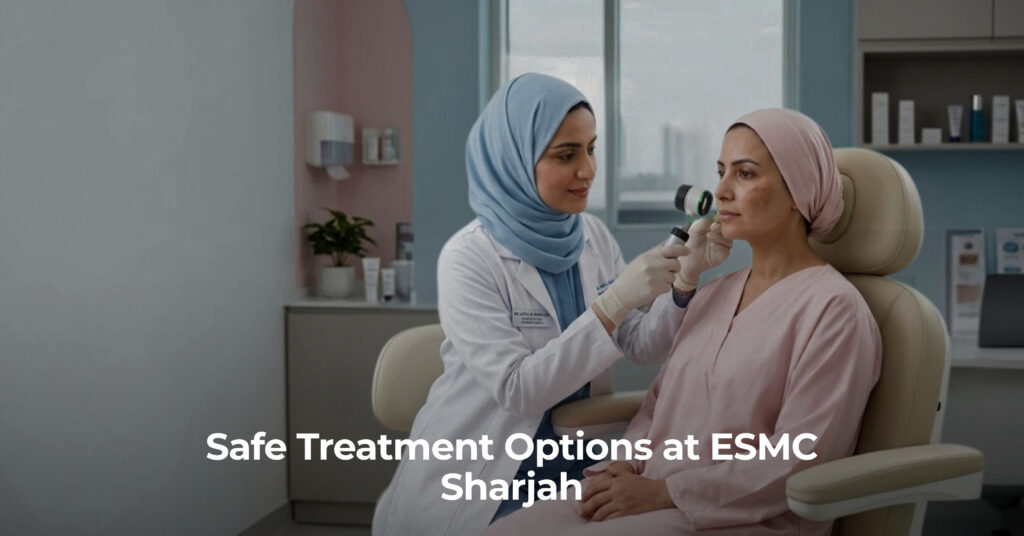
First-Line Topical Protocols
We utilize a “Gold Standard” approach adapted for the local climate:
- Hydroquinone: The most effective depigmenting agent, used in strict 3–4 month cycles under medical supervision to ensure safety.
- Cysteamine: A newer, non-hydroquinone alternative that is highly effective for long-term maintenance in brown skin.
- Azelaic Acid: Excellent for both acne and PIH, with a very low risk of irritation.
- Retinoids (Tretinoin): Used to increase cell turnover, though we start at low concentrations to avoid the “retinoid flush” that can trigger more pigmentation in UAE heat.
In-Clinic Procedures
For deeper or resistant pigmentation, we offer:
- Low-Fluence Q-Switched Nd:YAG: Known as “Laser Toning,” this uses very gentle energy to shatter pigment without heating the surrounding skin (preventing PIH).
- Superficial Lactic/Glycolic Peels: We use “lunchtime” peels that exfoliate without causing the intense inflammation associated with deeper peels.
- Oral Tranexamic Acid: A breakthrough treatment for melasma that works systemically to “turn off” the pigment signal, showing incredible results in Middle Eastern skin types.
Practical Tips for Residents
- Sunscreen is the Treatment: Without a broad-spectrum SPF 50 (preferably a tinted mineral version to block visible light), no laser or cream will work.
- Avoid Heat: If you enjoy outdoor activities, try to schedule them before 8:00 AM or after 6:00 PM.
- Patience is Key: Pigmentation lives deep in the skin. It takes at least 8 to 12 weeks of consistent treatment to see a visible change.
Frequently Asked Questions
Is melasma permanent?
It is a chronic condition, meaning it can be managed to the point of being invisible, but the “tendency” to pigment remains. Maintenance is a lifestyle, not a one-time fix.
Are lasers safe for my brown skin?
Yes, but only specific types (like the Nd:YAG) and only when operated by specialists who understand Fitzpatrick IV–VI settings.
How do I start?
The first step is a professional skin-type assessment. At ESMC, we don’t just look at the spot; we look at your hormonal history, your sun exposure, and your skin’s unique biology.
Conclusion
In Sharjah, managing pigmentation isn’t just about “brightening” it’s about medical precision. Using the wrong product can turn a temporary spot into a permanent scar. At ESMC Dermatology, we pride ourselves on protocols designed specifically for the diverse skin tones of the UAE.
Ready to address your pigmentation safely?
Achieve Clearer Skin with Medical Precision
Stop experimenting with high-risk whitening creams. Book a specialized consultation for melasma and pigmentation treatment in Sharjah at ESMC today.