
Polycystic Ovarian Disease (PCOD) is one of the most common hormonal conditions affecting women today. In the UAE, busy lifestyles, stress, and changing dietary habits have made PCOD an increasingly common concern among women of all ages. Despite its prevalence, many women remain unaware of its symptoms, differences from PCOS, and available treatment options.
This guide aims to help women in the UAE better understand PCOD, recognize early warning signs, and seek timely medical care.
What Is PCOD vs PCOS?
PCOD (Polycystic Ovarian Disease) and PCOS (Polycystic Ovary Syndrome) are often used interchangeably, but they are not the same. According to the Cleveland Clinic
- PCOD is a condition where the ovaries release immature or partially mature eggs, which later turn into cysts.
- PCOS is a more severe metabolic and hormonal disorder linked to insulin resistance and higher androgen levels.
PCOD is generally more manageable with lifestyle changes and early treatment, whereas PCOS may require long-term medical management. Early diagnosis plays a key role in preventing complications in both conditions.
Common PCOD Symptoms Among Women in the UAE
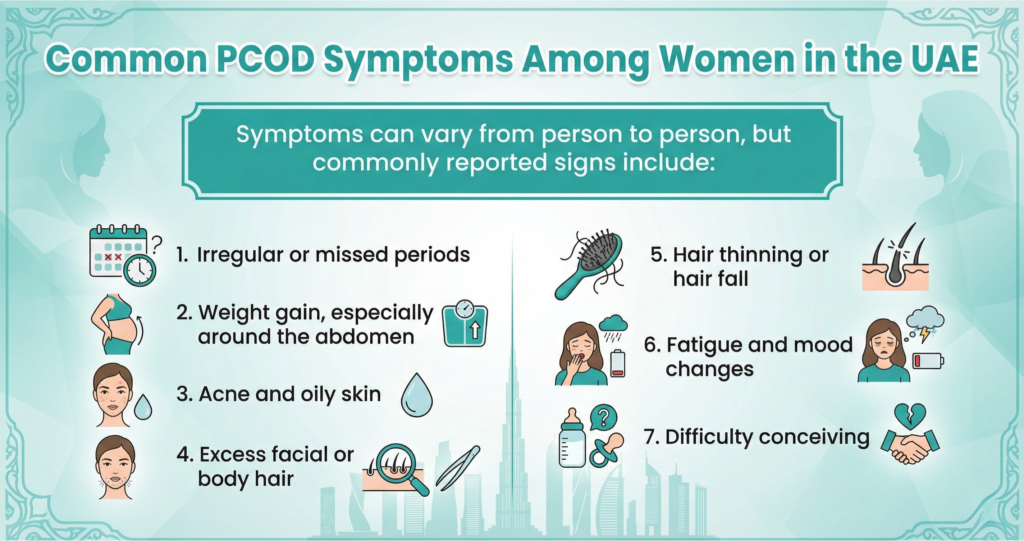
Symptoms can vary from person to person, but commonly reported signs include:
- Irregular or missed periods
- Weight gain, especially around the abdomen
- Acne and oily skin
- Excess facial or body hair
- Hair thinning or hair fall
- Fatigue and mood changes
- Difficulty conceiving
Due to hectic schedules and high stress levels in urban areas like Sharjah and Dubai, many women overlook these symptoms until they start affecting daily life or fertility.
Lifestyle Factors Contributing to PCOD
Several lifestyle-related factors common in the UAE can increase the risk or severity of PCOD:
- Sedentary routines and lack of physical activity
- High consumption of processed and sugary foods
- Stress from work-life imbalance
- Irregular sleep patterns
- Rapid weight fluctuations
While PCOD is influenced by genetics, lifestyle changes can significantly improve symptoms and overall hormonal balance.
Several lifestyle changes can help manage PCOD effectively. According to the Mayo Clinic, maintaining a healthy weight, eating a balanced diet, and exercising regularly can significantly reduce symptoms and improve hormonal balance.
Diagnosis: How PCOD Is Identified
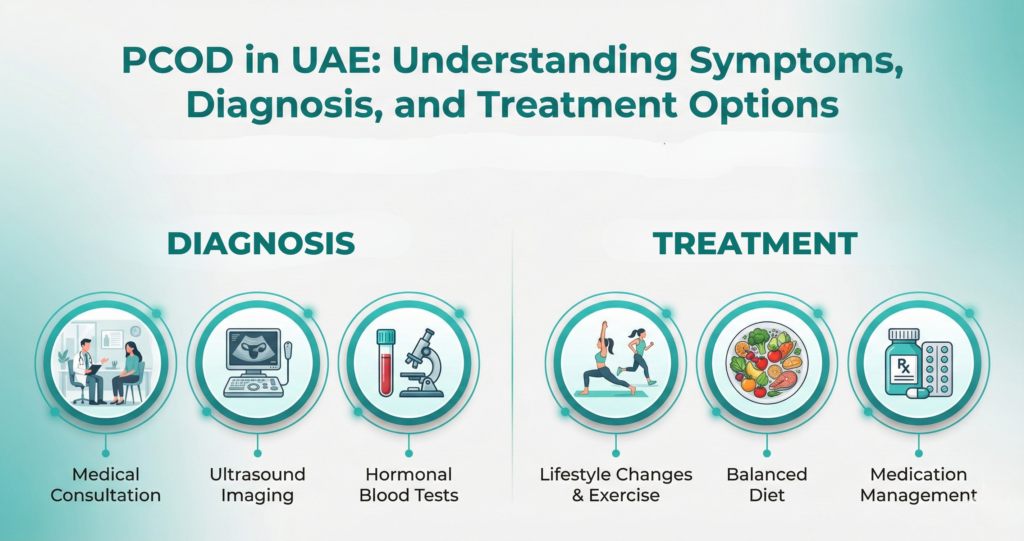
Diagnosing PCOD involves a combination of clinical evaluation and diagnostic tests. A gynecologist may recommend:
- Detailed medical and menstrual history
- Physical examination
- Blood tests to check hormone levels
- Pelvic ultrasound to identify ovarian cysts
Early screening helps detect PCOD before complications such as infertility, diabetes, or prolonged hormonal imbalance develop.
Many women in Sharjah opt for PCOD screening packages that combine blood tests and ultrasound for a comprehensive assessment.
Treatment Options Available in the UAE
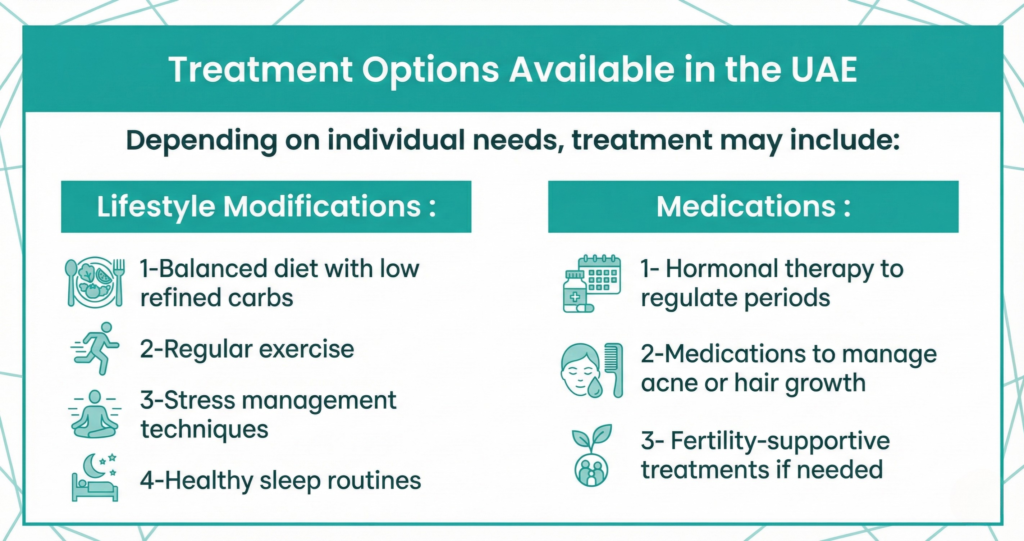
PCOD treatment focuses on symptom management and restoring hormonal balance. Depending on individual needs, treatment may include:
1. Lifestyle Modifications
- Balanced diet with low refined carbs
- Regular exercise
- Stress management techniques
- Healthy sleep routines
2. Medications
- Hormonal therapy to regulate periods
- Medications to manage acne or hair growth
- Fertility-supportive treatments if needed
3. Ongoing Monitoring
- Regular follow-ups ensure symptoms are controlled and long-term health risks are minimized.
- With the right approach, most women with PCOD can lead healthy, active lives.
When Should You See a Specialist?
You should consult a gynecologist or women’s health specialist if you experience:
- Missed or irregular periods for several months
- Sudden weight gain or persistent acne
- Difficulty getting pregnant
- Excessive hair growth or hair loss
Early medical guidance can prevent long-term complications and improve quality of life.
Real Stories, Real Hope (Anonymous)
Many women in the UAE have successfully managed PCOD through early diagnosis and lifestyle changes. From regulating cycles to achieving healthy pregnancies, timely intervention has helped countless women regain confidence and control over their health.
You’re not alone, and PCOD is manageable with the right care.
Take Charge of Your Hormonal Health
If you’re experiencing symptoms or simply want clarity about your hormonal health, consider a PCOD screening package in Sharjah. Early testing empowers you with the knowledge needed to make informed health decisions.
📍 Book a consultation today and take the first step toward balanced health.