
PCOS can affect periods, ovulation, skin, hair growth, weight and fertility, but not every woman has the same combination of symptoms. That is why PCOS treatment in Sharjah is never one-size-fits-all. A gynecologist can look at your symptoms, medical history and plans for pregnancy to decide what kind of management makes sense for you.
This guide to PCOS treatment in Sharjah skips the textbook definition and focuses on the practical question: what happens after PCOS is suspected or diagnosed, what can be treated, and when should you see a specialist? If you would rather talk it through, you can book a PCOS consultation in Sharjah at ESMC.
Table of Contents
What Is PCOS?
PCOS stands for polycystic ovary syndrome, and polycystic ovary syndrome is a common hormonal condition that can include irregular or missed periods, signs of raised androgen hormones, and changes in how the body handles insulin. Features vary widely from one woman to another. You do not need to have cysts on your ovaries to be diagnosed, and having them on a scan does not by itself mean you have PCOS. The World Health Organization describes it as a condition that can affect reproductive and metabolic health, and one that is managed rather than cured.
Common Signs That May Lead to a PCOS Evaluation
None of these signs proves you have PCOS, and each can have other causes. Together, they are what usually prompt a doctor to look further.
Irregular or missed periods
Cycles that are consistently irregular, very infrequent or absent can point to ovulation problems. This is the most common reason women are evaluated for PCOS.
Difficulty with ovulation or conception
If ovulation does not happen regularly, getting pregnant can take longer. Some women first hear about PCOS when they are trying to conceive.
Acne
Persistent acne, especially along the jaw and chin and beyond the teenage years, can reflect raised androgens.
Excess facial or body hair
Darker, coarser hair on the face, chest or abdomen is another possible androgen-related sign.
Hair thinning
Thinning at the crown or along the parting can occur, and it has many possible causes that a doctor can help separate.
Weight or metabolic changes
Weight gain, difficulty losing weight or signs of insulin resistance, such as darker skin patches, can be part of the picture. Not every woman with PCOS gains weight.
How Is PCOS Diagnosed?
Diagnosis is clinical. No single test or symptom is enough. Doctors generally put together several pieces of information:
- your medical and menstrual history
- a physical assessment
- relevant blood tests
- assessment of androgen-related symptoms such as acne and hair growth
- an ultrasound when it is clinically appropriate
- checks to rule out other conditions that can look similar, such as thyroid problems
An ultrasound showing ovaries with many small follicles does not diagnose PCOS on its own, and diagnostic criteria can vary by guideline and by patient. If you are told you have “polycystic ovaries” after a scan, ask your gynecologist what that means for you.
PCOS Treatment Depends on Your Main Goal
The most useful way to think about PCOS treatment in Sharjah, or anywhere, is to start with what matters most to you right now. A woman who wants regular cycles needs a different conversation from a woman who wants to conceive, or one who is mainly bothered by acne. The table below summarizes six common goals and the kind of management that may be considered. It is a guide, not a prescription.
| Main concern | Possible management approach |
|---|---|
| Irregular periods | Cycle regulation and hormonal management where appropriate |
| Acne and hair growth | Hormonal or dermatological approaches |
| Metabolic concerns | Lifestyle measures and medical management where appropriate |
| Trying to conceive | Ovulation and fertility-focused treatment |
| Weight concerns | Individualized nutrition, activity and medical support |
| Long-term health risks | Ongoing monitoring and preventive care |
No medicine is right for every woman, and not every woman with PCOS needs medication. Your doctor will explain the options that suit your symptoms, health and pregnancy plans. If you would like a plan built around your goals, speak with an ESMC gynecology specialist.
PCOS Treatment for Irregular Periods
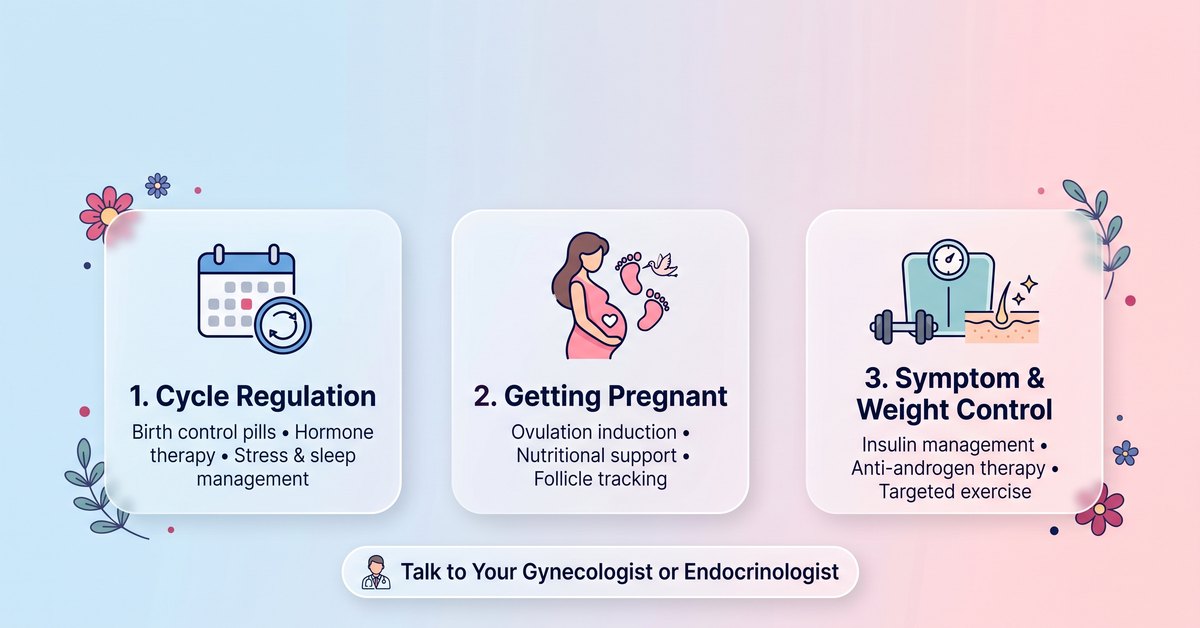
Going months without a period is not just an inconvenience. When ovulation is infrequent, the lining of the womb can build up without being shed regularly, which is why long gaps between periods deserve medical attention. At a high level, management of irregular periods may involve hormonal treatment to regulate the cycle, monitoring, and a plan that takes account of whether you want to become pregnant. Which approach is suitable is an individual decision made with your doctor.
PCOS Treatment for Acne and Excess Hair
Androgen-related symptoms can affect confidence as much as health, and they are treatable. Depending on your situation, options may include hormonal management, dermatological treatment, hair-removal methods and, in some cases, medication. It is important to be realistic: treating PCOS does not automatically clear acne or remove excess hair, and results take time. A combination approach is common.
PCOS, Weight and Insulin Resistance
Not every woman with PCOS has insulin resistance, and weight is not a requirement for diagnosis. Where insulin resistance is present, lifestyle changes can be part of treatment, and even modest improvements in health can matter for some women. Treatment should never be reduced to “just lose weight”. For practical advice on food and weight, read our PCOS diet and weight-management strategies, which covers that topic in more depth than this guide.
PCOS Treatment When You Want to Get Pregnant
PCOS can make ovulation irregular, which can make conception harder, but many women with PCOS do become pregnant. A fertility assessment may be appropriate if you have been trying for some time or have other concerns, and treatment depends on your individual profile. A specialist may consider ovulation-induction treatment, and other fertility factors, including your partner’s, should be checked as well. No one can promise pregnancy, but treatment can help restore or support ovulation in suitable patients.
You can read more about what fertility evaluation involves in our guide to fertility evaluation and treatment. If you are ready to start, book a PCOS consultation in Sharjah.
Lifestyle Measures That Support PCOS Treatment
Lifestyle changes are rarely the whole answer, but they can make other treatment work better. For many women with PCOS, regular physical activity, balanced meals and enough sleep help with insulin resistance, mood and energy. Even modest, sustainable changes may improve cycles and metabolic health for some women. Aim for habits you can keep up rather than strict diets, and avoid any plan that promises to “reverse” or “detox” PCOS, because no such treatment exists.
It is also fine to ask for support. A doctor can refer you to a dietitian, and treating mood, sleep or stress is a legitimate part of PCOS care, because they affect hormones and daily life.
Long-Term Health Monitoring With PCOS
PCOS is linked with a higher chance of some long-term health problems, including type 2 diabetes, high blood pressure, raised cholesterol and, when periods are very infrequent, changes in the womb lining. This does not mean these will happen to you. It means that follow-up matters, even when your periods or skin are under control. Your gynecologist can advise on how often to check blood pressure, blood sugar and cholesterol, and on whether your cycle needs treatment to protect the womb lining. Regular reviews also let you adjust treatment as your priorities change, from regulating irregular periods in your twenties to planning pregnancy or managing insulin resistance later on.
Can PCOS Be Cured?
There is currently no single cure that permanently eliminates PCOS, but its symptoms and associated health risks can often be managed effectively. Treatment goals also change with time. In your twenties, regulating your cycle may be the priority. At 30, fertility may matter most. Later, long-term metabolic and heart health monitoring may take center stage. That is why PCOS care works best as an ongoing relationship with a doctor you trust, rather than a one-time fix. The NHS also stresses that treatment is about managing symptoms and reducing long-term risk.
When Should You See a PCOS Specialist?
Consider booking a visit with a PCOS specialist if:
- your periods are consistently irregular
- your periods stop for long stretches
- you have significant acne or hair growth
- you are having unexplained difficulty conceiving
- you suspect PCOS but have never had an assessment
- you already have a diagnosis but symptoms are poorly controlled
- you have metabolic concerns such as raised blood sugar
- your symptoms are changing despite treatment
Early assessment with a PCOS specialist helps rule out other causes and gives you a clear plan. Book a PCOS consultation in Sharjah when you are ready.
Questions to Ask at Your PCOS Appointment
- How do you know whether I have polycystic ovary syndrome, or could something else explain my symptoms?
- What is the main goal of my treatment right now?
- Which options suit my plans for pregnancy?
- Do I need blood tests for insulin resistance or other conditions?
- How often should I come back for review?
Bring a note of your period dates for the last few months. It helps your doctor see patterns in irregular periods that a single visit could miss.
PCOS Treatment at ESMC
At ESMC, PCOS treatment in Sharjah sits within our gynaecology department, which offers specialist gynecology care, individualized assessment and reproductive health support. We work from your symptoms and goals, whether that is cycle control, skin concerns, fertility or long-term follow-up, and we do not promise outcomes that no clinic can guarantee. You can meet our gynecology specialist, Dr. Erum Saba before you book.
PCOS can also overlap with other concerns that a routine check can pick up, so you may find our guide to a women’s health checkup in Sharjah useful as well.
Frequently Asked Questions
What is the best treatment for PCOS?
There is no single best treatment. Care depends on your main concern, such as irregular periods, acne, weight or fertility, and on whether you want to become pregnant. A gynecologist builds a plan around your symptoms and goals.
Can PCOS be cured permanently?
There is currently no permanent cure, but symptoms and related health risks can often be managed well with lifestyle measures, medical treatment and regular follow-up. Treatment goals may change over time.
Can PCOS cause infertility?
PCOS can make ovulation irregular, which can make conceiving take longer. Many women with PCOS become pregnant, with or without help. A fertility assessment can show whether treatment would be useful.
Can I get pregnant naturally with PCOS?
Many women do, particularly if they ovulate at least some of the time. If you have been trying for a while without success, a specialist can check ovulation and other fertility factors and advise on options.
Does every woman with PCOS need medication?
No. Some women are managed mainly with lifestyle measures and monitoring, while others benefit from medication. The choice depends on symptoms, health factors and whether pregnancy is currently desired.
Does PCOS always cause weight gain?
No. Weight gain is common but not universal, and weight is not required for a diagnosis. Women of any body size can have PCOS, so the approach to weight should be individualized.
How is PCOS diagnosed?
Doctors combine your menstrual and medical history, a physical exam, relevant blood tests, assessment of androgen-related symptoms and sometimes an ultrasound, while excluding other conditions. No single test confirms PCOS on its own.
When should I see a PCOS specialist in Sharjah?
See a specialist if your periods are consistently irregular or absent, you have significant acne or hair growth, you are struggling to conceive, or you already have PCOS and your symptoms are not controlled. You can book a consultation with the ESMC gynecology team.