Your baby is three months old, and postpartum depression UAE is likely the last thing you want to name, but the reality is heavy. Everyone keeps telling you this should be the happiest time of your life. You smile when they say it, you nod, and then you go home and feel nothing. Or you feel everything at once, a kind of dread you cannot explain, a worry that does not stop, or a sadness that settles over the day before you even get out of bed. You are not sure if this is normal.
You have not told your husband the full truth, you have not told your mother because she will worry, and you have not told your doctor because you are not sure it is serious enough to mention. Understanding these emotional and physical changes is essential for identifying postpartum depression symptoms early.
Postpartum depression in the UAE affects a significant proportion of new mothers in this country, yet it remains one of the most underreported and undertreated conditions in women’s health. A prospective cohort study recruiting women from postpartum wards across four UAE emirates found that 35 percent of women exhibited depressive symptomatology within the first 6 months after birth. You are not failing, you are not ungrateful, and you are not a bad mother. You are experiencing a recognised, documented, and treatable medical condition. This guide is here to help you understand it, name it, and take the next step. Many new mothers struggle to distinguish between the temporary baby blues and more enduring postpartum depression symptoms.
Table of Contents
Baby Blues vs Postpartum Depression: The Critical Distinction
Understanding the difference between normal postpartum adjustment and clinical postpartum depression is the first step toward removing the shame that keeps women silent. Seeking a professional evaluation is the safest way to address severe postpartum depression symptoms.
Baby blues affect up to 80 percent of new mothers in the first one to two weeks after delivery. They are caused by the dramatic hormonal shift that occurs after the placenta is delivered. Oestrogen and progesterone levels drop sharply within 24 to 72 hours of delivery. This hormonal withdrawal produces tearfulness, irritability, emotional sensitivity, and mood swings that are entirely normal and typically resolve on their own within 10 to 14 days without any treatment. A clinical assessment using standard screening tools can help identify the severity of postpartum depression symptoms.
Postpartum depression is clinically distinct from baby blues in three ways: duration, severity, and functional impact. It persists beyond two weeks after delivery and is significantly more intense than ordinary new mother tiredness. It interferes directly with your ability to function, bond with your baby, and care for yourself. According to NHS guidance on postnatal depression treatment, the Edinburgh Postnatal Depression Scale (EPDS) is used globally to identify this condition. PPD involves persistent low mood, loss of interest, severe sleep disturbance, appetite changes, concentration difficulties, and sometimes thoughts of self-harm. Educating family members about these mood shifts makes it easier to talk openly about postpartum depression symptoms.
Postpartum anxiety often occurs alongside or instead of postpartum depression. Symptoms include constant worrying about the baby’s safety, inability to rest even when the baby is sleeping, racing thoughts, physical tension, and a persistent sense of dread. Postpartum anxiety is widespread in UAE clinical settings, though frequently underdiagnosed. Both emotional distance and intense worry can be prominent indicators of postpartum depression symptoms.
| Feature | Baby Blues | Postpartum Depression | Postpartum Anxiety |
| When it starts | Days 2 to 5 after delivery | Within first year, often weeks 2 to 8 | Within first year |
| How long it lasts | Up to 2 weeks | Weeks to months without treatment | Weeks to months without treatment |
| Severity | Mild, manageable | Moderate to severe | Moderate to severe |
| Effect on daily function | Minimal | Significant | Significant |
| Resolves without treatment | Usually yes | Rarely | Rarely |
| Requires clinical assessment | No unless persistent | Yes | Yes |
When to seek help: If what you are experiencing has lasted more than two weeks after delivery, is getting worse rather than better, or is affecting your ability to care for yourself or your baby, this is not baby blues. This is postpartum depression, and it requires clinical assessment. You do not have to wait for it to pass on its own. These persistent feelings of guilt and inadequacy are often tied directly to underlying postpartum depression symptoms.
The Postpartum Depression Symptoms in Detail
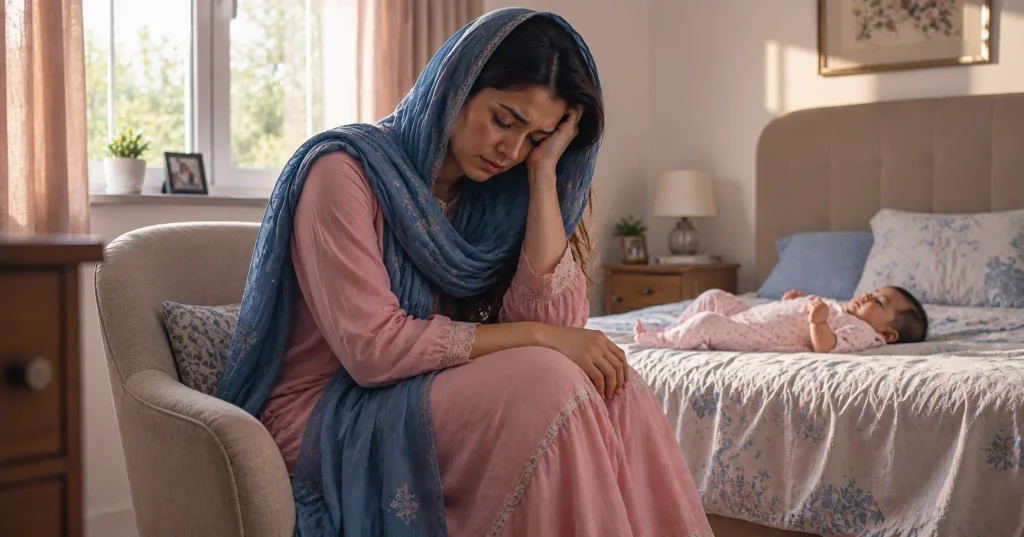
Postpartum depression does not always look like sadness, which is one of the primary reasons it goes unrecognized for months. Unwanted intrusive thoughts are a distressing but recognized facet of severe postpartum depression symptoms.
Emotional Symptoms
You may experience a persistent low mood that does not lift despite positive events around you. Many mothers feel emotional numbness, as if they are watching their lives from behind a glass wall. Unexplained crying spells or the complete inability to cry can occur. Overwhelming guilt, frequently focused on whether you are good enough for your baby, is extremely common, alongside unexpected irritability and anger. Physical exhaustion that does not improve with sleep is another key sign of postpartum depression symptoms.
Cognitive Symptoms
Difficulty concentrating, making simple decisions, or remembering basic tasks can make daily life feel overwhelming. Many mothers experience intrusive, frightening thoughts about something bad happening to the baby. Seeking compassionate medical care is a vital step in managing these complex postpartum depression symptoms.
A note on intrusive thoughts: In some cases, mothers experience intrusive, unwanted thoughts about harming their baby. These thoughts are deeply distressing to the mother, and she has zero desire to act on them. They are a recognised symptom of PPD and anxiety, not a reflection of your character or your love for your child. Sharing these thoughts with a clinician is safe and essential for relief. Regional statistics suggest that local environmental factors can influence the onset of postpartum depression symptoms.
Physical, Relational And Other Postpartum Depression Symptoms
Physical signs include exhaustion that goes beyond sleep deprivation, severe appetite changes, persistent headaches, chest tightness, and a heavy physical feeling in the body. Relationally, you might struggle to bond with your baby, feel like your baby would be better off with someone else, or withdraw entirely from your partner, family, and friends. A lack of close family support in the UAE can exacerbate these postpartum depression symptoms.
Postpartum depression does not mean you do not love your baby. It means your body and brain chemistry have been disrupted by a complex mix of hormonal and psychological factors. The most loving thing you can do for your family is to seek care. Overcoming cultural stigma is crucial for mothers seeking help for their postpartum depression symptoms.
Why UAE Mothers Are at Higher Risk
The environmental, social, and demographic factors in the UAE create a unique set of circumstances for new mothers. Clinical guidelines offer clear reassurance that breastfeeding is compatible with treating postpartum depression symptoms.
According to a prospective cohort study published in PMC, 35 percent of UAE women exhibit depressive symptomatology within the first six months postpartum. An Eastern Mediterranean Health Journal study via PMC further noted that 17.8 percent of UAE postpartum women screen positive on the EPDS scale. Both numbers exceed the WHO global average of 10 to 15 percent. Local Khaleej Times reports highlight that actual numbers are likely higher due to underreporting driven by stigma. Discussing safe pharmacological options with a doctor can provide significant relief from postpartum depression symptoms.
Global PPD Average vs. UAE Study Findings
┌──────────────────────────────────────────────────┐
│ Global Average (WHO): 10% – 15%
├──────────────────────────────────────────────────┤
│ UAE EPDS Screened Positive: 17.8%
├──────────────────────────────────────────────────┤
│ UAE Cohort Study Symptom Rate: 35%
└──────────────────────────────────────────────────┘
The single strongest independent risk factor identified in UAE research is limited social support. For the majority of South Asian and Arab expatriate women in UAE, traditional support systems like grandmothers, aunts, and sisters live abroad. While traditional cultures design the postpartum period around collective family caregiving, many expat mothers in the UAE must navigate these months in isolation. Evidence-based therapies like CBT are highly effective at reducing the impact of postpartum depression symptoms.
Cultural stigma surrounding mental health further complicates recovery. Seeking psychological support may be misattributed to spiritual weakness or ingratitude by family members. This pressure forces women to perform happiness for relatives and social media while suffering privately. Furthermore, physical factors such as vitamin D deficiency UAE play a biological role in mood regulation, while mothers with a history of recurrent miscarriage in UAE carry higher baseline anxiety into the postpartum period. A comprehensive biological check helps rule out other medical issues that mimic postpartum depression symptoms.
Postpartum Depression and Breastfeeding
Many women delay seeking medical care because they assume that any treatment for postpartum depression will require them to stop breastfeeding. This misconception causes mothers to suffer silently for months. Practical support from family members can significantly ease the burden of daily postpartum depression symptoms.
Breastfeeding Safety: According to NHS clinical guidelines, several effective antidepressant medications are safe and compatible with breastfeeding. The decision is always made individually between you and your doctor, weighing all factors to protect both your health and your baby’s development. Loved ones should learn to offer non-judgmental support when a mother displays postpartum depression symptoms.
If you are breastfeeding, do not let that hold you back from seeking care. Options exist, and your clinical team can build a safe management plan tailored to your preferences. An all-female medical team offers a safe space to discuss and diagnose these postpartum depression symptoms.
What Postpartum Depression Treatment Looks Like
Treating postpartum depression involves a combination of compassionate clinical care, psychological strategies, and biological checks. Early clinical intervention leads to a more rapid and complete recovery from postpartum depression symptoms.
- Psychological Support: Cognitive Behavioral Therapy (CBT) is highly effective for PPD. A Cochrane Review on psychological interventions for postnatal depression confirms that structured talking therapies produce meaningful, long-term improvement by helping reframe negative thought patterns. It is important to remember that resting alone is rarely enough to resolve clinical postpartum depression symptoms.
- Medical Management: Selective Serotonin Reuptake Inhibitors (SSRIs) are routinely used for moderate to severe cases. Medication corrects chemical imbalances, allowing you to regain emotional stability. Hormonal shifts and sleep deprivation can trigger a sudden increase in postpartum depression symptoms.
- Hormonal and Health Assessments: Postpartum thyroiditis affects 5 to 10 percent of new mothers according to research on PMC. Because thyroid dysfunction mimics depressive symptoms, testing thyroid function alongside Vitamin D levels is an essential diagnostic step. Clinical treatments are designed to help restore emotional balance and alleviate postpartum depression symptoms.
- Social and Practical Adjustments: Building realistic daily routines, connecting with supportive peer groups, and communicating openly with your partner form the foundation of physical and mental recovery. A supportive partner can help monitor the timeline and severity of these postpartum depression symptoms.
| Treatment | Best For | Breastfeeding Compatible | Available at ESMC |
| Talking Therapy (CBT) | Mild to moderate PPD | Yes | Referral provided |
| SSRI Antidepressants | Moderate to severe PPD | Selected options yes | Prescription & monitoring |
| Thyroid Assessment | Identifying organic causes | Yes | Blood testing & care |
| Vitamin D Correction | Adjunct biological support | Yes | Testing & supplementation |
| Social Support Guidance | All cases | Yes | Professional signposting |
How to Help a Loved One With Postpartum Depression
If you are reading this as a husband, mother, or friend who is worried about a new mother, your response plays a critical role in her recovery. Many women feel isolated when they try to cope silently with severe postpartum depression symptoms.
- What NOT to say: Avoid telling her to “just rest,” to “be grateful,” or that “everyone feels tired.” Do not share her feelings with other relatives without her explicit permission. Our clinic provides a compassionate environment designed specifically to address various postpartum depression symptoms.
- What to say: Let her know you notice she is carrying a heavy load, that she is not to blame, and that you are here to support her without judgment. Identifying these issues early prevents the long-term impact of untreated postpartum depression symptoms.
- What to do: Take over specific tasks directly, such as night feedings, cooking, or managing household chores. Offer to book an appointment and accompany her to see a doctor. Lifestyle changes work beautifully alongside medical guidance to manage day-to-day postpartum depression symptoms.
- What to remember: Postpartum depression is a medical condition, not a personal failure or a lack of love for her child.
UAE-Specific Guidance: Where to Get Help
Taking the first step toward getting help does not have to be intimidating. At ESMC Gynecology Department, under the guidance of Dr. Erum Saba, we offer a confidential, compassionate space to discuss your emotional and physical recovery. We conduct thorough evaluations using the EPDS tool, review vital health markers like thyroid and Vitamin D levels, and guide you through an individualized recovery path.
Emergency Notice: If you or someone you know is having thoughts of self-harm or harming the baby, please seek immediate emergency care. Call 998 for UAE emergency services or go directly to the nearest hospital emergency department. Do not wait for a routine clinic appointment.
For comprehensive maternal health support, you can also review our complete guide to antenatal care in UAE or explore options for physical recovery through our yummy mummy makeover UAE resources.
When to Come to ESMC
Consider scheduling a postpartum assessment with our team if:
- You are within 18 months of delivery and have experienced low mood, anxiety, or numbness for more than two weeks.
- You feel disconnected from your baby or overwhelmed by constant intrusive worries.
- You are exhausted, struggling to cope, or hiding your true feelings from family members.
- You want professional, non-judgmental guidance from an all-female medical team that understands your cultural context.
You do not need to wait for a crisis to seek support. Early intervention leads to faster, more complete recovery for both you and your baby.
Frequently Asked Questions
How do I know if I have postpartum depression or just normal new mother tiredness?
New mother tiredness improves when you get rest, and it does not typically prevent you from experiencing joy or bonding with your baby. Postpartum depression involves persistent low mood, anxiety, numbness, or despair that does not lift even after you sleep, lasting longer than two weeks after birth.
Can postpartum depression start months after the birth, not just in the first few weeks?
Yes. While PPD frequently appears in the first eight weeks after delivery, it can begin at any point within the first year postpartum. Triggers such as weaning, returning to work, or shifting sleep patterns can also contribute to later onset.
Is it safe to take antidepressants for postpartum depression while breastfeeding?
Yes, many effective antidepressant options are considered safe while breastfeeding. Your doctor will carefully evaluate medications to select options with minimal transfer into breast milk, balancing your health needs with your baby’s safety.
I have intrusive thoughts about something happening to my baby. Does this mean I have postpartum depression?
Intrusive thoughts are a common symptom of postpartum anxiety and depression. Experiencing these distressing thoughts does not mean you want to harm your baby or that you are a bad mother; rather, it reflects an overactive threat-response system in your brain that requires clinical care.
My husband thinks I just need more rest. How do I explain that this is something more serious?
You can share clinical information with him showing that postpartum depression is a recognized medical condition linked to real hormonal and neurochemical shifts. Inviting him to attend a medical consultation with you can also help him understand the diagnosis from a professional perspective.
Can postpartum depression affect my bond with my baby long term if left untreated?
While untreated PPD can make early bonding feel challenging, seeking proper treatment helps restore your emotional capacity and closeness with your baby. Addressing PPD early protects both your personal health and your relationship with your child.
I had postpartum depression after my first baby. Am I more likely to get it again?
Having PPD in a previous pregnancy increases your risk for future births, but it does not make it inevitable. Knowing your history allows your clinical team to put proactive support and monitoring strategies in place early in your next pregnancy.
Does postpartum depression affect the baby’s development?
Untreated severe PPD can influence daily interactions, but seeking timely medical care effectively buffers against long-term developmental impacts. Getting treatment is one of the best steps you can take for your baby’s overall well-being.
Can fathers or partners experience postpartum depression?
Yes, paternal postpartum depression affects roughly 10 percent of new fathers. Hormonal shifts, sleep deprivation, stress, and supporting a partner who is struggling can all contribute to depression in partners.
How long does postpartum depression last with treatment?
Recovery timelines vary for every individual, but many women notice significant improvement within a few weeks of starting structured treatment. With appropriate support, PPD is a fully temporary and treatable condition.
You Do Not Have to Carry This Alone
You have carried these feelings quietly for long enough. What you are experiencing has a name, a clear cause, and an effective treatment. It is not a reflection of your character, your faith, or your love for your child. Postpartum depression UAE affects thousands of mothers across the country, and seeking help is a sign of strength, not failure.
At Erum Saba Medical Center, our all-female gynaecology team offers a confidential, gentle environment where you will be heard and supported every step of the way.
Visit Dr. Erum Saba at ESMC Sharjah Now
Visit us at Al Owais Building, Flat 206, Block A, Jaber Bin Hayan Street, Al Zahra Street, Maysaloon, Sharjah.
Open 8:00 AM to 11:30 PM daily.