A dental emergency is any acute oral health problem involving severe pain, progressive infection, uncontrolled bleeding, or traumatic dental injury that requires immediate professional assessment and urgent intervention to relieve pain, stop bleeding, or save a tooth. If you are searching for an emergency dentist Sharjah, understanding whether your symptoms require immediate clinical evaluation can help prevent minor dental issues from escalating into severe complications. Consulting an experienced emergency dentist Sharjah families trust guarantees timely pain relief and structural preservation.
Not every dental problem is a true emergency; a small, painless chipped tooth or mild sensitivity can typically wait for a routine appointment. However, acute symptoms such as severe toothaches, facial swelling, knocked-out adult teeth, or significant trauma require urgent attention. It is also vital to distinguish standard dental emergencies from medical emergencies: while a dentist treats the underlying dental source, life-threatening symptoms such as severe facial swelling that compromises your airway, difficulty breathing, or trouble swallowing require immediate hospital emergency care.
What Counts as a Dental Emergency?
When sudden dental pain or trauma strikes, knowing how to categorize your symptoms helps determine your next step.
Table of Contents
Usually Needs Urgent Dental Assessment
- Severe or persistent toothache that interferes with daily activities or sleep.
- Dental abscess, localized gum boils, or progressive facial swelling.
- Broken or cracked teeth causing severe pain, sharp edges, or exposed inner tissue.
- Knocked-out permanent (adult) teeth.
- Significant dental or facial trauma.
- Uncontrolled oral bleeding following an injury or extraction.
- Lost dental crowns or fillings accompanied by sharp pain, sensitivity, or structural vulnerability.
May Not Require Emergency Treatment
- Small, painless chips on a tooth edge.
- Mild, transient tooth sensitivity without accompanying swelling or severe pain.
- Minor cosmetic concerns in the absence of pain or trauma.
- Routine dental cleanings, check-ups, or orthodontic wire adjustments.
While clinical circumstances and individual pain thresholds vary, conditions involving active infection, trauma, or severe pain should be evaluated promptly by an emergency dentist Sharjah. Seeking immediate care from a qualified emergency dentist Sharjah prevents minor oral infections from worsening. Erum Saba Medical Center’s (ESMC) dental department identifies severe toothache, sudden swelling, broken or chipped teeth after injury, lost restorations, and infections as key reasons to seek urgent care.
Emergency Dentist Sharjah: 7 Problems That Need Care
When evaluating acute dental concerns, clinicians look for specific clinical indicators. Below are seven common dental problems that frequently require urgent evaluation.
1. Severe or Persistent Toothache
Sudden, unprovoked, or continuous tooth pain is one of the most common reasons patients seek urgent care. A severe toothache often presents as:
- Intense, sharp, or throbbing pain.
- Pain that worsens when biting down or eating.
- Lingering sensitivity to hot or cold stimuli long after the source is removed.
- Pain that disrupts sleep or daily functioning.
- Discomfort accompanied by a localized gum bump, fever, or a bad taste in the mouth.
Severe dental pain typically indicates that the inner pulp of the tooth containing nerves and blood vessels is inflamed, infected, or exposed due to deep decay, cracks, or trauma. Professional diagnosis is necessary to identify the root cause, which may require restorative care or a root canal treatment. require restorative care or a root canal treatment. **Evaluating acute tooth pain with a skilled emergency dentist Sharjah ensures targeted, effective relief.
Can Severe Toothache Wait Until Tomorrow?
While minor sensitivity can often wait for regular hours, severe, persistent pain deserves prompt dental assessment. If the pain is accompanied by facial swelling, fever, or difficulty swallowing, the urgency escalates significantly. Reaching out to an emergency dentist Sharjah immediately is essential when severe toothache disrupts daily sleep.
2. Dental Abscess or Facial/Gum Swelling
A dental abscess is a localized collection of pus caused by a bacterial infection originating inside a tooth or in the supporting gum tissues. Typical symptoms include severe, constant throbbing pain, red or swollen gums, a pimple-like bump on the gum line, a foul taste from discharging pus, and localized facial swelling.
Infections should never be ignored. If left untreated, dental infections can spread to surrounding bone, adjacent facial spaces, or into the bloodstream. It is also important to note that antibiotics are not automatically the primary fix for every type of tooth pain; professional dental intervention is required to treat the source of the infection, such as draining an abscess or performing root canal therapy. Receiving urgent intervention from an emergency dentist Sharjah stops deep bacterial infections from spreading.
When Does Dental Swelling Become a Medical Emergency?
Facial swelling can occasionally pose serious airway or systemic risks. You should seek immediate emergency medical care at a hospital if dental swelling is associated with:
- Difficulty breathing.
- Difficulty swallowing.
- Difficulty speaking.
- Major mouth or facial swelling.
- Swelling around the eyes or sudden vision changes.
- Inability to open your mouth fully (trismus).
Evaluating facial or gum swelling with a dedicated emergency dentist Sharjah protects your airway and systemic health.
3. Knocked-Out Permanent Tooth
A knocked-out (avulsed) permanent adult tooth is a true time-sensitive dental emergency. The long-term survival of the tooth depends heavily on how quickly it is managed within the first 60 minutes.
- Handle the tooth only by the crown (the chewing part), never by the root.
- Do not scrub, scrape, or remove any attached tissue fragments from the root.
- Keep the tooth moist at all times ideally by reinserting it gently into its socket if possible, or storing it in a container of milk or a suitable dental preservation solution. Avoid storing permanent teeth in plain tap water if alternatives are available.
- Seek professional dental care immediately.
Arriving at an emergency dentist Sharjah within 60 minutes dramatically increases the chances of saving an avulsed tooth.
Note:
This guidance applies strictly to permanent adult teeth.
Primary (baby) teeth are generally not re-implanted to avoid damaging the underlying permanent tooth developing beneath them.
4. Broken, Cracked, or Severely Chipped Tooth
Dental trauma, biting down on hard foods, or untreated decay can cause a tooth to fracture, crack, or break. Signs include a visible portion of the tooth missing, sharp edges that irritate the tongue or cheeks, severe sensitivity, pain when chewing, or a visible dark line where internal tooth structure is exposed.
Depending on the severity of the fracture, professional treatment options may range from cosmetic bonding and protective dental crowns to root canal treatment or, in cases where a tooth cannot be structurally restored, safe extraction. cannot be structurally restored, safe extraction. Restoring fractured enamel with an emergency dentist Sharjah restores both chewing function and smile aesthetics.
What Should You Do Before Seeing the Dentist?
- Rinse your mouth gently with warm water to clean the area.
- Cover any sharp jagged edges with temporary dental wax or sugar-free chewing gum to protect soft tissues.
- Save any broken tooth fragments in a clean container and bring them to your appointment.
- Avoid chewing on the affected side of your mouth.
- Contact an urgent dentist Sharjah promptly for evaluation.
Securing an immediate appointment with an emergency dentist Sharjah prevents sharp broken edges from causing soft-tissue lacerations.
5. Uncontrolled Bleeding After Dental Injury or Extraction
A minor amount of oozing or bleeding after a dental extraction or minor oral injury is normal. However, persistent or heavy bleeding that does not slow down after applying steady pressure is considered a dental emergency.
If bleeding occurs, place a clean, folded gauze pad directly over the bleeding site and bite down firmly with steady pressure for 20 to 30 minutes. Avoid rinsing vigorously, spitting repeatedly, or disturbing the blood clot. If bleeding remains uncontrolled or is accompanied by systemic symptoms, seek urgent professional evaluation. Managing persistent post-extraction bleeding under an emergency dentist Sharjah ensures safe hemostasis.
6. Lost Filling, Crown, or Dental Restoration
Restorations can occasionally loosen and fall out due to underlying decay, sticky foods, or normal wear and tear over time. A lost filling or crown becomes urgent when it leaves underlying dentin or nerve structures exposed, causing sharp pain with temperature changes, discomfort while chewing, or structural vulnerability that risks further fracture. If you are dealing with a compromised restoration, our clinicians provide targeted solutions including dental crowns and fillings to protect your teeth.
Never attempt to glue a restoration back in place using household superglue, as commercial glues contain toxic chemicals and can permanently damage the tooth or remaining restoration. Replacing a dislodged crown through an emergency dentist Sharjah protects sensitive dentin from painful thermal shocks. Contact a clinic offering emergency dental care Sharjah to have the restoration professionally cleaned and securely replaced.
7. Serious Dental Trauma or Jaw/Facial Injury
Severe accidents, sports impacts, or falls can result in extensive oral trauma involving tooth displacement (intrusion, extrusion, or lateral luxation), multiple fractured teeth, severe soft-tissue lacerations, or suspected jaw fractures. If an injury involves loss of consciousness, severe head trauma, or suspected neurological symptoms, visit a hospital emergency department immediately before seeking dental stabilization. Stabilizing traumatic oral injuries with an emergency dentist Sharjah minimizes long-term structural damage.
Dentist or Hospital Emergency Department?
Determining whether to visit an emergency dental clinic or a hospital emergency room depends entirely on the nature of your symptoms.
| Situation | Appropriate Next Step |
| Severe, throbbing toothache | Urgent dentist |
| Broken or painful cracked tooth | Urgent dentist |
| Localized dental abscess or gum swelling | Urgent dentist |
| Knocked-out adult tooth | Emergency dentist immediately |
| Uncontrolled dental bleeding | Urgent or emergency assessment |
| Significant facial trauma without airway compromise | Urgent dentist / Hospital evaluation |
| Breathing or swallowing difficulty caused by facial swelling | Emergency medical care immediately |
What Should You Do While Waiting for an Emergency Dentist?
Managing the interim period between your injury and your dental appointment safely can prevent further damage.
| Do | Don’t |
| Contact an emergency dental clinic promptly | Don’t ignore severe or worsening pain |
| Follow professional first-aid instructions carefully | Don’t place aspirin or pain medication directly on the gum or tooth |
| Keep a knocked-out permanent tooth moist | Don’t scrub or handle the root of a knocked-out tooth |
| Preserve broken tooth fragments if instructed | Don’t use household glue or adhesives on dental restorations |
| Follow medication instructions provided by a clinician or pharmacist | Don’t self-prescribe or take leftover antibiotics |
Following professional interim care steps while waiting for an emergency dentist Sharjah ensures patient safety.
What Happens During an Emergency Dental Appointment?
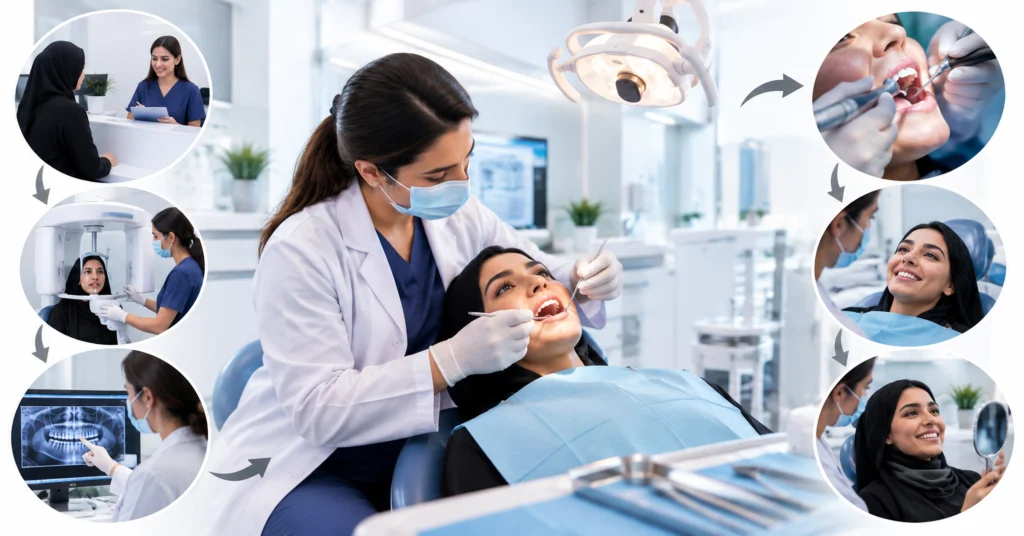
When you arrive for an emergency dental visit, the clinical team typically follows a structured workflow to diagnose and stabilize your condition:
- Triage and Medical History: Reviewing your symptoms, pain timeline, and general health background.
- Clinical Examination: Visually inspecting the affected area, checking bite alignment, and testing tooth vitality.
- Diagnostic Imaging: Taking targeted digital dental X-rays to visualize bone levels, root tips, and hidden decay.
- Diagnosis: Identifying the underlying cause of your pain or trauma.
- Pain Relief and Stabilization: Administering local anesthesia or performing emergency procedures to provide immediate comfort.
- Definitive Treatment Plan: Discussing long-term restorative solutions such as fillings, crowns, root canal therapy, or extractions. Undergoing structured clinical triage with an emergency dentist Sharjah leads to an accurate diagnosis.
Emergency treatments depend entirely on clinical diagnosis. Facilities such as the University Dental Hospital Sharjah emphasize structured triage, evaluation, and stabilization for acute oral pain and trauma.
Do Emergency Dental Problems Always Need Antibiotics?
No. A common misconception is that every dental pain or swelling requires a course of antibiotics. Antibiotics do not treat the underlying structural cause of a toothache, such as a dead nerve, deep cavity, or fractured root.
According to professional dental guidelines from the American Dental Association (ADA), definitive dental treatment such as root canal therapy, extraction, or drainage is the primary priority for managing pulpal and periapical pain conditions. Antibiotics are reserved for specific clinical situations where there is evidence of systemic involvement, fever, or spreading infection. Patients should never take leftover antibiotics or self-medicate without a formal prescription. Consulting an emergency dentist Sharjah ensures antibiotics are only prescribed when clinically necessary.
How Much Does an Emergency Dentist Cost in Sharjah?
Emergency dentist Sharjah costs vary depending on the nature of the diagnosis and the specific treatment required. Consultation fees, diagnostic X-rays, emergency pain relief interventions, and restorative procedures (such as temporary fillings, root canals, or extractions) all carry distinct costs. If you have private dental insurance, coverage varies by policy tier. It is always appropriate to ask the clinic staff for an expected cost breakdown before proceeding with non-life-threatening treatments. before proceeding with non-life-threatening treatments. **Discussing treatment costs upfront with your emergency dentist Sharjah provides financial transparency.
When Should You Call an Emergency Dentist Instead of Booking a Routine Appointment?
| Symptom / Condition | Recommended Urgency |
| Severe, persistent toothache | Urgent |
| Pain combined with facial swelling | Urgent |
| Dental abscess or gum boil | Urgent |
| Knocked-out adult tooth | Immediate (Within 60 minutes) |
| Large broken or cracked tooth with pain | Urgent |
| Uncontrolled oral bleeding | Emergency |
| Mild, painless chip | Routine |
| Routine cleaning and check-up | Routine |
| Breathing or swallowing difficulty from swelling | Emergency medical care immediately |
How to Choose an Emergency Dentist in Sharjah
When searching for reliable urgent dental care in Sharjah, consider the following selection criteria:
- Licensed Professionals: Ensure the dentists are fully licensed by health authorities (such as MOHAP or DHA/DOH equivalents).
- Diagnostic Capabilities: Look for clinics equipped with modern digital X-ray and imaging technology.
- Trauma Management: Experience in handling acute dental injuries and restorative emergencies.
- Clear Availability: Responsive communication channels for booking urgent appointments.
- Infection Control: Strict adherence to international sterilization and hygiene protocols.
Selecting a fully licensed emergency dentist Sharjah guarantees high sterilization and safety standards. Erum Saba Medical Center (ESMC) in Sharjah features a dedicated dental department equipped to handle urgent concerns such as severe toothaches, sudden swelling, broken or chipped teeth, lost restorations, and dental abscesses under stringent sterilization protocols and modern comfort-focused equipment.
Why Consider Emergency Dental Care at ESMC with an Emergency Dentist Sharjah?
The dental department at Erum Saba Medical Center provides structured urgent care for patients experiencing acute dental discomfort as emergency dentist Sharjah. Key attributes of the ESMC dental practice include:
- Targeted Urgent Care: Management of common dental emergencies, including severe toothaches, sudden swelling, broken or chipped teeth from injuries, lost fillings and crowns, and dental infections.
- Rigorous Sterilization: Adherence to high standards of instrument sterilization and infection control to ensure patient safety.
- Modern Equipment: Utilization of contemporary dental instruments and effective local anesthetic methods designed to maximize patient comfort during procedures.
Choosing Erum Saba Medical Center when searching for an emergency dentist Sharjah delivers compassionate, expert care.
Frequently Asked Questions
What is considered a dental emergency?
A dental emergency includes any urgent oral condition involving severe pain, uncontrolled bleeding, facial swelling, trauma, or a knocked-out tooth that requires immediate professional evaluation. Prompt evaluation by an emergency dentist Sharjah prevents minor dental pain from becoming severe.
Is severe toothache a dental emergency?
Yes. Severe, throbbing, or persistent tooth pain often signals deep decay, pulp inflammation, or infection that requires prompt professional diagnosis and treatment. Treating severe pulpitis with an emergency dentist Sharjah eliminates throbbing discomfort quickly.
Is a swollen face from a tooth infection dangerous?
Facial swelling resulting from a dental abscess can indicate a spreading bacterial infection. If swelling is accompanied by difficulty breathing, swallowing, or vision changes, it requires immediate hospital emergency care.
What should I do if my adult tooth is knocked out?
Handle the tooth only by its crown, keep it moist (in milk or its socket if possible), avoid touching or scrubbing the root, and seek emergency dental care immediately.
Is a broken tooth an emergency?
A broken tooth is an emergency if it causes severe pain, sharp edges that injure soft tissues, or exposes the inner nerve tissue of the tooth. Seeking prompt care from an emergency dentist Sharjah protects exposed nerve tissue from infection.
Do I need an emergency dentist for a lost filling?
If a lost filling or crown causes sharp pain, sensitivity, or leaves the tooth vulnerable to further damage, you should see an emergency dentist promptly. Re-seating loose dental restorations with an emergency dentist Sharjah prevents further structural decay.
Does a dental abscess always need antibiotics?
No. According to ADA guidelines, definitive dental treatment (such as draining the abscess, root canal therapy, or extraction) is the primary solution, with antibiotics reserved for cases showing systemic involvement.
When should I go to a hospital instead of a dentist?
You should visit a hospital emergency department if you experience severe facial trauma affecting the airway, uncontrollable bleeding, head injury, or major facial swelling causing difficulty breathing or swallowing.
Can an emergency dentist treat severe tooth pain?
Yes. An emergency dentist can perform diagnostic tests, identify the source of the pain, and provide immediate palliative treatment or definitive care.
How quickly should I see an emergency dentist?
Conditions involving trauma, knocked-out teeth, uncontrolled bleeding, or severe pain and swelling should be evaluated as soon as possible, ideally within hours. Visiting an emergency dentist Sharjah without delay ensures optimal long-term oral health outcomes.
Where can I find an emergency dentist in Sharjah?
You can contact the dental department at Erum Saba Medical Center (ESMC) in Sharjah to schedule an urgent dental assessment for acute symptoms.