Being told your pregnancy is high-risk can feel unsettling, but the label does not mean something will go wrong. It means your doctor would like to watch your pregnancy more closely, plan ahead and, in some cases, involve a specialist. This guide explains what high-risk pregnancy in Sharjah involves, who may need specialist care, what monitoring looks like and which symptoms need urgent attention.
ESMC provides specialist obstetric and gynecological care in Sharjah, including individualized pregnancy monitoring. If you are unsure whether your situation needs extra attention, you can book a consultation with an ESMC OB/GYN specialist at any stage of pregnancy.
Table of Contents
What Is a High-Risk Pregnancy?
A high-risk pregnancy is a clinical classification, not a prediction. It means that certain maternal, pregnancy-related or fetal factors may raise the chance of complications for the mother, the baby or both, so closer monitoring or specialist input is appropriate. The aim of the label is to help doctors identify problems early and plan care. As the NICHD notes, a high-risk pregnancy needs extra attention, and many women with this label go on to have healthy pregnancies with the right care.
Factors usually fall into three broad groups. Having one of them does not automatically decide your care plan; your doctor looks at your whole picture.
Maternal health factors
Some health conditions that exist before or develop during pregnancy may call for additional monitoring, including:
- high blood pressure (hypertension)
- diabetes, including diabetes that was present before pregnancy
- certain heart conditions
- thyroid or other endocrine disorders
- kidney disease
- autoimmune conditions
Pregnancy-related factors
Other factors arise from the pregnancy itself or from earlier pregnancies:
- a multiple pregnancy, such as twins
- placenta previa, where the placenta lies low and covers the cervix
- previous cesarean deliveries
- preterm labor or early rupture of the membranes
- pregnancy-related high blood pressure, including preeclampsia
- gestational diabetes
Fetal factors
Sometimes a scan or screening test shows something about the baby’s growth, development or amniotic fluid that needs a closer look. This can lead to extra ultrasound assessment or a referral, and it is often a precaution rather than a sign of a serious problem.
Who May Need High-Risk Pregnancy Care?
Many women managing a high-risk pregnancy in Sharjah are surprised to find that a common situation, such as pregnancy at 35 or twins, can change how their pregnancy is monitored. The table below shows examples and the reason extra attention may be considered.
| Situation | Why additional monitoring may be considered |
|---|---|
| High blood pressure | To watch for blood pressure complications for mother and baby |
| Diabetes | To monitor blood sugar control and the baby’s growth |
| Twin or multiple pregnancy | Closer follow-up of growth, position and timing of delivery |
| Previous pregnancy complications | To identify and reduce the chance of the same problem recurring |
| Previous cesarean deliveries | May affect planning of the pregnancy and delivery |
| Age-related factors | May call for an individualized assessment rather than a fixed rule |
| Certain chronic illnesses | Pregnancy can change how a condition needs to be managed |
| Abnormal fetal findings | May need specialist assessment and repeat scans |
Remember that none of these automatically means a complicated pregnancy. Your doctor will use your history, examination and test results to decide what level of monitoring fits you. If any of them applies to you, speak with an ESMC OB/GYN specialist early so a plan is in place.
Why Early Specialist Input Matters
Finding out early that you may have a high-risk pregnancy in Sharjah gives you and your doctor more options. Early input from a high-risk pregnancy specialist allows medicines to be reviewed for safety in pregnancy, long-term conditions to be stabilized and a monitoring schedule to be agreed before pressure builds. It also helps you understand which pregnancy complications are being watched for, so that you recognize warning signs quickly.
Women who have a long-term condition are often advised to speak with a doctor before they conceive. If that was not possible, it is still worth arranging specialist obstetric care as soon as you know you are pregnant.
When Should You See a High-Risk Pregnancy Specialist?
You do not need to wait for a problem before asking for specialist input. A visit to a high-risk pregnancy specialist may be appropriate when:
- you have a significant medical condition that was present before pregnancy
- a complication develops during pregnancy, such as raised blood pressure or high blood sugar
- an ultrasound or screening test shows something that needs further assessment
- you are expecting twins or more
- you had a serious complication in a previous pregnancy
- your pregnancy needs extra maternal or fetal monitoring
- your own OB/GYN recommends specialist input
Age on its own does not mean specialist care is essential. Many women over 35 have routine pregnancies, and your doctor will consider age together with your health and pregnancy history. Regular antenatal care in Sharjah is the foundation, and a specialist adds to it when your situation calls for it.
What Happens During High-Risk Pregnancy Care?
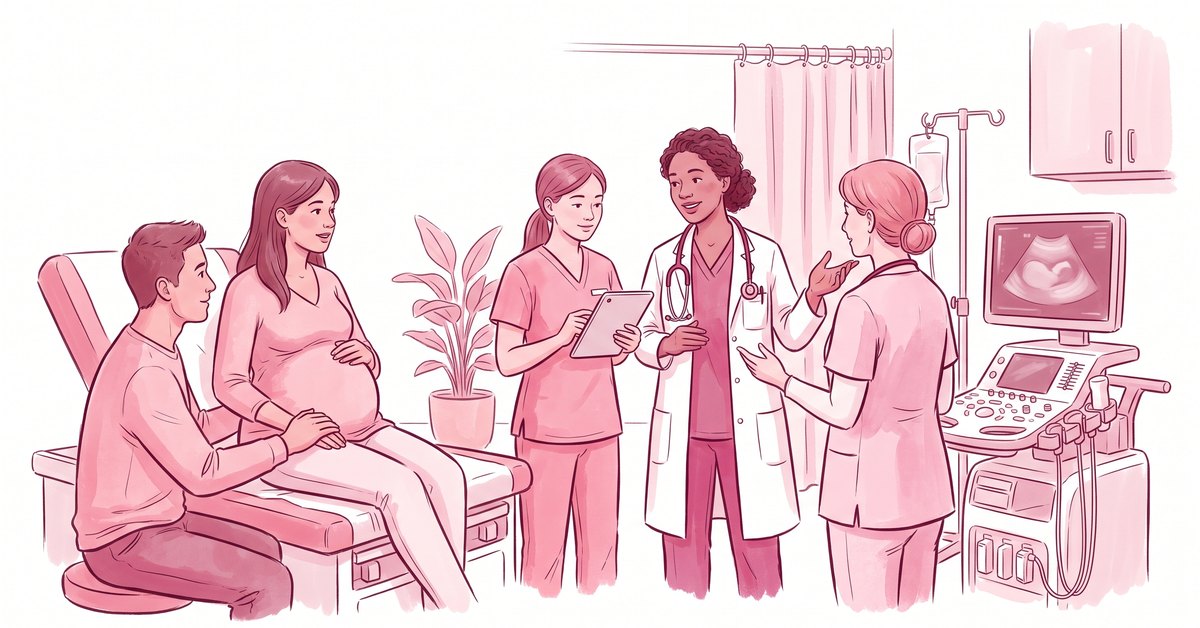
High-risk pregnancy care is a pathway, not a fixed package of tests, and it is designed to catch pregnancy complications early. Your plan is built around your particular risks, and it may change as your pregnancy progresses. Common elements are described below. Guidance from the Mayo Clinic also outlines what many women can expect.
Medical history and risk assessment
Your first visit usually starts with a detailed history: existing conditions, medicines, earlier pregnancies, family history and how this pregnancy has gone so far. This helps your doctor identify what needs watching.
Blood pressure and maternal monitoring
Blood pressure and general health checks are repeated at planned intervals. If you have high blood pressure or diabetes, you may also be asked to monitor readings at home and bring them to appointments.
Blood and urine testing where clinically indicated
Tests are chosen for a reason. They may include blood tests to check for anemia or blood sugar problems and urine tests that screen for infection or protein. Your doctor will explain why each test is advised.
Ultrasound and fetal assessment
Ultrasound is used to check the baby’s growth, position and amniotic fluid, and the position of the placenta. More frequent scans are sometimes recommended, depending on the identified risk. You can read more about pregnancy ultrasound at ESMC.
Additional monitoring based on the identified risk
Depending on your situation, your doctor may recommend extra checks such as growth scans or fetal monitoring. The frequency is individual, so avoid comparing your schedule with someone else’s.
Birth and delivery planning
Planning for delivery is part of specialist obstetric care. Your doctor will talk through the timing and place of birth, the possible modes of delivery and what support the baby may need, so there are fewer surprises later in pregnancy.
High-Risk Pregnancy Does Not Mean You Cannot Have a Healthy Pregnancy
The classification exists so that doctors can act early, and early action matters just as much for a high-risk pregnancy in Sharjah as anywhere else. In practice, many risk factors can be managed, and early identification gives your care team time to respond. Reassurance should not replace care, though. Attending your scheduled appointments, taking medicines as advised and reporting new symptoms are the most useful things you can do.
No honest source can promise a particular outcome. What good care can do is make sure that problems are found promptly and that decisions are made with you, step by step.
Warning Signs That Need Urgent Medical Attention
Do not wait for your next appointment if you notice any of the following. Seek urgent medical attention or emergency care if you have severe or concerning symptoms:
- vaginal bleeding
- severe abdominal pain
- a severe or persistent headache
- changes in vision
- sudden significant swelling of the face, hands or feet
- reduced baby movements, if you are far enough along to feel them
- leaking fluid from the vagina
- symptoms that suggest very high blood pressure or another sudden complication
If you are unsure whether a symptom is serious, it is safer to call your doctor or go to the nearest emergency department than to wait.
How to Prepare for Your First High-Risk Pregnancy Appointment
A little preparation makes the first visit far more useful. Try to bring:
- a list of your current medicines, including supplements
- reports from earlier pregnancies, scans and tests
- details of long-term conditions and who treats them
- your questions, written down so you do not forget them
- a partner or family member for support, if you wish
It also helps to note how you feel day to day, including headaches, swelling, movements of the baby and any bleeding, because patterns are easier to assess when they are recorded.
Questions to Ask Your Specialist
There are no silly questions in a high-risk pregnancy. You may want to ask:
- Why is my pregnancy considered high-risk?
- What will be monitored, and how often?
- Which symptoms should make me call you or go to emergency care?
- Do any of my medicines need to change?
- Will I need extra scans or tests?
- What are the likely options for the birth?
- Who should I contact outside clinic hours?
Good specialist obstetric care involves clear answers to these questions, in plain language, so that you feel part of every decision.
High-Risk Pregnancy Care at ESMC in Sharjah
ESMC offers specialist obstetric care in Sharjah, including management of a high-risk pregnancy in Sharjah and individualized pregnancy monitoring. Our approach is built on continuity: the same team follows your pregnancy, explains each step and adjusts the plan as things change. Our gynaecology department brings together antenatal care, scans and specialist review.
You can read about Dr. Erum Saba, Specialist Obstetrician and Gynecologist, whose profile lists high-risk pregnancy management among her areas of expertise, and about Dr. Iman Gassem, whose profile also includes high-risk pregnancy. For a wider overview, see our high-risk pregnancy management guide.
Ready to talk through your own situation? Book a high-risk pregnancy consultation with an ESMC specialist, or meet our obstetrics and gynecology team through the gynaecology department page.
Frequently Asked Questions
What is considered a high-risk pregnancy?
A high-risk pregnancy is one in which maternal, pregnancy-related or fetal factors may increase the chance of complications, so closer monitoring or specialist care is advised. It is a classification that guides care, not a prediction that something will go wrong.
What conditions can make pregnancy high-risk?
Factors include high blood pressure, diabetes, certain heart, kidney or thyroid conditions, a multiple pregnancy, placenta previa, previous cesareans or earlier pregnancy complications. Your doctor decides how much each factor matters in your case.
Is pregnancy after age 35 always high-risk?
No. Pregnancy after 35 can carry a higher chance of some complications, so doctors may suggest an individualized assessment, but many women over 35 have uncomplicated pregnancies. Age is considered together with your health and pregnancy history.
Do twins automatically require high-risk pregnancy care?
A twin pregnancy usually needs closer monitoring of growth and timing of delivery than a single pregnancy, so it is often followed with extra attention. The exact plan depends on how the pregnancy develops.
When should I see a high-risk pregnancy specialist?
Consider a specialist if you have a significant medical condition, a complication in this pregnancy, an abnormal scan or test, a multiple pregnancy, or a serious complication in a previous pregnancy. You can also ask for referral whenever your own doctor recommends specialist input.
How often are high-risk pregnancies monitored?
There is no single schedule. Visits and scans are planned around your specific risks and may become more frequent if your condition changes. Your doctor will explain the plan and the reason for each check.
Can a high-risk pregnancy result in a normal delivery?
Often it can, but this depends on the reason for the risk and how the pregnancy progresses. Your doctor will discuss delivery options with you and revisit them as your pregnancy develops.
Where can I get high-risk pregnancy care in Sharjah?
ESMC provides specialist obstetric and gynecological care in Sharjah, including management of high-risk pregnancies and individualized monitoring. You can book a consultation through the ESMC contact page.