
Finding an ovarian cyst on an ultrasound can be worrying, particularly when you do not know whether it is harmless, whether it will go away or whether you need surgery. Many ovarian cysts do not need immediate treatment. The right approach depends on the cyst’s characteristics, your symptoms, your age and your overall situation.
This guide to ovarian cyst treatment in Sharjah explains how cysts are assessed, when watching and waiting is reasonable, and when treatment or an operation may be considered. If you already have a report you are unsure about, you can book an ovarian cyst consultation in Sharjah with ESMC.
Table of Contents
What Is an Ovarian Cyst?
An ovarian cyst is a fluid-filled sac, or sometimes a structure containing tissue, that forms in or on an ovary. Cysts have different causes and appearances. Some form as a normal part of the monthly cycle and are called functional cysts, while others are linked to conditions that need further evaluation. The NHS notes that many cysts are harmless and go away without treatment. Not all ovarian cysts are the same, which is why your own scan findings matter more than general rules.
What Ovarian Cyst Symptoms Can You Expect?
Many cysts cause no symptoms and are found by chance during a scan done for another reason. When ovarian cyst symptoms do occur, they can include:
- pelvic pain
- discomfort in the lower abdomen
- bloating or a feeling of fullness
- pain during sex
- changes in your periods in some cases
- pressure on the bladder or bowel when a cyst is large
These symptoms can have other causes, so they do not by themselves show that you have a cyst. Persistent pelvic pain is always worth discussing with a doctor, particularly if it is new or getting worse.
Common Types of Ovarian Cysts
Knowing the type of cyst often explains why one woman is watched and another is treated. The main groups are:
- Functional cysts: follicular and corpus luteum cysts that relate to the monthly cycle and often settle by themselves.
- Endometriomas: cysts linked to endometriosis, which may cause pelvic pain and can be relevant to fertility.
- Dermoid cysts: cysts that contain different kinds of tissue and are usually present from birth, though they may be found later.
- Cystadenomas: cysts that develop from the surface of the ovary and can grow large.
The type is judged mainly from your scan, and sometimes from further tests, which is why the same word “cyst” can mean very different things for different women.
How Are Ovarian Cysts Diagnosed?
Assessment follows a few steps, and not every cyst needs extensive testing.
Medical history and symptoms
Your doctor will ask about your pain, periods, whether you could be pregnant, any previous cysts and your reproductive history.
Pelvic examination
Depending on your symptoms, an examination may be appropriate.
Ultrasound
An ultrasound helps to show the size and location of a cyst, how it looks, and whether it is simple and fluid-filled or has more complex features.
Further evaluation
Depending on what the scan shows, your doctor may recommend more tests or a repeat scan. If you have not yet had a general review, our guide to a women’s health checkup in Sharjah explains what a routine visit can cover.
When Does an Ovarian Cyst Need Treatment?
Ovarian cyst treatment in Sharjah, or closer evaluation, may be considered when there is:
- significant or persistent pain
- a cyst that has not gone away as expected
- a large cyst
- concerning features on imaging
- complications
- recurrent or troublesome cysts
- particular concerns because of your age or menopausal status
Broadly, management falls into three categories: monitoring, medical management and procedural or surgical treatment. The summary below shows how they differ.
| Approach | When it may be considered |
|---|---|
| Monitoring | Small cysts with simple features and no or mild symptoms; repeat scan after an interval your doctor advises |
| Medical management | Managing pain or other symptoms; does not necessarily make an existing cyst disappear |
| Surgical treatment | Large or persistent cysts, significant symptoms, concerning imaging or complications |
If you want to know which group you fall into, book an ovarian cyst consultation in Sharjah.
When Can an Ovarian Cyst Be Monitored?
Some cysts can safely be watched, and monitoring is a legitimate part of ovarian cyst treatment in Sharjah and elsewhere. Monitoring may involve a repeat ultrasound, keeping an eye on your symptoms, reassessment after an appropriate interval and returning sooner if symptoms get worse. The interval is not the same for everyone; it depends on the cyst and your situation, so follow your doctor’s advice rather than a general timetable.
Can Ovarian Cysts Go Away on Their Own?
Some do, especially certain functional cysts. Whether it is reasonable to wait depends on the type and size of the cyst, how it looks on the scan, your symptoms and your age or reproductive stage. Spontaneous resolution cannot be promised, which is why ovarian cyst treatment in Sharjah usually starts with a scan and a plan for review rather than with surgery.
Medication for Ovarian Cysts
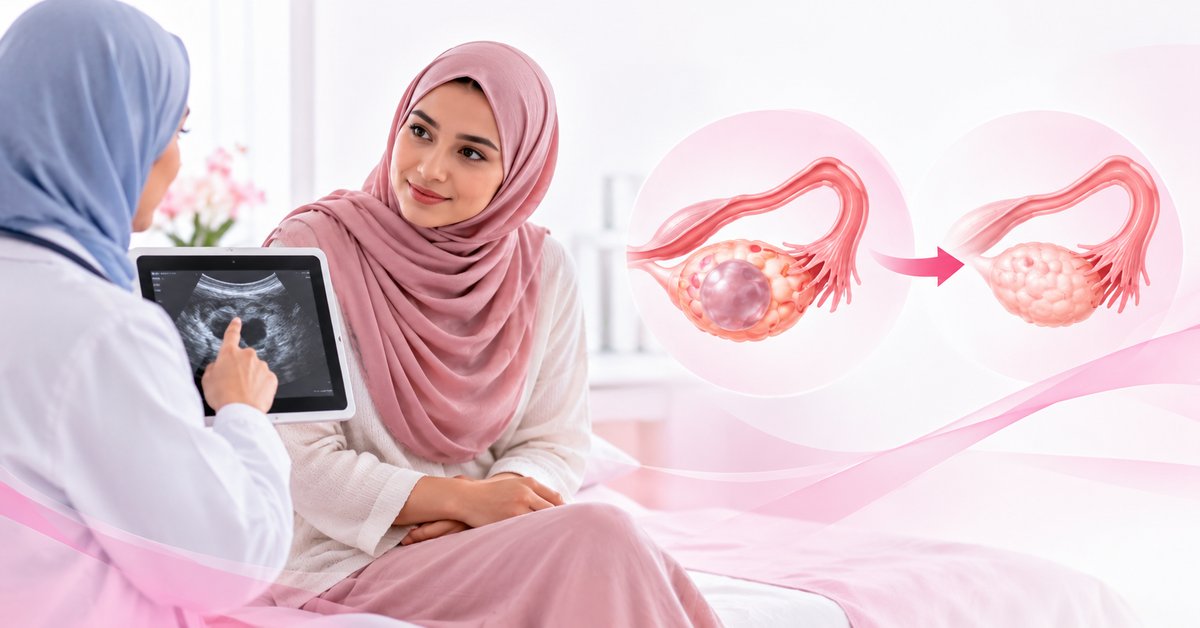
It helps to separate two ideas. Treating symptoms means that medication may sometimes be used to manage pelvic pain or other ovarian cyst symptoms. Treating the underlying cyst is different: medication is not appropriate for every type of ovarian cyst and does not necessarily make an existing cyst disappear. Hormonal contraception is not a universal treatment for ovarian cysts, and your doctor will explain whether it has a role in your case.
When Is Ovarian Cyst Surgery Considered?
Ovarian cyst surgery may be discussed when a cyst is large or persistent, symptoms are significant, imaging is concerning, complications occur, a cyst has not resolved as expected or your doctor believes removal is clinically appropriate. Minimally invasive keyhole surgery, called laparoscopy, can be an option for some patients, but it is not suitable for everyone, and the approach depends on the individual cyst.
What Is Ovarian Cyst Removal Surgery?
At a high level, ovarian cyst removal aims to take out the cyst while preserving healthy ovarian tissue where appropriate. The surgical approach depends on the cyst and the patient, and laparoscopic and other techniques may be considered. If you hope to have children in future, tell your doctor, because this will shape the plan. The Mayo Clinic provides a useful overview of the diagnosis and treatment pathway.
Can Ovarian Cysts Affect Fertility?
Many ovarian cysts do not prevent pregnancy, and ovarian cyst treatment in Sharjah is planned with your fertility goals in mind. The effect on fertility depends on the type of cyst and any underlying condition. For example, conditions such as endometriosis can be associated with ovarian cysts and fertility concerns, and surgery involving an ovary needs careful thought when future fertility matters. Having an ovarian cyst does not automatically mean you will have fertility problems. Read more about endometriosis and, if conception is a concern, our guide to infertility treatment in Sharjah.
If you are planning pregnancy and have a cyst, speak with an ESMC gynecology specialist before treatment decisions are made.
When Is an Ovarian Cyst an Emergency?
Sudden severe symptoms can be associated with complications such as a cyst that twists the ovary (ovarian torsion) or one that bursts (rupture), and they should not be managed through an online article. Seek urgent medical attention if you have:
- sudden severe pelvic or abdominal pain
- severe pain with vomiting
- fainting or marked weakness
- heavy bleeding
- any symptom that suggests a serious complication
Go to an emergency department; do not wait for an appointment. Only a doctor can tell what is causing severe pain.
Ovarian Cysts Before and After Menopause
The approach can differ depending on reproductive stage. Before menopause, many ovarian cysts are benign and some resolve naturally. After menopause, a cyst may need a more individualized assessment depending on imaging, symptoms and other risk factors. This does not mean a cyst after menopause is automatically serious; it means your doctor will look at it more carefully. If you are in this stage, our menopause clinic guide may also be helpful.
Living With a Cyst While You Are Being Monitored
If your doctor has advised watching and waiting, you can still do a few practical things. Note any new pelvic pain or change in your periods, keep your follow-up scan date, take pain relief only as advised by your doctor, and avoid unexplained delays if your symptoms change. Knowing the warning signs described above helps you to act quickly if you need to, while staying calm about a cyst that your doctor considers low-risk.
Questions to Ask Your Gynecologist About an Ovarian Cyst
Taking a list to your appointment helps you get answers, especially when you are comparing options for ovarian cyst treatment in Sharjah. You might ask:
- What type of cyst do I have?
- How large is it?
- What did my ultrasound show?
- Does it need monitoring?
- When should I have follow-up imaging?
- Which symptoms should make me seek urgent care?
- Could it affect my fertility?
- Do I need medication or another treatment?
- If surgery is recommended, why?
- What treatment options suit my situation?
If your periods are also irregular, you may want to read about PCOS treatment in Sharjah, which is a separate condition that can involve the ovaries. Unlike a uterine fibroid, an ovarian cyst develops on the ovary; our fibroid treatment in Sharjah guide explains that difference.
Ovarian Cyst Treatment in Sharjah at ESMC
ESMC’s gynaecology department offers gynecological evaluation and assessment of ovarian cysts, individualized treatment planning, fertility-conscious discussions where relevant, and follow-up and monitoring. We explain each option and why we suggest it. For a general review of your health, ask about a women’s health checkup in Sharjah. To discuss your own results, book an ovarian cyst consultation in Sharjah or arrange a gynecology consultation in Sharjah with the ESMC team.
Frequently Asked Questions
Do all ovarian cysts need treatment?
No. Many cysts, particularly simple functional cysts, cause no problems and are only monitored. Treatment is considered when a cyst is large, persistent, causes significant symptoms or has concerning features on scans.
Can an ovarian cyst go away on its own?
Some can, especially certain functional cysts, but this cannot be promised. Your doctor will decide if watching and waiting with a repeat scan is suitable for your cyst.
What is the best treatment for an ovarian cyst?
There is no single best treatment. Options range from monitoring to medication for symptoms to surgery, and the choice depends on the cyst type, size, appearance, your symptoms and your age and plans for pregnancy.
When does an ovarian cyst require surgery?
Surgery may be discussed when a cyst is large or persistent, symptoms are significant, imaging is concerning or complications occur. Ovarian cyst removal is one option among several, and your gynecologist will explain why surgery is or is not needed in your case.
Can ovarian cysts affect fertility?
Many ovarian cysts do not affect your ability to conceive. The effect depends on the type of cyst and any underlying condition, such as endometriosis. Tell your doctor if you plan a pregnancy.
How are ovarian cysts diagnosed?
Doctors combine your history and symptoms, a pelvic examination where appropriate and an ultrasound that shows the cyst’s size, location and appearance. Further tests are used only when needed.
Can ovarian cysts cause irregular periods?
They can in some cases, depending on the type of cyst. Irregular periods can also come from other conditions such as PCOS, so they should be assessed rather than assumed to come from a cyst.
What symptoms can indicate an ovarian cyst complication?
Sudden severe pelvic or abdominal pain, pain with vomiting, fainting or heavy bleeding can signal a complication such as torsion or rupture. These need urgent emergency care.
Are ovarian cysts dangerous after menopause?
A cyst after menopause needs a more individualized assessment, but it is not automatically serious. Your doctor will consider imaging, symptoms and risk factors to decide on follow-up or treatment.
Where can I get ovarian cyst treatment in Sharjah?
You can arrange an assessment with the ESMC gynecology team in Sharjah. They will review your scan, discuss whether monitoring or treatment is appropriate and plan follow-up. Book through the ESMC contact page.