
A tooth that hurts when you drink something cold, aches while you chew or keeps throbbing at night is hard to ignore. Sometimes the problem can be solved with a filling or other conservative dental care. In other cases, the soft tissue inside the tooth has become inflamed or infected, and a root canal may be recommended.
This guide to root canal treatment in Sharjah explains the signs to look for, how a dentist decides, what happens during the treatment and what to expect afterwards. It cannot diagnose you: only a dental examination can show whether a root canal is right for your tooth. If you already have a toothache, you can book a root canal consultation in Sharjah with the ESMC dental team.
Table of Contents
What Is a Root Canal?
Every tooth has soft tissue inside it called the pulp, which contains nerves and blood vessels. Deep decay, cracks, injury or repeated dental work can damage the pulp, and it can then become inflamed or infected. The root canal procedure removes the affected tissue from inside the tooth, cleans the inner canals and seals them. The tooth is then restored so that it can work normally again.
The American Association of Endodontists explains that patients typically need a root canal when there is inflammation or infection in the roots of a tooth. The aim is to treat the tooth, not to remove it.
What Are the Root Canal Symptoms to Watch For?
Root canal symptoms vary from person to person, and some people have very few. The signs below are common reasons to see a dentist, but none of them proves that you need a root canal.
Persistent toothache
Pain that lasts, comes on by itself or wakes you at night should be assessed. Prolonged root canal pain of this kind is a sign that something inside the tooth may be wrong.
Sensitivity to hot or cold
Brief sensitivity is common and often has simple causes. Sensitivity that lingers after the hot or cold stimulus has gone is more worrying and is worth mentioning to your dentist.
Pain when biting or chewing
Pain on pressure can point to a problem around the root of the tooth, though a crack or a high filling can also cause it.
Swelling around the tooth
Swelling of the gum or face near a painful tooth needs prompt attention. See the emergency section below for the warning signs that cannot wait.
Tender or swollen gums
Gums that look red, swollen or tender near one tooth may indicate infection, although gum disease can look similar.
Tooth discoloration
A tooth that darkens, becoming grey or brown compared with its neighbors, may have damaged pulp.
A recurring dental problem
A tooth that keeps causing trouble after fillings or other treatment deserves a closer look.
These root canal symptoms do not prove that you need treatment. Other dental conditions cause similar problems, and some teeth that need a root canal cause no pain at all, which is why regular check-ups matter.
What Causes a Tooth to Need Root Canal Treatment?
The common causes are:
- deep tooth decay that reaches the pulp
- repeated dental procedures on the same tooth
- a crack or fracture in the tooth
- a knock or other dental trauma
- damage to the pulp from other causes
Untreated decay does not stay still; it can progress deeper into the tooth over time. If you clench or grind your teeth, cracks are more likely, so our guide to bruxism treatment may be useful.
How Does a Dentist Determine Whether You Need a Root Canal?
Diagnosis combines several pieces of information. No single test decides it.
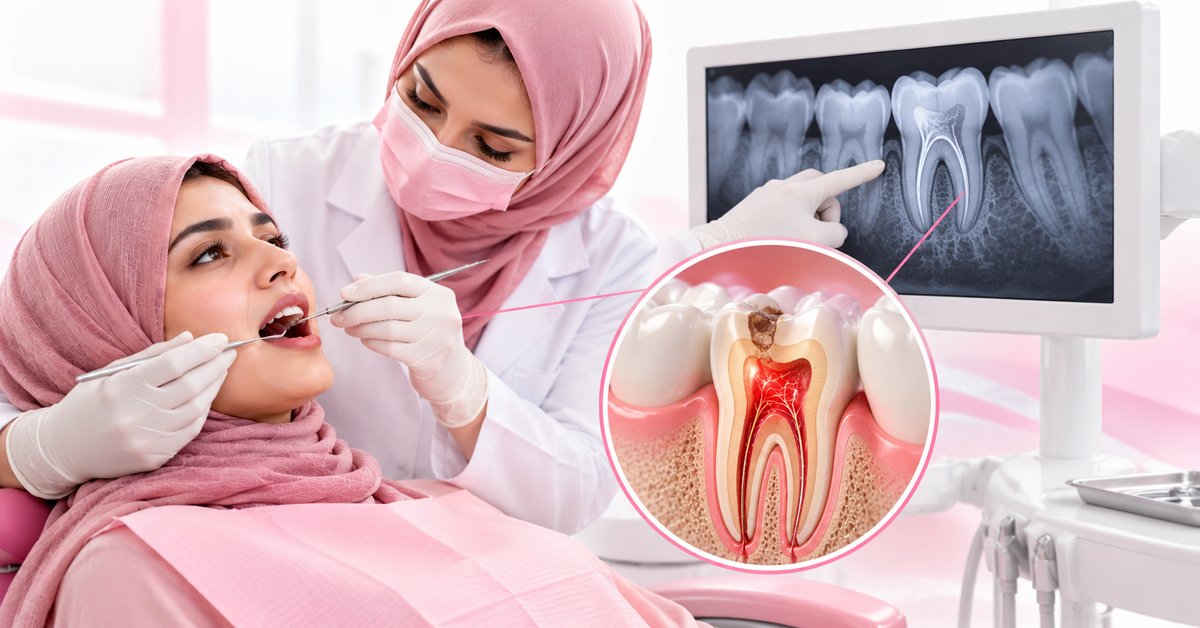
Dental examination
Your dentist will ask about your symptoms and look at the condition of the tooth and the surrounding gums. They may also test how the tooth responds to sensitivity tests.
Dental X-rays
Imaging helps the dentist assess the roots of the tooth, the bone around them and how far any infection or damage has spread. An X-ray on its own does not make the diagnosis.
Clinical judgment
The final recommendation on root canal treatment in Sharjah, or anywhere else, rests on your symptoms, the examination and appropriate imaging taken together. If you have been told you might need treatment, you can book an appointment with an ESMC dentist to talk it through.
Root Canal Treatment vs. Tooth Extraction
Many people ask whether it is better to save a painful tooth or have it taken out. When weighing root canal treatment in Sharjah against extraction, the answer depends on the condition of the tooth, and a root canal is not always the better choice. The table below shows the main differences.
| Root canal treatment | Tooth extraction |
|---|---|
| Treats the inside of the affected tooth | Removes the tooth |
| Can keep the natural tooth when appropriate | The tooth is no longer retained |
| Usually followed by a restoration | May need replacement planning |
| Suitable only when the tooth can be treated and restored | May be considered when a tooth cannot be predictably saved |
The NHS notes that an infected tooth left untreated may eventually need to be extracted, which is one reason early assessment helps.
What Happens During the Root Canal Procedure?
Knowing the root canal procedure in advance takes away much of the worry. In outline, it follows seven steps, although your dentist will tailor them to your tooth.
Step 1: Examination and diagnosis
The dentist confirms the diagnosis and explains the treatment plan before starting.
Step 2: Local anesthesia
The area is numbed so that treatment can be carried out comfortably.
Step 3: Accessing the tooth
The dentist makes a small opening to reach the inner part of the tooth.
Step 4: Removing the affected pulp
The damaged or infected tissue is taken out of the tooth.
Step 5: Cleaning and shaping
The root canals are cleaned and prepared so that they can be sealed.
Step 6: Filling and sealing
The cleaned canals are filled and sealed to help protect them.
Step 7: Restoring the tooth
A filling or another restoration may be needed to protect the tooth and restore its function. If you want to understand which steps apply to you, book a root canal consultation in Sharjah and ask your dentist to walk you through the plan.
Does a Root Canal Hurt? Understanding Root Canal Pain
Root canal treatment is carried out under local anesthesia, so the goal is to control pain during the procedure. Many people are surprised to find it feels similar to having a filling. Understanding root canal pain before you start often reduces anxiety. Nobody can promise that treatment will be completely painless, and you should tell your dentist straight away if you feel discomfort so that it can be managed.
After treatment, some tenderness or sensitivity is common as the surrounding tissues recover. The NHS says that soreness should ease within a couple of weeks. If root canal pain becomes significant or gets worse instead of better, contact your dentist.
How Long Does Root Canal Treatment Take?
There is no single answer. How long root canal treatment takes depends on:
- which tooth is being treated
- the number and complexity of its canals
- how much infection or damage there is
- whether additional treatment is needed
- whether the tooth can be finished in one visit or needs several appointments
The NHS says treatment usually takes two or more appointments, each lasting an hour or more, but your dentist can tell you what to expect for your own tooth.
Root Canal Recovery: What Happens After Treatment?
Root canal recovery is usually straightforward, and most people return to normal activities quickly. After treatment:
- mild tenderness is common
- follow your dentist’s instructions about eating and medication
- avoid putting unnecessary stress on the treated tooth until it has been properly restored
- complete the recommended restoration
- attend any follow-up your dentist advises
The final restoration is important. A root canal does not mean the tooth needs no further dental care; the tooth still has to be protected. If you would like help planning your treatment, speak with an ESMC dentist.
Why Does a Tooth Often Need a Crown After Root Canal Treatment?
Some root-treated teeth are restored with a crown or another protective restoration because the tooth can be structurally weakened, particularly when a lot of the tooth has been lost to decay or damage. Back teeth, which take heavy chewing forces, are more likely to need one.
This does not mean every root-treated tooth needs a crown. The restoration is chosen by your dentist according to the individual tooth.
Can a Root Canal Save Your Natural Tooth?
In appropriate cases, yes. Root canal treatment can allow a damaged or infected tooth to be kept instead of extracted. However:
- the tooth must be restorable
- the surrounding structures matter
- success depends on the clinical situation
- good oral hygiene and a proper restoration remain important
No dentist can promise that every tooth can be saved, and an honest assessment includes saying when extraction is the more sensible option.
When Is a Dental Problem an Emergency?
Some dental infections, and some severe root canal symptoms, need urgent care, not a routine appointment. Seek urgent dental or medical assessment if you have:
- significant facial swelling
- swelling that is spreading
- difficulty breathing
- difficulty swallowing
- severe pain you cannot control
- fever together with dental swelling
- rapidly worsening symptoms
Difficulty breathing or swallowing with facial or mouth swelling is an emergency. Go to an emergency department without waiting for an appointment. For tooth pain that is urgent but not life-threatening, see our guide to an emergency dentist for tooth pain in the UAE. Antibiotics alone are not a substitute for dental treatment.
How Can You Reduce the Risk of Needing a Root Canal?
Prevention cannot be guaranteed, but early dental care prevents some problems from progressing to the point where root canal treatment in Sharjah or elsewhere is needed.
- brush regularly with fluoride toothpaste
- clean between your teeth
- limit frequent sugary foods and drinks
- attend regular dental examinations
- treat cavities early
- protect your teeth during sports or other risky activity
- do not ignore persistent dental pain
Root Canal Treatment in Sharjah at ESMC
ESMC’s dental department offers dental assessment, diagnosis and restorative care in Sharjah. Our senior general dentist, Dr. Farhan Hamid Saif, lists root canals among his areas of expertise. ESMC provides root canal treatment in Sharjah as part of wider restorative care. We build each plan around your tooth, explain the reasons for each step and tell you plainly when another option is better.
To start, book a root canal consultation in Sharjah, or find out more about dental care in Sharjah and our general dentist in Sharjah before you visit.
Frequently Asked Questions
What are the signs that I may need a root canal?
Common signs include a lasting toothache, sensitivity to hot or cold that lingers, pain when biting, swelling near the tooth, tender gums and a darkened tooth. These do not prove you need a root canal, so see a dentist for an examination.
Does root canal treatment hurt?
Treatment is done under local anesthesia, so the aim is to control pain during the procedure. Some tenderness afterwards is common. No one can promise it will be completely painless.
How long does a root canal take?
It depends on the tooth, the number of canals, the extent of infection and whether extra treatment is needed. Some teeth are finished in one visit and others need more than one appointment.
Can a root canal save my natural tooth?
In appropriate cases, yes. The tooth must be restorable, and success depends on the clinical situation and on proper restoration and oral hygiene afterwards.
Is root canal treatment better than extraction?
Not always. A root canal aims to keep the natural tooth, while extraction removes it and may need replacement planning. The right choice depends on whether the tooth can be predictably saved.
How long does it take to recover after a root canal?
Mild tenderness is common and usually settles over days to a couple of weeks. Follow your dentist’s instructions, protect the tooth until it is restored and contact the dentist if pain worsens.
Will I need a crown after a root canal?
Some root-treated teeth do, particularly if much of the tooth structure is gone or it is a back tooth, but not all. Your dentist will decide for the individual tooth.
Can a tooth need a root canal without severe pain?
Yes. Some infected or damaged teeth cause little or no pain, which is why they are often found at routine check-ups or on X-rays.
What happens if an infected tooth is left untreated?
The infection can spread and the tooth may eventually need to be extracted. Swelling of the face, fever or difficulty breathing or swallowing needs urgent medical care.
Where can I get root canal treatment in Sharjah?
You can arrange an assessment with the ESMC dental team in Sharjah. They will examine the tooth, explain your options and plan treatment. Book through the ESMC contact page.