PRP for hair loss UAE searches have exploded in recent years, but so has the marketing surrounding it. You noticed it in the shower drain first, then on your pillow, and finally in your hairbrush. You told yourself it was seasonal, or stress, or the desalinated water here in the Emirates. It has been eight months and the shedding is still happening.
You have tried the expensive thickening shampoo from the pharmacy, the biotin capsules your friend recommended, and the scalp serum you saw on Instagram. Despite all of it, your hair looks visibly thinner at the crown and at the temples than it did two years ago. You want to know honestly: does PRP actually work, or is it another treatment that sounds more promising than it is?
Platelet-Rich Plasma therapy is one of the most searched aesthetic treatments in the region and also one of the most overpromised. This guide gives you what the marketing does not: a clear, evidence-based answer to whether PRP is appropriate for your specific type of hair loss, what realistic results look like, and exactly what to expect at Erum Saba Medical Center in Sharjah.
Table of Contents
Understanding Your Hair Loss First: Type Matters
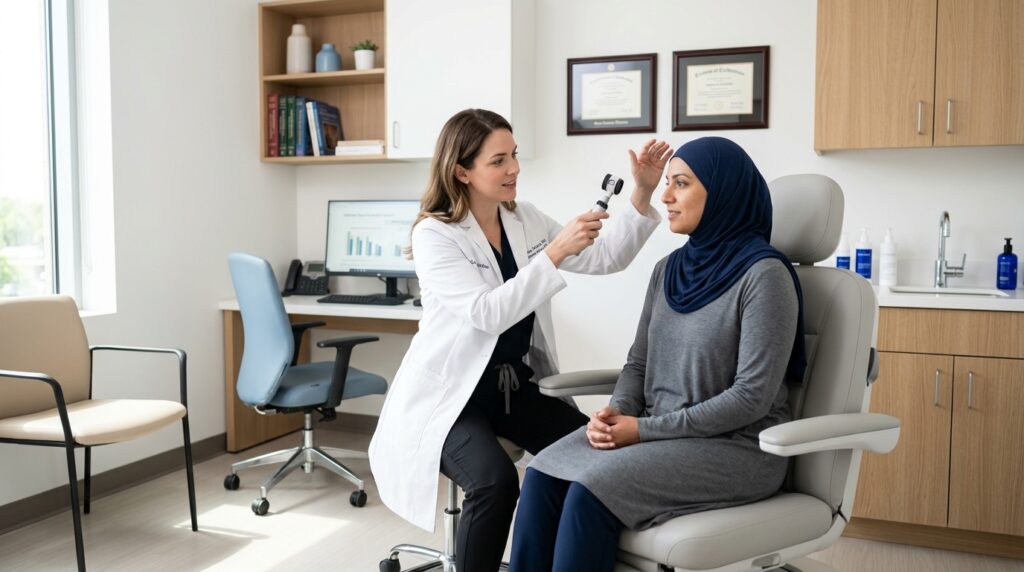
PRP does not work for every type of hair loss. The specific cause of your shedding determines whether PRP is an appropriate treatment, a complementary tool, or not indicated at all. Treating hair loss without first identifying the underlying clinical cause is one of the most common and most costly mistakes women make.
Androgenetic Alopecia (Female Pattern Hair Loss)
Gradual thinning at the crown and widening of the centre part line, caused by genetic sensitivity of hair follicles to dihydrotestosterone (DHT). This is the most common type of permanent hair loss in women and the condition with the strongest clinical evidence base for PRP therapy. Because the follicles are miniaturising but not yet lost, they remain responsive to growth factor stimulation.
Telogen Effluvium (Diffuse Shedding)
A sudden or gradual increase in overall shedding triggered by a specific event: childbirth, rapid weight loss, surgery, crash dieting, thyroid dysfunction, severe stress, or nutritional deficiency. This is extremely common among women in the UAE and frequently misidentified as permanent hair loss. In many cases it resolves on its own once the underlying trigger is removed. PRP can accelerate recovery but may not be strictly necessary if the root cause is addressed.
Postpartum Hair Loss
A specific and very common form of telogen effluvium triggered by the sudden drop in oestrogen levels after delivery. It affects a significant proportion of our patient population in Sharjah. It is often addressed as part of a comprehensive postpartum restoration plan alongside other treatments in the yummy mummy makeover Sharjah programme.
Alopecia Areata
Patchy hair loss caused by an autoimmune response. PRP has emerging evidence as a supportive treatment but is not a first-line option and must be managed with expert dermatological input to control the underlying inflammation.
Traction Alopecia
Hair loss localised at the hairline and temples from repeated tension caused by tight hairstyles, heavy braids, extensions, or securely fastened hijab pins. This is increasingly observed in UAE communities. PRP cannot reverse traction alopecia if the follicles have been permanently scarred. Early intervention before scarring occurs is essential.
Scarring Alopecias
A group of inflammatory conditions that permanently destroy hair follicles and replace them with scar tissue.
PRP is strictly contraindicated in active scarring alopecias. These conditions require immediate specialist dermatological management. Do not begin any cosmetic hair treatment without a confirmed diagnosis.
A proper clinical diagnosis before any treatment is the absolute foundation of effective hair loss management. The team at Aesthetics and Dermatology at ESMC assesses the exact cause of hair loss at every initial consultation before recommending any procedure.
What Is PRP and How Does It Work for Hair?
Platelet-Rich Plasma is a concentrated biological solution produced from a small sample of your own blood, drawn at the clinic and spun in a specialised centrifuge to isolate the platelet-rich plasma layer. Platelets contain a dense supply of growth factors including platelet-derived growth factor (PDGF), vascular endothelial growth factor (VEGF), insulin-like growth factor (IGF), and transforming growth factor (TGF-beta).
When this concentrated growth factor solution is injected into the scalp at the level of the hair follicles, it extends the active growth phase of the hair cycle (anagen), stimulates microcirculation to improve nutrient supply to the follicle, and slows the miniaturisation process caused by androgenetic alopecia.
According to a 2024 systematic review and meta-analysis published in PMC covering 21 randomised controlled trials and 628 participants, PRP treatment significantly enhances hair density and thickness in women experiencing telogen effluvium and female pattern hair loss, with adverse effects that were generally mild and transient.
What PRP cannot do is equally important. It cannot regenerate follicles permanently destroyed by scarring. It cannot reverse advanced androgenetic alopecia where follicles have already been completely lost. It is not a permanent cure and requires maintenance. Results develop gradually and are not visible for 3 to 6 months after beginning treatment.
What the Clinical Evidence Actually Says
What the Evidence Supports
The strongest clinical evidence for PRP exists for androgenetic alopecia and chronic telogen effluvium. The 2024 PMC systematic review covering 21 RCTs and 628 women confirmed statistically significant, measurable improvements in hair density and thickness across multiple independent trials, with no notable difference in pain or discomfort between PRP and control groups.
A 2021 comprehensive PMC systematic review and meta-analysis on PRP for female androgenetic alopecia covering 42 studies and 1,569 cases including 776 female participants found that PRP showed positive efficacy in treating female pattern hair loss in hair density compared to control groups. For patients with a negative response to topical minoxidil, PRP offered an effective alternative treatment option.
A 2024 meta-analysis comparing PRP versus topical minoxidil across 9 RCTs and 451 participants found no significant difference in hair density outcomes between the two treatments, meaning PRP is clinically comparable to minoxidil for androgenetic alopecia in terms of measurable outcomes.
The Honest Limitations
Standardisation remains a significant challenge across global PRP literature. Different clinics use different centrifuge protocols, platelet concentration ratios, injection depths, and treatment intervals, making direct comparison between studies complex. The majority of high-quality studies follow patients for 6 to 12 months, with long-term data beyond 2 to 3 years still limited. No single protocol has been universally mandated as the global standard.
PRP is not a miracle treatment. It is a clinically validated biological treatment with a genuine evidence base for specific types of hair loss, realistic expectations for gradual improvement, and a requirement for ongoing maintenance.
Who Is a Good Candidate for PRP in the UAE?
PRP is likely to produce meaningful results for:
Women with early to moderate androgenetic alopecia where follicles are miniaturising but still present. The earlier PRP is started in the thinning process, the more responsive the follicles will be. Women whose excessive shedding from telogen effluvium has persisted for 3 to 12 months and the underlying trigger has been identified and corrected, with PRP acting as a recovery accelerator. Women who are at least 3 months postpartum and have fully finished breastfeeding. Women with early-stage traction alopecia where follicle activity still remains before any permanent scarring.
PRP is not indicated or unlikely to produce meaningful results for:
Women with advanced female pattern hair loss where frontal or crown areas are completely smooth and bald. Women with active scalp infections, severe psoriasis, or intense localised inflammation. Women with platelet disorders, those on blood thinners, or those with certain autoimmune conditions. Women with confirmed scarring alopecias.
Many women in Sharjah present with hair loss caused by multiple overlapping factors: postpartum telogen effluvium combined with mild genetic thinning, aggravated by Vitamin D deficiency, iron deficiency, and chronic stress. An assessment that identifies all contributing factors produces far better outcomes than treating a single factor in isolation.
Book a PRP Hair Loss Consultation at ESMC Sharjah
The UAE-Specific Causes of Hair Loss Women Need to Know
Vitamin D and Iron Deficiency
Both are highly prevalent among women in the UAE. A systematic review and meta-analysis published in PMC on Vitamin D deficiency and alopecia found that 50.38 percent of patients with female pattern hair loss and 53.51 percent of patients with telogen effluvium had Vitamin D deficiency, with significantly lower Vitamin D levels compared to controls across all alopecia types studied. Low serum ferritin is also significantly associated with telogen effluvium in women, according to PMC research on iron and hair loss. PRP will not produce optimal results if these deficiencies are not corrected simultaneously.
Water Quality
The UAE relies primarily on desalinated water with a different mineral composition than what many expatriates grew up with. While direct clinical studies linking UAE desalinated water to permanent follicle damage are limited, consistent reports of increased hair brittleness and scalp sensitivity are worth discussing during your consultation.
Psychological Stress and Lifestyle
The high-achieving expatriate lifestyle in the UAE involves unique stressors: career demands, extended family separation, frequent lifestyle transitions, and heat-induced fatigue. Elevated systemic cortisol is a well-documented trigger that pushes follicles prematurely into the shedding phase, creating a cycle that PRP alone cannot fully resolve without lifestyle adjustments.
Heat and Scalp Environment
Sharjah’s intense summer heat increases scalp perspiration and sebum production, which can disrupt the scalp microbiome and contribute to follicular inflammation. Wearing a hijab or head covering in high temperatures can trap moisture and heat against the scalp if not managed with breathable fabrics, adding a local environmental factor that compounds existing shedding concerns.
The Combined Picture
The most common presentation at ESMC is not a single isolated issue. It is a combination of two or more overlapping factors acting simultaneously. PRP functions best as part of a holistic treatment strategy that corrects local environmental and nutritional challenges at the same time as the injections.
What the PRP Process Looks Like at ESMC
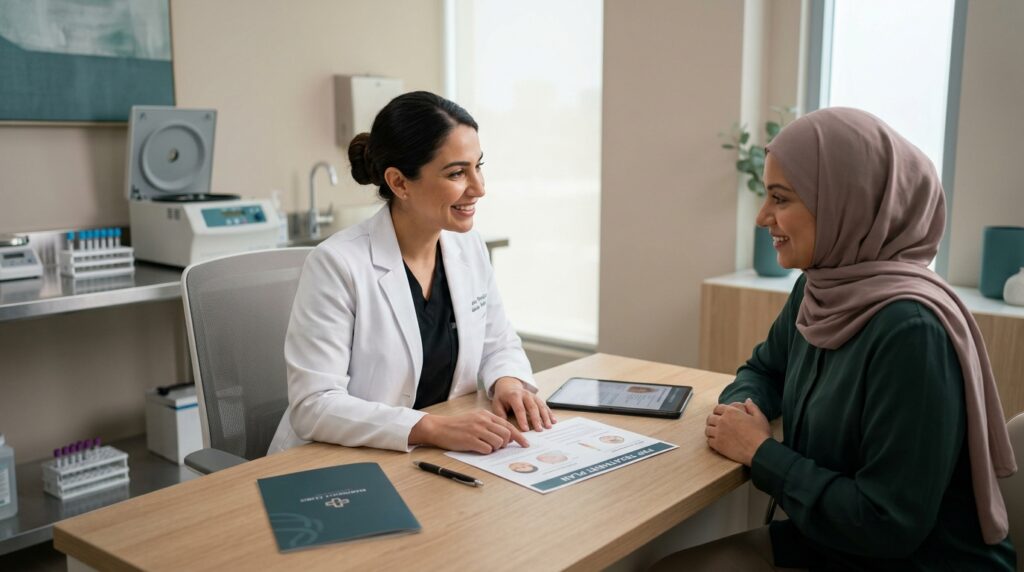
Step 1: Initial Consultation with Dr. Arsala Shariq
Your journey begins with a private consultation with Dr. Arsala Shariq, our Aesthetic Physician and Laser Specialist. This involves a detailed evaluation of your hair loss pattern, duration, and associated symptoms. A full medical history is compiled including recent pregnancies, thyroid health, nutritional habits, and current medications. A detailed scalp examination is performed and targeted blood tests are recommended if not recently done.
Step 2: Blood Tests and Metabolic Review
Laboratory panels covering iron, ferritin, Vitamin D, thyroid function, and key hormonal markers are reviewed before your first injection session. This ensures no hidden metabolic deficiency is limiting your body’s ability to respond to growth factor stimulation.
Step 3: The PRP Treatment Session
A small blood sample of approximately 20 to 30ml is drawn from your arm. The sample is spun in a clinical centrifuge for approximately 10 minutes to concentrate the platelet-rich layer. The resulting PRP is injected across the pre-mapped thinning areas of your scalp. The entire procedure takes 45 to 60 minutes. A topical numbing cream is applied beforehand to ensure comfort. Most women describe the sensation as mild stinging or localized pressure rather than sharp pain.
Step 4: Post-Session Care
Avoid washing your hair or applying any topical scalp products for the first 24 hours. Avoid intense exercise, saunas, and swimming pools for 48 hours. Mild scalp tenderness and occasional small bruises at injection sites are normal and resolve within 2 to 3 days. There is no downtime and you can return to your daily schedule immediately.
Step 5: The Treatment Course
A standard primary course consists of 3 sessions spaced 4 to 6 weeks apart. Initial changes typically become visible at the 3 to 4-month mark. Full clinical outcomes are assessed 6 months after completing the primary course. Maintenance sessions every 6 to 12 months are recommended to sustain hair density gains. Treatment starts from AED 150 per session at ESMC.
Realistic Expectations: What PRP Can and Cannot Do
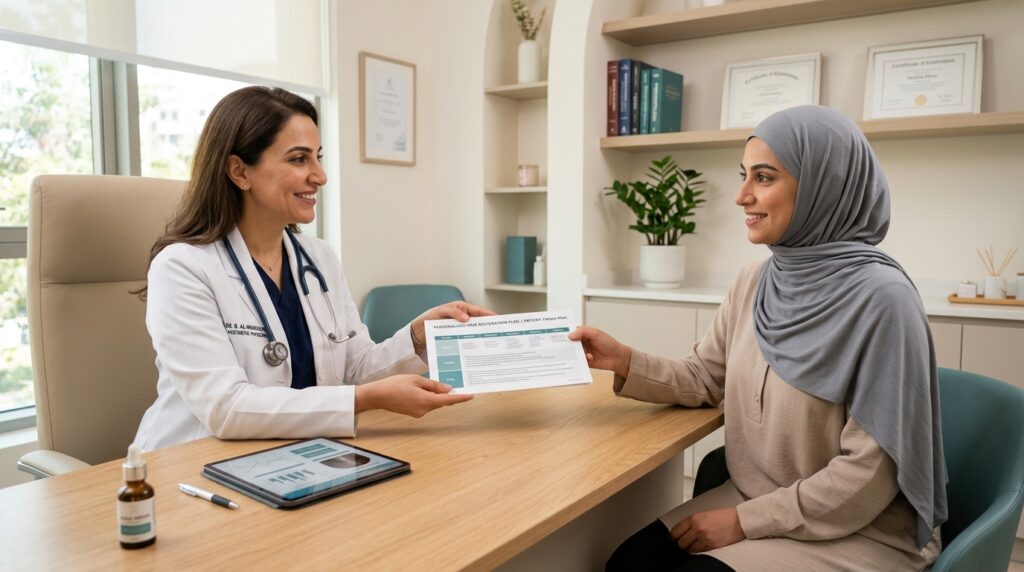
What you can realistically expect:
A measurable reduction in daily hair shedding, often noticeable after the second session. Gradual thickening of existing hair shafts as the growth cycle is extended. Improvement in overall hair density over a 3 to 6-month period. Stabilisation of progressive hair loss in androgenetic alopecia. Measurable changes trackable using trichoscopy imaging at follow-up appointments.
What you should not expect:
Complete regrowth of areas that are already entirely bald or scarred. Immediate dramatic changes after a single session. Permanent results without ongoing maintenance. A cure for genetic female pattern hair loss. Identical results to someone else’s before-and-after photos, as hair loss type, stage, and nutritional status are entirely individual.
PRP Versus Other Hair Loss Treatments: How It Compares
| Treatment | Evidence Base | Invasiveness | Downtime | Ongoing Cost | Best For |
|---|---|---|---|---|---|
| PRP Injections | Strong for AGA and telogen effluvium | Minimally invasive | None | Maintenance every 6 to 12 months | Early to moderate thinning |
| Topical Minoxidil | Strong, long-established | Non-invasive | None | Continuous daily cost | Daily long-term management of female pattern thinning |
| Oral Medications (Spironolactone) | Strong for genetic patterns | Systemic medication | None | Continuous prescription cost | Androgen-driven thinning under medical supervision |
| Nutritional Supplements | Moderate, only if deficiency exists | Non-invasive | None | Monthly supplement cost | Correcting verified Vitamin D, iron, or zinc deficiency |
| Hair Transplant Surgery | Strong for permanent restoration | Surgical | 2 to 4 weeks | Significant one-time fee | Advanced thinning with healthy donor sites |
| Low-Level Laser Therapy | Moderate | Non-invasive | None | Ongoing session cost | Supportive use alongside primary treatments |
PRP demonstrates highest efficacy when integrated into a multi-targeted plan. For genetic thinning, combining PRP with topical therapies yields superior outcomes. For telogen effluvium with nutritional deficiency, correcting the deficiency while using PRP as a follicle stimulant delivers the most efficient recovery.
When to Book Your Consultation at ESMC
Consider booking a dedicated hair loss consultation at ESMC if:
- You have observed continuous excessive hair shedding or a widening part line for more than 3 months and over-the-counter options have failed
- You are between 6 and 18 months postpartum and hair volume has not naturally returned to pre-pregnancy density
- You have been told your hair thinning is genetic and want to discuss evidence-based local treatment options
- You have not had iron, ferritin, Vitamin D, or thyroid levels checked in the past 12 months while experiencing hair loss
- You want an honest medical evaluation of whether your hair follicles are still viable for PRP before investing in a treatment course
At ESMC, your initial appointment with Dr. Arsala Shariq is designed as an investigative step rather than an immediate treatment commitment. The priority is delivering a clear diagnosis and an honest assessment of what will work for your scalp. If you are also exploring postpartum restoration treatments alongside hair loss management, our melasma and pigmentation treatment guide for Sharjah explains our approach to the skin concerns that frequently present alongside postpartum hair loss.
Book Your PRP Consultation with Dr. Arsala Shariq at ESMC Sharjah
Frequently Asked Questions
How many PRP sessions do I need for hair loss and how far apart?
A standard primary course requires 3 distinct sessions spaced 4 to 6 weeks apart to align with the natural cycle of the hair follicles. For patients with more advanced or long-standing thinning, a fourth initial session may occasionally be recommended. Once the primary phase is complete, single maintenance sessions are scheduled every 6 to 12 months to sustain the growth factor benefits and prevent progressive decline.
How long does it take to see results from PRP for hair loss in the UAE?
Measurable improvements in hair density and reduced shedding are typically not visible for 3 to 6 months after your initial session. This timeline reflects the natural rate of human hair growth and the time required for resting follicles to transition back into the active anagen phase. The earliest change most patients notice is a visible deceleration in daily hair fall, which often occurs around the time of the second session.
Is PRP for hair loss painful?
The scalp injections are performed using an ultra-fine needle to minimise tissue disruption. A medical-grade topical numbing cream is applied to the treatment area before the procedure begins to manage discomfort. Most patients describe the resulting sensation as localised, manageable stinging or a feeling of deep pressure across the scalp rather than sharp or intolerable pain, and adverse effects were confirmed as mild and transient in the 2024 PMC meta-analysis.
Can I have PRP while breastfeeding?
We do not perform PRP therapy on patients who are actively breastfeeding as a standard clinical precaution. While PRP uses your own autologous blood and carries no risk of synthetic chemical transfer, clinical safety data regarding cosmetic scalp injections during lactation remains limited. We recommend scheduling your initial consultation and treatment course once your breastfeeding journey is fully complete.
Will PRP work if I have been losing my hair for several years?
Your response depends entirely on whether your remaining hair follicles are still biologically active or have undergone permanent fibrosis. If your hair has been thinning gradually but fine, miniaturised hairs are still visible at the affected areas, PRP for hair loss in the UAE can still help revitalise those follicles. If the area has become completely smooth and shiny with no hair visible at all, the follicles are likely no longer viable and PRP will not produce results.
Is PRP better than Minoxidil for female hair loss?
These two treatments function via entirely different mechanisms and are best viewed as complementary rather than competing options. A 2024 meta-analysis across 9 RCTs found no significant difference in hair density outcomes between PRP and topical minoxidil, meaning they are clinically comparable but offer different practical advantages. Minoxidil requires daily permanent application, while PRP offers periodic biological stimulation without daily product use. Combining both therapies often yields the highest clinical success rates.
Why is my hair still shedding after two PRP sessions?
Continued shedding in early treatment weeks is common because the introduction of growth factors can stimulate follicles to clear out old resting hairs as part of the renewal process. Additionally, if an underlying trigger such as severe Vitamin D deficiency, thyroid imbalance, or chronic stress remains uncorrected, shedding will continue despite the injections. This is precisely why identifying and resolving internal metabolic triggers during your initial consultation is essential before expecting PRP alone to stop the shedding.
How long do PRP results last and do I need maintenance?
The clinical benefits of a primary PRP course generally last for 6 to 12 months before the stimulating effects on the hair follicles begin to naturally decline. Because genetic conditions like androgenetic alopecia cause progressive follicle miniaturisation, the follicles will gradually return to their pre-treatment state without ongoing intervention. Regular maintenance sessions once or twice a year are necessary to preserve hair density over time, making PRP for hair loss in the UAE a long-term management strategy rather than a one-time solution.
What blood tests should I have before starting PRP for hair loss?
Prior to starting treatment, it is important to screen for underlying conditions that limit the follicle response to growth factors. The key panels cover complete blood count (CBC), serum ferritin, Vitamin D3, thyroid-stimulating hormone (TSH), and a hormonal panel if irregular cycles are present. Correcting any deficiencies discovered in these results ensures your hair follicles have the necessary nutritional building blocks to respond to PRP growth factor stimulation rather than simply continuing to shed.
What is the difference between PRP at a medical clinic versus a beauty salon?
PRP is a complex autologous medical procedure that can only be legally and safely performed within a licensed medical facility under physician supervision. True PRP requires specialised sterile medical centrifuges and specific collection tubes designed to achieve a high and clean platelet concentration. Beauty salons are neither equipped nor legally permitted to handle blood products or perform deep dermal scalp injections, meaning any PRP-adjacent service offered in a salon setting is not the same procedure and cannot deliver the same clinical outcome.
Taking the Next Step
Hair loss as a woman can be emotionally challenging, particularly in communities where hair carries deep cultural and personal significance. You have managed this concern quietly for months. What your scalp needs now is not another over-the-counter remedy but an objective clinical evaluation of the true cause of your shedding and an honest answer to whether PRP for hair loss in the UAE is the right tool to address it.
That evaluation is available at Erum Saba Medical Center in Sharjah, with no pressure to commit to a treatment package until you understand your diagnosis fully.
Book your consultation with Dr. Arsala Shariq at ESMC Sharjah. Al Zahra Street, Maysaloon. Open 8AM to 11:30PM daily.
Book Your PRP Consultation Now
This article is written for general informational purposes by the aesthetic team at Erum Saba Medical Center, Sharjah. It does not replace professional medical advice. If you are experiencing hair loss, please consult a qualified clinician for a full clinical assessment before beginning any treatment.