Acne is common, but that does not make it easy to live with. Painful lesions, breakouts that keep coming back and marks that linger can wear down your confidence and are often difficult to control with over-the-counter skincare alone.
This guide to acne treatment in Sharjah focuses on one practical question: when can acne be managed with basic skincare, and when is it time to see a dermatologist? If your acne keeps returning, is painful, is leaving scars or is affecting your confidence, a dermatologist can look at the pattern behind it and suggest an appropriate plan. You can book an acne consultation in Sharjah with ESMC whenever you are ready.
Table of Contents
What Is Acne?
Acne is a skin condition that involves the hair follicles and the oil glands attached to them. It can appear on the face, chest and back, and it takes several forms:
- Blackheads: open, darkened clogged pores
- Whiteheads: closed clogged pores
- Papules: small red, tender bumps
- Pustules: bumps with pus at the tip
- Nodules and cysts: deep, painful lumps under the skin
Most people have a mix of types. Deeper lesions are more likely to leave marks, which is why the type of acne matters as much as how much of it there is.
What Causes Acne?
Acne usually involves several factors working together:
- excess oil production
- blocked pores
- bacteria associated with acne
- inflammation
- hormonal influences
The NHS describes acne as starting when hair follicles become blocked with oil and dead skin cells, which lets bacteria grow. It is not simply caused by having a dirty face, and washing more does not clear it. Hormone changes, some medicines and certain skin or hair products can also play a part.
When Is Persistent Acne Considered Severe?
Only an examination can tell how serious your acne is, but these signs suggest that professional evaluation may be appropriate:
- deep or painful lesions
- widespread inflammatory acne
- breakouts that keep recurring
- acne that is leaving scars
- persistent dark marks
- acne that has not responded to appropriate basic treatment
- significant emotional distress
Breakouts that will not clear are not a failure on your part. It often simply needs a more structured approach than shop-bought products can offer.
When Should You See a Dermatologist for Acne?
You do not have to wait until acne is severe. A dermatology visit makes sense in the situations below.
Your acne keeps coming back
Repeated recurrence may need a more structured treatment plan than switching between products.
Your acne is painful or deep
Deep inflammatory lesions carry a greater risk of scarring, so early assessment is worthwhile.
Your acne is leaving scars
Acne scars can develop while acne is still active, and early treatment can matter when scarring has started.
Basic skincare is not working
Escalating treatment without understanding the type of acne you have may not help and can irritate the skin.
Acne is affecting your confidence or daily life
The emotional impact of acne is a legitimate reason to seek professional support. The NHS also lists effects on mental health among the reasons to seek advice.
If any of these sounds familiar, book an acne consultation in Sharjah and let a doctor look at the whole picture.
What Happens in a Dermatologist Consultation for Acne?
A good dermatologist consultation goes beyond looking at the spots. It can include:
- your medical history
- your current skincare routine
- any medications you take
- hormonal and reproductive history where relevant
- an examination of the skin
- the type and severity of the acne
- any scarring or pigmentation
Treatment is then chosen to fit your presentation, which is why two people with similar-looking breakouts can be given different plans.
Acne Treatment in Sharjah: Which Options Are Available?
There are four broad groups of treatment. Not every option suits every patient, and the choice depends on your acne type, severity, skin characteristics and age. The American Academy of Dermatology makes the same point: clearer skin comes from acne-friendly skincare combined with the right treatment for each type of blemish.
Topical treatments
Depending on the diagnosis, a dermatologist may recommend topical medicines that target blocked pores, inflammation or the acne-causing processes in the skin.
Oral medication
Some people with moderate-to-severe or persistent acne are offered prescription tablets. These should only be used under appropriate medical supervision, and they are not for everyone.
Hormonal approaches
For some women, hormones contribute to breakouts. A doctor will consider your wider medical and reproductive history before recommending anything in this category.
Procedures
Depending on your skin, a dermatological procedure may sometimes be considered. Lasers, peels, microneedling and facials are not universal first-line acne treatments, and a cosmetic treatment is not the same as medical acne care.
To find out which of these might suit you, speak with an ESMC dermatology specialist.
What About Acne Scars and Dark Marks?
It helps to separate three things, because they are treated differently.
- Active acne: the priority is to control new breakouts.
- Post-acne marks: changes in skin color left behind after inflammation, which often fade over time.
- Acne scars: true scars that involve changes in skin texture and may need separate treatment.
Treating active acne and treating acne scars are not necessarily the same process. The NHS notes that acne can leave lasting marks, including shallow holes and changes in skin color or texture. If dark patches are your main concern, our guide to pigmentation treatment in Sharjah explains that side in more detail.
Can Hormones Cause Hormonal Acne?
They can contribute. Hormonal acne is the term often used when breakouts follow hormonal changes, such as:
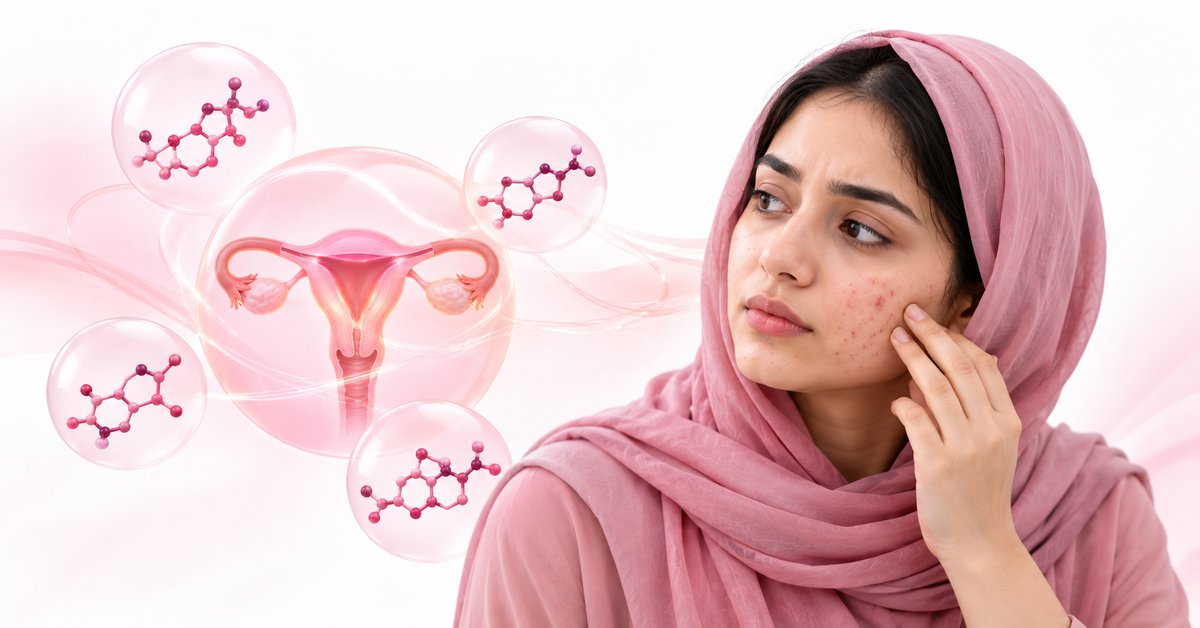
- during adolescence
- around the menstrual cycle
- during pregnancy
- with certain endocrine conditions
If you also have irregular periods or extra facial or body hair, a clinician may consider whether an underlying hormonal condition needs to be evaluated. Acne on its own does not mean you have PCOS. Our guide to PCOS treatment in Sharjah explains the condition, and a women’s health checkup in Sharjah is a good place to raise hormonal concerns.
Acne Treatment for Teenagers
Acne often begins in adolescence, and teenagers can receive professional acne care. Useful points include:
- arrange an early assessment when acne is persistent
- avoid aggressive squeezing or picking
- treat early to help prevent unnecessary scarring
- use age-appropriate treatment
- involve parents appropriately while respecting the teenager’s concerns
The tone matters as much as the treatment. A teenager needs support, not comments about how their skin looks.
Skincare Habits That Support Acne Treatment
Good basics make professional treatment work better. Wash gently, no more than twice a day, with a mild cleanser, and avoid scrubbing. Choose hair and skin products that are not greasy, because heavy products can add to blocked pores. Keep any medicated product you have been given for the full period your doctor advised, and ask about sun protection, since some acne treatments make the skin more sensitive to sunlight.
These habits support treatment, they do not replace it. If your skin is not improving, a dermatologist consultation is the next step, not a stronger scrub.
How to Prepare for Your Dermatologist Consultation
A little preparation helps the visit go further. Bring or note down:
- the products you currently use and for how long
- treatments you have already tried
- any medicines or supplements you take
- when your acne started and what seems to trigger it
- changes in your periods, if relevant
- your main goal, such as fewer breakouts, less scarring or fading dark marks
Photos of how your skin looks on a bad day can help too, because acne changes from week to week. Arriving with these details makes the visit more productive.
Common Acne Mistakes to Avoid
Five habits make acne harder to control.
Constantly changing products
Give a treatment plan a reasonable amount of time unless it is irritating your skin or making things worse, in which case ask for a review.
Squeezing or picking lesions
The NHS warns against this because it can cause scars. It also increases inflammation.
Over-washing the skin
More cleansing does not mean fewer breakouts. Scrubbing can irritate the skin and make acne worse.
Using random prescription medicines
Antibiotics and other strong dermatological medicines should not be used without professional guidance.
Assuming every facial treats acne
Cosmetic procedures and medical acne treatment are not interchangeable.
When Should Acne Be Treated Professionally?
The table below is educational, not diagnostic. It shows the usual next step for common situations.
| Situation | Appropriate next step |
|---|---|
| Occasional mild breakout | Basic evidence-based skincare may be sufficient |
| Frequent recurring acne | Consider a dermatology assessment |
| Painful or deep acne | Professional assessment recommended |
| Acne causing scars | Seek dermatological care |
| Acne affecting your confidence significantly | Discuss with a healthcare professional |
| No improvement despite appropriate treatment | Reassessment may be needed |
Acne Treatment in Sharjah at ESMC
ESMC’s Aesthetics and Laser Dermatology Department offers skin consultations and individualized treatment planning in Sharjah. For acne, the focus is on assessment: understanding what type of acne you have, how persistent it is and whether scarring or pigmentation needs attention. We do not promise a particular treatment or result before we have seen your skin.
To get started, book a dermatology consultation in Sharjah, read more about our dermatology services in Sharjah, or book an acne consultation in Sharjah directly if your acne is persistent, painful or scarring.
Frequently Asked Questions
When should I see a dermatologist for acne?
See one if your acne keeps returning, is painful or deep, is leaving scars, has not improved with basic skincare or is affecting your confidence. You do not need to wait until it is severe.
What is the best treatment for acne?
There is no single best treatment. The right one depends on the type and severity of your acne, your skin, your age and your health, which is why an assessment comes first.
Can hormonal changes cause acne?
Yes, hormones can contribute, for example in adolescence, around periods or during pregnancy. If you also have irregular periods or excess hair, a doctor may check for an underlying hormonal condition.
Can acne cause permanent scars?
Acne scars can be lasting, especially when lesions are deep or inflamed, or when they are squeezed. Early treatment of active acne helps lower the risk.
How are acne scars treated?
Scars are treated separately from active acne, and the options depend on the type of scar. A dermatologist can explain which approaches might suit your skin after an assessment.
Can teenagers receive professional acne treatment?
Yes. Teenagers can see a dermatologist for acne, particularly when it is persistent, painful or leaving marks. Treatment should be age-appropriate and supportive.
Why does my acne keep coming back?
Acne is influenced by oil, blocked pores, inflammation and hormones, so it can return if the underlying pattern is not addressed. A dermatologist can look at triggers and suggest a structured plan.
How long does acne treatment take to work?
It varies, and no timeline can be promised. Many treatments need weeks of consistent use before you can judge them, so ask your doctor what to expect for your plan.
Should I squeeze pimples?
No. Squeezing or picking can increase inflammation and the risk of scarring. If a lesion is painful or deep, ask a professional for advice.
Where can I get acne treatment in Sharjah?
You can arrange an assessment with the ESMC dermatology team in Sharjah. They will examine your skin, discuss your options and plan follow-up. Book through the ESMC contact page.