Vaginal rejuvenation Sharjah options exist across a wide spectrum of clinical treatments, yet finding honest, clear guidance has always been harder than it should be. You have been noticing something for a while, perhaps since your second delivery, or maybe it started gradually with age. A change in how things look externally. A persistent discomfort you have been quietly managing. A sudden dryness that makes intimacy uncomfortable. A difference in physical sensation that you have not mentioned to anyone.
If you have searched these symptoms, you likely found a confusing mix of rigid medical terminology and glamourised beauty clinic advertisements. You probably closed the tab feeling more confused than when you started. At Erum Saba Medical Center, we believe you deserve clear, clinical information rather than marketing. This guide draws the line honestly.
Table of Contents
What Does Vaginal Rejuvenation Actually Mean?
Vaginal rejuvenation is not a single procedure. It is an umbrella term covering a range of distinct treatments that address different concerns across separate anatomical areas. Some of these options are primarily functional, meaning they address physical symptoms that affect daily life and comfort. Others are primarily aesthetic, meaning they address appearance without a functional complaint. Many address both simultaneously.
To understand your choices, it helps to understand the main anatomical areas covered under this umbrella. The vulva refers to the external visible anatomy including the labia majora and labia minora. The vaginal canal is the internal passage addressed by energy-based treatments like CO2 laser. The perineum is the specific tissue between the vaginal opening and the anus. The vaginal entrance is the opening itself, frequently affected by childbirth and natural ageing.
Treatments fall into four distinct categories: non-surgical energy-based treatments such as CO2 laser and radiofrequency, surgical treatments including labiaplasty and perineorrhaphy, injectable options such as platelet-rich plasma (PRP), and topical or hormonal management including oestrogen creams. The right treatment depends entirely on what is bothering you and whether it has a functional component, an aesthetic component, or both.
The Functional Conditions That Bring Women to This Consultation
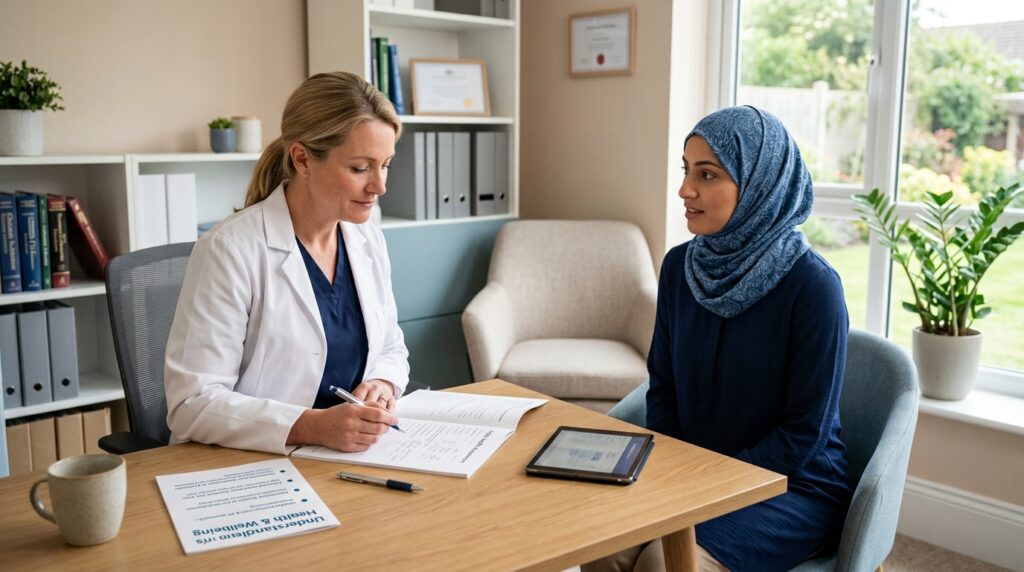
A woman does not need to be in severe distress to seek a medical assessment. Mild but persistent discomfort, reduced quality of intimacy, or physical chafing during daily activity are all legitimate reasons to speak with a specialist. The International Society for the Study of Vulvovaginal Disease (ISSVD) provides clear clinical definitions that help distinguish these conditions from normal anatomical variation.
Vaginal Laxity (Internal)
The internal vaginal walls can lose tone and elasticity after childbirth or due to oestrogen decline. This often results in a noticeable reduction in sensation during intercourse, a feeling of physical looseness, and sometimes difficulty with tampon retention. Depending on severity, this is treated with CO2 laser therapy or surgical vaginoplasty. For a detailed comparison of CO2 laser and perineorrhaphy, our guide on vaginal tightening in Sharjah covers both procedures in full clinical detail.
Perineal Laxity and Structural Changes
The perineum and vaginal entrance are frequently stretched or torn during vaginal delivery. When healing is incomplete, the entrance may feel structurally wider or cause physical discomfort during certain positions. According to the Royal College of Obstetricians and Gynaecologists (RCOG), perineal tears affect a significant proportion of women after vaginal birth and can have lasting functional consequences when not addressed.
Genitourinary Syndrome of Menopause (GSM)
The American College of Obstetricians and Gynecologists (ACOG) notes that the decline in oestrogen after menopause causes thinning, dryness, and fragility of vulvovaginal tissue. This produces burning, itching, painful intercourse, and increased susceptibility to local infections. GSM affects approximately 50 percent of postmenopausal women according to a PMC review on vaginal energy-based devices, yet remains significantly undertreated.
Stress Urinary Incontinence
Involuntary leaking of urine when coughing, sneezing, laughing, or exercising is caused by pelvic floor weakness and loss of urethral support after childbearing or with age. According to Mayo Clinic, pelvic floor weakness is the primary cause. A 2024 randomised controlled trial published in PMC found that vaginal laser therapy is a safe and viable treatment option for women with persistent stress urinary incontinence symptoms who have not responded to pelvic floor exercises. A PMC systematic review of CO2 laser for stress urinary incontinence found significant improvements in validated incontinence scores across multiple studies.
Vulval Appearance Concerns with Functional Impact
Enlarged or asymmetrical labia minora can cause physical discomfort during exercise, cycling, intercourse, or when wearing tight clothing. The RCOG confirms that when physical discomfort is documented, the concern crosses from cosmetic into functional territory and is highly addressable through labiaplasty. A 2022 meta-analysis published in Plastic and Reconstructive Surgery covering 46 studies and 3,804 patients found a pooled satisfaction rate of 99 percent after labia minoraplasty, with functional complaints being the primary motivator for seeking the procedure in 52.2 percent of cases.
The Aesthetic Concerns That Are Also Valid
Some women seek vaginal rejuvenation in Sharjah for concerns that are primarily about appearance. These include the shape of the labia minora, the volume of the labia majora, or changes to the mons pubis following weight fluctuations or caesarean delivery. Feeling self-conscious about your body in intimate contexts directly affects your confidence and wellbeing, and wanting to feel comfortable in your own skin is a legitimate reason to seek expert information.
Purely cosmetic genital procedures carry the same surgical risks as any operation and require careful evaluation. The essential question is whether the perceived concern is causing genuine personal distress and whether your expectations are realistic. At ESMC, our professional approach is to assess the full picture honestly. If your concern is primarily aesthetic without a functional component, that conversation will be had openly during your private consultation with Dr. Erum Saba.
Book a Private Gynaecological Consultation at ESMC Sharjah
Treatments Available at ESMC: What Each One Does
CO2 Fractional Laser
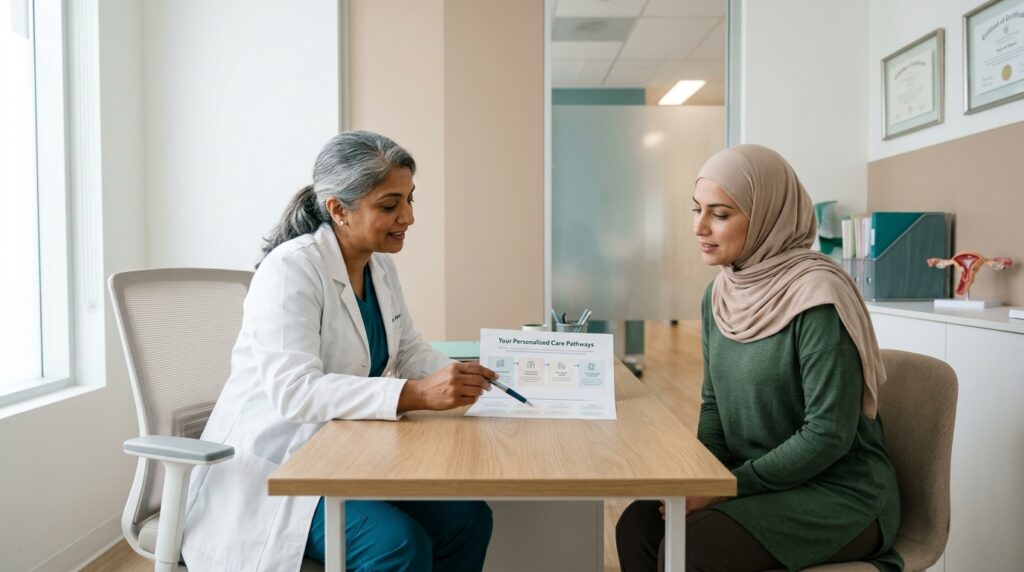
A non-surgical treatment that targets the internal vaginal canal by stimulating collagen remodelling within the vaginal mucosa. According to PMC research on CO2 laser and vaginal rejuvenation, CO2 laser demonstrates significant improvements in vaginal dryness, dyspareunia, sexual function, and mild stress urinary incontinence through its collagen-stimulating mechanism. It improves tissue tone, natural moisture, and mild internal laxity. It does not alter the external vulva or perineum. Typically requires 1 to 3 sessions with minimal downtime. Starting from AED 299 per session based on your consultation at ESMC.
Perineorrhaphy
A surgical procedure that repairs and tightens the perineum and vaginal entrance. It addresses structural changes after childbirth that cannot be corrected through non-surgical means. Performed under local or regional anaesthesia with a recovery period of 2 to 4 weeks. Most effective for women who have completed their families. Full details are covered in our dedicated guide on vaginal tightening in Sharjah.
Labiaplasty
A surgical procedure that reduces or reshapes the labia minora or labia majora to resolve physical chafing or aesthetic dissatisfaction. The NHS provides clear guidance on what this procedure involves, its risks, and recovery requirements. Performed under local anaesthesia as a day case, it requires 4 to 6 weeks of recovery before resuming strenuous physical activity. A 2024 systematic review in the Aesthetic Surgery Journal, covering studies through October 2023, found that labiaplasty is a generally effective approach with low associated risks when the surgeon tailors the technique to the patient’s individual anatomy and goals.
PRP to Vulval Tissue
A non-surgical injectable treatment applying platelet-rich plasma to vulval tissue and the clitoral area to support localised sensitivity and natural lubrication. It is often requested by women seeking non-hormonal options for intimacy support. This is a less established treatment than CO2 laser and individual clinical results vary. A course of 3 sessions is the standard protocol.
Topical and Hormonal Baseline Management
Before any procedure, underlying hormonal causes of symptoms should be thoroughly evaluated. Topical oestrogen creams are highly effective for GSM and can resolve dryness without any invasive procedure. ACOG confirms that localised topical oestrogen is safe and effective as a first-line treatment for genitourinary syndrome of menopause. Our team always assesses hormonal status before recommending any advanced treatment pathway.
Treatment Comparison Table
| Treatment | Surgical | Area Treated | Best For | Downtime | Sessions |
|---|---|---|---|---|---|
| CO2 Laser | No | Internal vaginal canal | Laxity, dryness, mild incontinence, GSM | Minimal | 1 to 3 |
| Perineorrhaphy | Yes | Perineum and entrance | Post-delivery structural repair | 2 to 4 weeks | Single |
| Labiaplasty | Yes | Labia minora or majora | Discomfort or appearance of labia | 4 to 6 weeks | Single |
| PRP Injection | No | Vulval tissue | Sensitivity, tissue lubrication | Minimal | Course of 3 |
| Topical Oestrogen | No | Vulval and vaginal mucosa | GSM, post-menopausal dryness | None | Ongoing |
Who Is a Candidate and Who Is Not?
Good candidates for vaginal rejuvenation Sharjah at ESMC are women with specific, identifiable functional or aesthetic concerns they want assessed by a qualified specialist. Candidates should be in good general health, have a recent normal Pap smear, and be free from active pelvic, vaginal, or cervical infections. Realistic expectations about what non-surgical and surgical options can achieve are essential.
These treatments are not the right starting point for women who are currently pregnant or less than 6 months postpartum for surgical procedures. Women with undiagnosed vaginal symptoms that have not yet received a basic gynaecological evaluation should begin with a clinical assessment rather than assuming a specific treatment. Women whose primary concern stems from generalised body dysmorphia without specific anatomical changes are better served by psychological support as the first step.
UAE-Specific Considerations
Cultural Privacy
Vulval and vaginal concerns are among the most difficult topics for women in Sharjah’s community to raise, even with a female doctor. Our all-female gynaecology team and completely private consultation environment exist specifically to address this. There are no mixed-gender clinical settings for these appointments, no judgment, and no rushed consultations.
Postpartum Patterns in the UAE
Women in the UAE frequently experience multiple vaginal deliveries with relatively short intervals between pregnancies, creating cumulative pelvic floor stress that explains why structural concerns are disproportionately common in this community. If you are exploring overall postpartum recovery alongside vaginal rejuvenation, our guide on the mommy makeover UAE provides a helpful overview of combining treatments for postpartum restoration.
Menopause and Dehydration
The extreme summer heat and constant AC exposure in Sharjah compound the drying effects of menopausal oestrogen decline on vulvovaginal mucosa. Women in Sharjah often report more pronounced GSM symptoms than those in cooler, more humid climates. Ensuring adequate hydration is particularly important in this environment, as dehydration worsens mucosal atrophy.
Hormonal and Fertility Context
Managing underlying health profiles is important before aesthetic or surgical intervention. Women who have experienced recurrent pregnancy loss should ensure their broader hormonal picture is stable before any elective procedure. Our guide on recurrent miscarriage in Sharjah covers the hormonal and structural factors that deserve investigation before and between pregnancies.
No Need to Travel
Full-spectrum vaginal rejuvenation, including advanced CO2 laser treatments and targeted pelvic surgery, is available at ESMC Sharjah at the same clinical standard as specialist centres elsewhere in the UAE.
Realistic Expectations: What to Expect and What Not to Expect

What you can realistically expect:
A measurable improvement in internal tissue tone and natural moisture from CO2 laser over a 3 to 6 month period after completing the treatment course. Structural restoration of a stretched vaginal entrance after perineorrhaphy, with final results visible after full healing at 3 months. A significant reduction in labial chafing, pinching, and discomfort during exercise after labiaplasty once recovery is complete. Improved localised comfort and sensitivity from PRP treatments, though individual responses vary.
What you should not expect:
A return to an anatomical state identical to your pre-pregnancy or pre-menopause years. Instant permanent results from non-surgical laser treatments without occasional maintenance sessions. A completely pain-free recovery from surgical options, as all procedures involve temporary bruising and swelling. A guarantee that a physical procedure will resolve complex relationship difficulties or generalised intimacy concerns.
The most valuable outcome of an initial consultation is receiving clear, objective information about your anatomy. You leave with total clarity about what is possible and what is right for your specific situation.
When to Book a Consultation at ESMC
Consider arranging a private appointment with our Gynaecology Department if you experience any of the following:
- Persistent vaginal dryness, burning, or discomfort during intimacy that has not improved with over-the-counter moisturisers
- Involuntary leaking of urine when running, coughing, sneezing, or lifting
- Noticeable structural changes to the perineum since childbearing that cause physical instability or discomfort
- Physical irritation or pain from the labia when wearing tight clothing, exercising, or sitting for extended periods
- Post-menopausal tissue changes that interfere with daily physical comfort or personal confidence
- A desire for a professional gynaecological opinion on whether your symptoms have a treatable cause, without commercial pressure
These are not vanity issues. They are genuine quality-of-life matters that impact your daily wellbeing. You deserve to have them evaluated by a doctor who provides honest information rather than a sales pitch.
A normal pelvic ultrasound does not rule out all causes of vulvovaginal discomfort. If your symptoms are real and affecting your quality of life, they deserve a thorough gynaecological assessment regardless of what a previous scan showed.
Book a Consultation with Dr. Erum Saba at ESMC Sharjah
Frequently Asked Questions
Is vaginal rejuvenation the same as a vaginoplasty?
Vaginal rejuvenation is a broad umbrella term that includes many distinct non-surgical and surgical treatments, including CO2 laser, PRP injections, perineorrhaphy, and labiaplasty. Vaginoplasty is a specific surgical operation designed to narrow and tighten the internal vaginal canal muscles throughout its length, which is a more extensive procedure than either perineorrhaphy or CO2 laser. For most women seeking vaginal rejuvenation in Sharjah, a combination of targeted external repair and internal laser therapy achieves excellent functional tightening without the greater risks associated with full vaginoplasty.
How do I know if I need CO2 laser or surgery?
The choice depends entirely on whether your concerns originate from tissue elasticity loss or structural muscle damage. Mild laxity, dryness, and early-stage urinary leaks often respond well to non-surgical CO2 laser treatments by stimulating collagen remodelling in the vaginal mucosa. Structural changes such as a visibly stretched perineum or significant post-delivery widening of the entrance require surgical repair to achieve a lasting structural result. The only way to determine which applies to you is a clinical assessment with Dr. Erum Saba, who can evaluate your anatomy and symptom history together.
Is labiaplasty safe and what does the recovery actually involve?
Labiaplasty is a well-established day-case surgical procedure with a strong safety profile when performed by an experienced clinician. A 2022 meta-analysis covering 46 studies and 3,804 patients found a pooled satisfaction rate of 99 percent after labia minoraplasty with low complication rates. Recovery involves localised swelling, bruising, and mild soreness for the first 1 to 2 weeks. You will need a few days off work, should avoid tight clothing, and must refrain from strenuous exercise or sexual intercourse for a full 4 to 6 weeks to allow complete healing.
Can these treatments improve stress urinary incontinence?
Yes, specific treatments can help manage mild to moderate stress urinary incontinence. A 2024 randomised controlled trial published in PMC found that vaginal laser therapy is a safe and viable option for women with persistent stress urinary incontinence symptoms who have not responded to conservative management. A PMC systematic review specifically assessing CO2 laser for stress urinary incontinence found significant improvements in validated incontinence scores across multiple studies, with no serious adverse events reported. Severe incontinence caused by significant pelvic organ prolapse typically requires traditional surgical suspension or specialised physiotherapy rather than laser alone.
I am post-menopausal and experiencing vaginal dryness and pain during intercourse. What can ESMC offer?
ESMC provides a multi-step approach to managing menopausal tissue changes. Our team can prescribe localised topical oestrogen therapies, which safely restore tissue thickness and moisture without significant systemic absorption, as endorsed by ACOG. For women who prefer a non-hormonal approach or need additional relief beyond topical treatment, CO2 fractional laser sessions revitalise the mucosal lining by stimulating new collagen and hyaluronic acid production. A consultation with Dr. Erum Saba will identify the most appropriate combination for your specific symptom profile.
Are these procedures covered by UAE health insurance?
In most cases, UAE health insurance providers do not cover these treatments when performed purely for aesthetic enhancement. However, when a procedure such as perineorrhaphy or labiaplasty is medically necessary to repair documented birth trauma or to address chronic functional pain, partial coverage may apply under some premium insurance plans. We recommend obtaining a detailed medical report during your consultation to submit to your insurer for pre-approval assessment before committing to treatment.
I have not had children. Can I still have vaginal rejuvenation?
Yes, childbearing is not a prerequisite for experiencing vulvovaginal concerns. Many women who have never given birth seek treatment for naturally enlarged or asymmetrical labia that cause physical pain during exercise, cycling, or intercourse. Others experience premature dryness due to hormonal imbalances, medication side effects, or naturally occurring tissue changes. The 2024 PMC motivational study on labiaplasty found that functional complaints are the primary driver for seeking the procedure across all demographic groups, not parity.
How long do the results of CO2 laser vaginal rejuvenation last?
The initial results of a completed CO2 laser treatment course typically last between 12 and 18 months as the newly stimulated collagen continues to provide structural support during this period. Because the body continues its natural ageing process and experiences ongoing hormonal changes, the collagen network gradually remodels over time. Most women choose to schedule a single annual maintenance session to preserve tissue comfort and elasticity. PMC research confirms that long-term follow-up studies of up to 36 months show sustained improvements in validated symptom scores with appropriate maintenance.
Is PRP to the vulval area clinically proven?
PRP has an emerging evidence base showing positive outcomes for tissue regeneration and localised blood flow improvement in vulval tissue. Many patients report improvements in lubrication and sensitivity following the injection course. However, PRP is a less established treatment than CO2 laser therapy, with fewer large-scale randomised controlled trials available, and results can vary significantly based on individual healing response and platelet concentration protocols. At ESMC, this treatment is offered within a clinical framework and its evidence base is discussed honestly during the consultation before any commitment is made.
What is the difference between vaginal rejuvenation and the Hollywood vagina procedure?
Vaginal rejuvenation in Sharjah at ESMC refers to a clinical gynaecological framework aimed at restoring tissue health, functional comfort, and structural support. The term Hollywood vagina is a non-medical commercial marketing phrase typically used to describe a combination of extreme labial reduction, skin bleaching, and aesthetic alterations that prioritise a specific appearance over individual anatomy and function. At ESMC, all treatments are evidence-based, respect natural anatomical variation, and are recommended based on your specific clinical picture rather than a cosmetic ideal.
Take the Next Step
You have spent long enough researching this in private, navigating a confusing mix of medical journals and commercial beauty advertisements. What you need is a qualified, compassionate specialist who will evaluate your unique anatomy and give you straightforward, honest clinical advice. No pressure, no sales pitch, no judgment.
Vaginal rejuvenation Sharjah care at ESMC is built on one principle: your physical comfort and quality of life matter, and you deserve clinical honesty about what is possible for your specific situation.
Book your private consultation at ESMC Sharjah. Al Zahra Street, Maysaloon. Open 8AM to 11:30PM daily.