
Every parent wants their child to grow up with a healthy, confident smile. But child dental care are often overlooked until a problem becomes painful or visible. From the moment your baby’s first tooth appears to their teenage years, every stage of childhood brings unique dental challenges and opportunities for prevention.
This guide covers the most common child dental care, practical prevention tips for parents, and how ESMC’s child-friendly dental team in Sharjah helps children build healthy smiles that last a lifetime. Effective oral hygiene is the foundation of high-quality child dental care.
Table of Contents
Why Baby Teeth Matter for Child Dental Care
Many parents assume baby teeth are not important because they eventually fall out. This is a common misconception. Baby teeth play a critical role in:
- Helping children chew food properly for good nutrition
- Supporting clear speech development
- Holding space in the jaw for permanent teeth to grow in correctly
- Building confidence through a healthy smile
If baby teeth are lost too early due to decay or injury, nearby teeth can shift into the empty space, causing crowding and alignment problems for permanent teeth later. Protecting these teeth is a vital part of long-term child dental care.
Teething: What to Expect and How to Help
Teething usually begins around 6 months of age and can continue until age 3. It can be an uncomfortable time for both baby and parents.
Common Teething Signs
- Drooling more than usual
- Swollen or tender gums
- Irritability and disrupted sleep
- Chewing on objects
- Mild fever (consult a doctor if fever is high)
How to Soothe Teething Discomfort
- Gently massage gums with a clean finger
- Offer a chilled (not frozen) teething ring
- Use teething gels only if recommended by your pediatric dentist
- Keep the area clean and dry to avoid skin irritation
Early intervention is a hallmark of quality child dental care.
When to Start Brushing Start cleaning your baby’s gums with a soft damp cloth even before teeth appear. Once the first tooth erupts, switch to a soft-bristled infant toothbrush with a tiny smear of fluoride toothpaste.
Age-Wise Dental Care Guide
0 to 2 Years
- Clean gums with a soft damp cloth after feeding
- Begin brushing with first tooth using a rice-grain amount of fluoride toothpaste
- Schedule the first dental visit by age 1 or when the first tooth appears
- Avoid putting baby to sleep with a bottle of milk or juice.Early professional visits are recommended for proactive child dental care.
3 to 5 Years
- Brush twice daily with a pea-sized amount of fluoride toothpaste
- Begin flossing when teeth start touching
- Watch for early signs of tooth decay such as white or brown spots
- Address thumb sucking or pacifier habits with your dentist
- Visit the dentist every 6 months. Consistent checkups at this age ensure the best results for child dental care.
6 to 12 Years
- Supervise brushing until at least age 8
- First permanent molars appear around age 6 and need extra care
- Ask about dental sealants to protect back teeth
- Schedule an orthodontic screening by age 7
- Encourage a low-sugar diet and plenty of water
- Use a mouth-guard during sports activities. Monitoring permanent tooth eruption is a key focus of child dental care.
Developing a positive relationship with the dentist helps improve child dental care.

1. Tooth Decay in Young Children
Tooth decay (dental caries) is the most common chronic disease in childhood even more common than asthma. It often develops when sugary foods and drinks stay on teeth long enough for bacteria to produce acids that eat away enamel.
Signs to Watch
- Brown or white spots on teeth
- Complaints of toothache
- Trouble eating cold or sweet foods
Prevention Tips
✔ Brush teeth twice a day with fluoride toothpaste✔ Cut down on sugary snacks and juice boxes
✔ Offer water after meals
✔ Schedule regular dental cleanings
Understanding these basics is necessary for comprehensive child dental care.
2. Thumb Sucking and Altered Teeth Alignment
Thumb sucking or pacifier use is normal up to about age 3. However, extended habits can push teeth forward and affect bite (open bite or overbite).
How It Affects Teeth
- Misaligned front teeth
- Changes in jaw growth
- Speech difficulties
How to Help Your Child Stop
- Gently talk about stopping the habit
- Use positive rewards and encouragement
- Replace with a comfort object if needed
- Ask a dentist for habit-breaking advice
Addressing these habits early prevents future complications in child dental care.
Guide:Thumb Sucking and Dental Development (Colgate)
3. Early Orthodontic Concerns
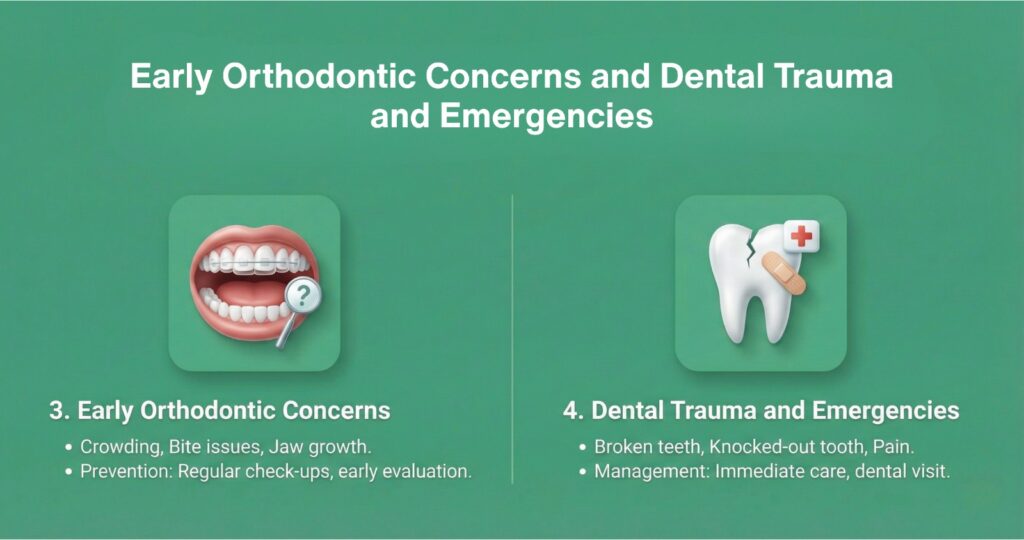
Crooked teeth aren’t always just cosmetic; they can influence chewing, jaw growth, and dental health. Early orthodontic evaluation (as early as age 6–7) helps detect concerns like crowding, cross-bite, or bite issues.
What Parents Should Notice
- Early or late loss of baby teeth
- Mouth breathing
- Jaw clicking or popping
- Teeth that don’t meet evenly
Benefits of Early Evaluation
- Shorter future treatment time
- Better growth guidance
- Fewer extractions later
Proper growth guidance is a significant advantage of early child dental care.
4. Dental Trauma and Emergencies
Kids are active, and accidents happen. A knocked-out or broken tooth can be frightening, but quick action makes a huge difference.
Common Dental Injuries
- Chipped or fractured tooth
- Tooth knocked out (avulsed)
- Soft tissue cuts inside mouth
What to Do in an Emergency
Stay calm
If a tooth is knocked out, hold it by the crown (top), rinse gently, and try to reinsert or store it in milk
Call a dentist immediately
Emergency dental tips:
Dental Trauma Guide (IADT)
Preparedness for accidents is a critical aspect of emergency child dental care.
5. Fear of the Dentist & Irregular Checkups
Too many children don’t visit a dentist early enough. Waiting until there’s pain makes treatment harder and creates fear.
Why Regular Checkups Matter
- Early cavity detection
- Fluoride treatments
- Professional cleaning
- Personalized hygiene education
- Dental anxiety management
When to Visit First
First dental visit by age 1 or when the first tooth appears. Creating a positive experience helps children embrace the importance of child dental care.
Is Fluoride Safe for Children?
Fluoride is one of the most effective tools for preventing tooth decay in children. It strengthens tooth enamel and makes teeth more resistant to acid attacks from bacteria.
Recommended Fluoride Use by Age
- Under 3 years: a rice-grain sized smear of fluoride toothpaste
- Ages 3 to 6: a pea-sized amount of fluoride toothpaste
- Age 6 and above: standard brushing with fluoride toothpaste twice daily
Fluoride toothpaste is safe when used in the correct amount. The key is to teach children to spit out toothpaste rather than swallow it. Your pediatric dentist at ESMC can advise on the right fluoride products based on your child’s age and cavity risk.
Creating Good Daily Dental Habits for Child Dental Care
Building healthy routines at home prevents most problems.
Simple Daily Routine
- Brush twice a day
- Floss daily once teeth touch
- Drink water frequently
- Eat balanced meals with fruits and veggies
- Avoid sticky candies and sodas
Parenting tip: Make brushing fun with a timer or favorite song. A dedicated approach is essential for optimal child dental care.
ESMC’s Pediatric Dental Services
At ESMC, we specialize in gentle, child-friendly dental care for children of all ages:
Early Childhood Dental Care
- Baby teeth checkups
- Early cavity protection
- Habit guidance (thumb/finger sucking)
Preventive Dentistry
- Fluoride treatments
- Sealants to protect molars
- Oral hygiene instruction
Orthodontic Screening & Consultation
- Early bite assessments
- Growth monitoring
- Referral to orthodontics when needed
Emergency Dental Treatment
- Trauma care
- Tooth re-implantation support
- Pain relief and restoration
A healthy smile starts in childhood. Most dental problems in children like cavities, misaligned teeth, or dental injuries are preventable with early care, good daily habits, and regular dental visits. By teaching children to brush and floss properly, limiting sugary foods, and visiting a pediatric dentist on time, parents can protect their child’s teeth for life. Early dental care not only prevents pain and costly treatments but also builds confidence and comfort with dental visits. Choosing the right pediatric dentist in UAE ensures your child receives gentle, professional care and grows up with a strong, healthy smile. A dedicated approach is essential for optimal child dental care.
Frequently Asked Questions (FAQs)
1. When should my child have their first dental visit? The first dental visit should happen by age 1 or within 6 months of the first tooth appearing, whichever comes first. Early visits help detect problems before they become serious and help children feel comfortable with dental care.
2. Are baby teeth really important if they fall out anyway? Yes, absolutely. Baby teeth help children chew, speak clearly, and hold space for permanent teeth. Losing them too early due to decay can cause crowding and alignment problems in adult teeth.
3. How do I know if my child needs braces? Signs your child may need orthodontic evaluation include early or late loss of baby teeth, crowded or overlapping teeth, difficulty biting or chewing, mouth breathing, and jaw clicking. An orthodontic screening is recommended by age 6 to 7.
4. My child is scared of the dentist. What should I do? Dental anxiety is very common in children. Choosing a child-friendly dental clinic like ESMC helps. You can also prepare your child by reading books about dental visits, using positive language, and never using the dentist as a threat or punishment.
5. How often should my child visit the dentist? Most children should visit a dentist every 6 months for a routine checkup and cleaning. Children with a higher risk of cavities may need more frequent visits as advised by their dentist.
6. What should I do if my child knocks out a tooth? Stay calm. If it is a permanent tooth, hold it by the crown, rinse gently with clean water, and try to reinsert it or store it in milk. Call your dentist immediately. Do not attempt to reinsert a baby tooth as this can damage the developing permanent tooth underneath.
7. Can my child use an electric toothbrush? Yes. Electric toothbrushes can be effective and fun for children. Choose one designed for kids with a small head and soft bristles. Always supervise brushing for younger children.
Give Your Child a Healthy Smile From Day One!
Book a pediatric dental appointment at ESMC Sharjah and let our gentle, child-friendly team take care of your child’s smile.