Safe eating during Eid in Sharjah is something our team at Erum Saba Medical Center is asked about every year as the holiday approaches. The Eid table is one of life’s great pleasures. Mutton salan that has been cooking since sunrise. Barbeque smoke drifting through the yard. Slow-cooked beef nihari and aromatic biryanis. Dishes arriving from neighbours, from relatives, and from the family three doors down. And you are sitting there, wanting to enjoy every single bite of it.
But if you have diabetes, high blood pressure, or you are currently pregnant, Eid ul Adha presents a specific challenge that nobody really talks about openly. Almost everything on that table is red meat, rich in saturated fat, heavily spiced, and often quite salty. And the celebrations last six days.
This guide is not about telling you what you cannot eat. It is about helping you make smart choices that let you enjoy Eid fully without ending the holiday with a blood sugar crisis, a blood pressure spike, or a pregnancy complication. At Erum Saba Medical Center, we want your celebration to be both joyful and safe.
Table of Contents
Why Eid ul Adha Is Different for Your Health
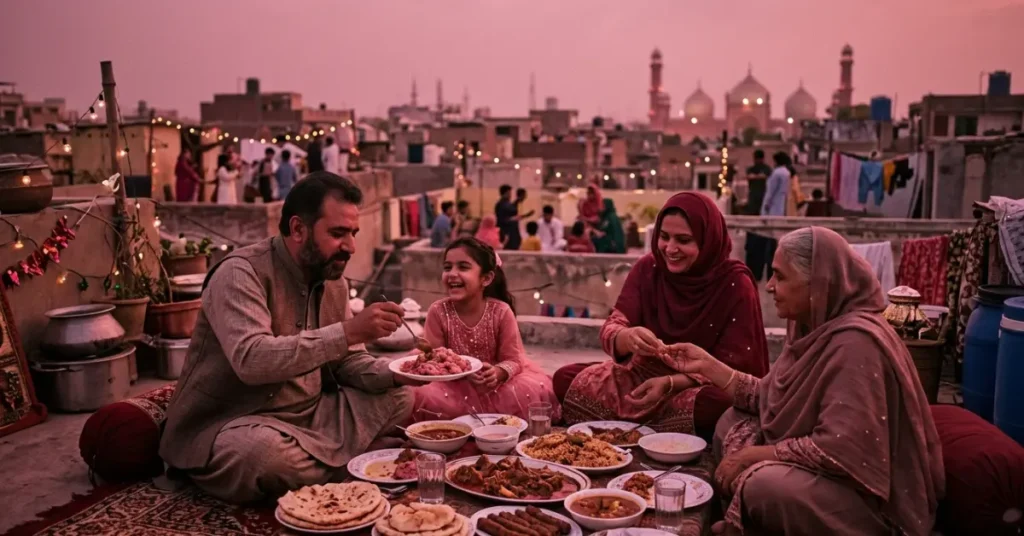
Understanding why safe eating during Eid in Sharjah is more complex than usual starts with one fact: unlike Eid ul Fitr, which centres around sweets, Eid ul Adha is almost entirely about red meat consumed across multiple days. Even the most disciplined patients tend to increase their meat consumption significantly during this holiday, often setting aside their usual balanced diet entirely for the duration.
The health challenges stack up quickly. According to Harvard T.H. Chan School of Public Health, red meat is high in saturated fat, which raises LDL cholesterol and puts pressure on the cardiovascular system. It is also high in protein, and while protein is necessary, large quantities consumed over multiple days can affect kidney function in those with existing conditions such as diabetes or hypertension. Traditional Eid preparations also involve high amounts of salt and oil that compound these effects.
The UAE Government’s food safety guidelines specifically address the importance of strict food handling during summer heat when the risk of foodborne illness rises significantly, which is particularly relevant for pregnant women and those with compromised immune function from chronic conditions.
The real danger for anyone with a chronic condition is not one heavy meal. It is six consecutive days of red meat with no vegetables, missed medications, disrupted monitoring routines, and no clinical oversight.
If You Have Diabetes: How to Enjoy Eid Meat Without a Blood Sugar Spike
It is a common misconception that meat is the primary enemy of blood sugar. In reality, lean, well-cooked, unprocessed red meat does not dramatically spike blood glucose the same way carbohydrates do. The real blood sugar dangers at the Eid table are the foods surrounding the meat: mounds of white rice, buttery naan, aromatic biryani, and sweetened drinks.
According to Diabetes UK, portion control and carbohydrate pairing are the two most important factors in managing blood glucose during celebratory meals. A person with diabetes who enjoys a moderate portion of grilled lamb with a large fresh salad has managed their Eid meal well. The same person who pairs that meat with three portions of rice and a glass of sweetened juice has created a serious glycaemic event.
How to Balance Your Plate
The half-plate rule is your most practical tool. Fill half your plate with salad or steamed vegetables first. This ensures you feel full without over-relying on heavier foods and slows the absorption of any carbohydrates you do eat.
Keep meat portions to roughly the size and thickness of your palm, approximately 90 to 120 grams per meal.
Choose one carbohydrate per meal and commit to it. If biryani is being served, make that your carbohydrate. Do not add naan or extra bread on top of it.
Watch the hidden sugars. Dates are a beautiful Eid tradition, but they are sugar-dense. Limit yourself to two or three. Replace fruit juices and sodas with sparkling water or fresh lemon-mint without added sugar.
Smart Cooking Choices
Choose the grill over the kadai where possible. Grilling or tikka-style preparation allows fat to drip away from the meat. Frying locks it in. If a dish is served in a heavy oil or cream-based gravy, use a slotted spoon to take the meat and leave the excess sauce behind. You get the flavour without the hidden fats and thickeners.
Medication Is Non-Negotiable
Take your medicines exactly as prescribed, even when your schedule is disrupted by visits and celebrations. Check your blood glucose more frequently than usual, ideally before each main meal and two hours after. Set a phone alarm for every dose. The meal is not dangerous. The missed medication is.
If you are on insulin and unsure how to adjust your dose around larger or differently timed Eid meals, book a pre-Eid consultation with our General Physician team at ESMC before May 25 to discuss a personalised plan.
If You Have High Blood Pressure: The Eid Risks You Need to Know
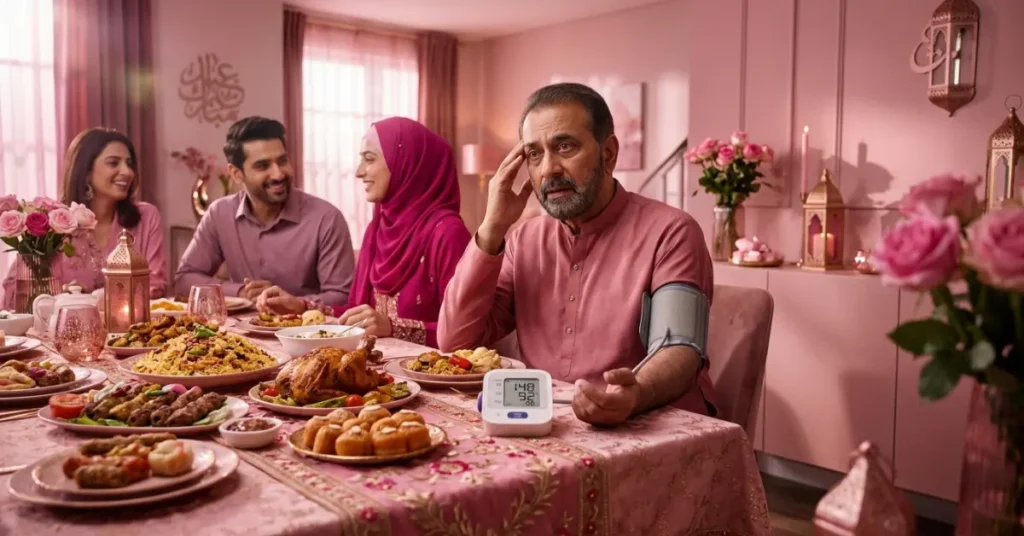
For those with hypertension, the combination of saturated fats and high sodium in Eid cooking is the primary concern. According to the American Heart Association, sodium directly causes the body to retain fluid, which raises blood volume and increases pressure on artery walls. Traditional Eid cooking involves what we describe as triple-salting: once during marination, once during cooking, and often again at the table with pickles and condiments. A single Eid meal can contain two to three times your recommended daily sodium intake.
Practical Sodium Management
Ask family members to set aside a portion of meat for you before the heavy salt, pickles, and heavy spices are added. This is a simple request that most families will accommodate willingly once they understand why.
Skip bottled chutneys, pickled vegetables, and salty sauces entirely. These are disproportionately high in sodium relative to their portion size.
Drink 2.5 to 3 litres of water daily throughout the Eid break to help your kidneys process any additional sodium.
Choose leaner cuts of meat. Lamb leg and beef fillet are significantly better for cardiovascular health than fatty ribs, brisket, or heavily marbled cuts.
Warning Signs to Watch For
A severe headache at the back of the head, sudden vision changes, chest tightness, or unexpected nausea during Eid require an immediate medical assessment. These can be signs of a hypertensive crisis. Do not wait for the holiday to end. Come to ESMC or the nearest emergency department immediately.
The single most dangerous thing a person with high blood pressure can do during Eid is miss their medication because the routine has been disrupted. Set multiple alarms. Take it every day without exception.
If You Are Pregnant: How to Celebrate Eid Safely for You and Your Baby

Being pregnant at Eid is a joy. You absolutely can enjoy the food and the family. You simply need to be more deliberate than everyone else at the table. Whether you have a healthy pregnancy, gestational diabetes, or pregnancy-induced hypertension, your approach to the Eid table matters for two.
For All Pregnant Women
Red meat is an excellent source of iron and B vitamins that your body needs in higher quantities during pregnancy. However, food safety is paramount. Ensure all meat is fully cooked through with no pink remaining. According to the NHS foods to avoid in pregnancy guidance, undercooked meat poses a risk of toxoplasmosis and listeria, both of which are significantly more dangerous during pregnancy than outside of it.
Liver Is Not Safe During Pregnancy
This is one of the most important warnings in this entire guide and one of the most commonly overlooked during Eid, where liver dishes are a traditional favourite in many communities. The NHS explicitly advises that pregnant women should avoid liver and liver products entirely. Liver contains extremely high levels of preformed vitamin A (retinol), which accumulates in fetal tissue and can cause serious developmental harm. A WHO-referenced review published in PMC confirms that elevated maternal retinol levels are associated with miscarriage and malformations involving the central nervous and cardiac systems. Please avoid liver completely throughout your pregnancy, not just at Eid.
For Gestational Diabetes
Apply the plate method described in the diabetes section above. Focus on lean meat paired with fibre-rich vegetables. Avoid refined carbohydrates such as white rice and paratha as these cause sharp blood glucose spikes that are particularly harmful during pregnancy. If you have not yet been screened for gestational diabetes and are in your second or third trimester, read our guide on PCOD in the UAE which covers the hormonal overlap between PCOS and gestational diabetes risk in detail.
For Pregnancy-Induced Hypertension or Pre-eclampsia
This is the highest-risk group at the Eid table. High sodium intake can trigger an escalation in blood pressure that may lead to or worsen pre-eclampsia. Eat only lightly salted food throughout the holiday. Check your blood pressure at home every day. Come to our Gynaecology team at ESMC immediately if you notice sudden swelling of the face or hands, flashing lights in your vision, or sharp pain under the ribs on the right side. These are pre-eclampsia warning signs requiring emergency assessment.
For a complete understanding of antenatal care during the high-risk months, read our complete guide to antenatal care in Sharjah which covers monitoring schedules and what to watch for trimester by trimester.
Before Eid Starts: Your Medication and Monitoring Checklist
The six-day break is precisely when routines fall apart. Use this checklist before the holiday begins:
Medication supply: Do you have enough medication for eight full days, six for the holiday plus two days buffer? Check this now, not on the morning of Eid.
Phone alarms: Set an alarm for every single dose of every medication. Do not rely on memory while visiting relatives across multiple households.
Monitoring equipment: Ensure your glucometer or blood pressure monitor has fresh batteries and enough test strips to cover the full holiday period.
Emergency contact: Save ESMC Sharjah’s number +971 50 665 9064 and UAE emergency services 998 in your phone favourites before Eid begins.
Pre-Eid consultation: If you are on insulin or have blood pressure that has been unstable recently, book a consultation at ESMC before May 25 to discuss dose adjustments and personalised guidance for the holiday.
Feeling well does not mean your condition is controlled. Blood pressure and blood glucose are frequently dangerously elevated before any symptoms appear. Do not skip your readings.
Smart Eid Swaps: Enjoy the Table Without the Risk
| Instead of | Try This |
|---|---|
| Large portion of fatty mutton curry | Smaller portion of lean grilled lamb with salad |
| White rice or multiple naans | Small portion of brown rice or extra vegetables |
| Sweetened juices or sodas | Sparkling water with fresh lemon or mint |
| Three pieces of mithai or sweets | One small piece eaten after a full glass of water |
| Reheated fatty leftovers late at night | A fresh light portion or a healthy snack |
| Liver or organ meats if pregnant | Lean muscle cuts such as beef fillet or lamb leg |
| One massive meal per day | Smaller portions spread across three to four meal times |
Safe eating during Eid in Sharjah does not mean sitting at the edge of the table watching everyone else eat.You can have the meat, the celebration, and the family and still wake up the next morning with stable readings. It takes intention, not deprivation.
When to Seek Medical Help During the Eid Break
ESMC Sharjah is open from 8AM to 11:30PM every day of the Eid holiday including the first day of Eid and all public holidays. Walk-ins are welcome for urgent concerns.
For People with Diabetes:
Blood glucose readings that stay above 14 mmol/L (250 mg/dL) despite taking medication. Symptoms of hypoglycaemia including sudden shakiness, cold sweats, extreme confusion, or fainting. Fruity-smelling breath or persistent vomiting alongside high readings.
For People with High Blood Pressure:
A blood pressure reading of 180/120 mmHg or higher constitutes a hypertensive crisis requiring immediate emergency care. A sudden severe headache unlike anything experienced before. Chest pain, shortness of breath, or sudden weakness on one side of the body.
For Pregnant Women:
Any vaginal bleeding or leaking of fluid at any stage of pregnancy. A noticeable reduction or complete absence of baby movements after 28 weeks. Pre-eclampsia signs including sudden swelling of the face and hands, flashing lights in your vision, or sharp pain under the right ribs.
For any of the above, do not wait for the holiday to end. Come directly to ESMC or call 998 for a life-threatening emergency.
Book an Appointment or Walk In at ESMC Sharjah
Frequently Asked Questions
Can people with diabetes eat red meat during Eid?
Yes. Lean, well-cooked red meat in moderate portions does not dramatically spike blood glucose the way carbohydrates do. According to Diabetes UK, portion control and what you pair the meat with are the determining factors. A palm-sized portion of grilled lamb with salad and vegetables is a well-managed Eid meal. The danger lies in combining meat with large portions of white rice, naan, and sweetened drinks simultaneously.
Why is liver dangerous during pregnancy?
Liver contains extremely high levels of preformed vitamin A (retinol), which accumulates in fetal tissue and cannot be safely processed by the developing baby. The NHS explicitly advises pregnant women to avoid liver and all liver products throughout pregnancy. A WHO-referenced review published in PMC confirms that elevated maternal retinol levels are associated with miscarriage and fetal malformations affecting the nervous and cardiac systems. This applies to all forms of liver including grilled liver, liver curries, and liver-based dishes commonly served at Eid.
How much does a single salty Eid meal affect blood pressure?
Significantly and quickly. The American Heart Association explains that sodium causes the body to retain fluid, increasing blood volume and artery wall pressure. Traditional Eid cooking often contains two to three times the recommended daily sodium intake in a single meal through marination, cooking, and table-side condiments. For someone with existing hypertension, this can cause a measurable spike within hours of eating. Drinking 2.5 to 3 litres of water daily throughout Eid helps the kidneys process the excess sodium.
Should I skip my blood pressure or diabetes medication during Eid because I am eating differently?
Never. Your medication should be taken exactly as prescribed every single day of the holiday. Changing your diet does not replace medication. If you are concerned that a different eating schedule might affect how your medication works, particularly if you are on insulin, discuss this with our General Physician team at ESMC before Eid begins rather than adjusting independently.
What is a hypertensive crisis and how do I know if I am having one?
A hypertensive crisis is a blood pressure reading of 180/120 mmHg or higher, which is a medical emergency requiring immediate assessment. Symptoms can include a sudden severe headache unlike anything before, vision changes, chest pain, and shortness of breath. If you have these symptoms during Eid, do not wait. Come to ESMC immediately or call 998.
I am pregnant with gestational diabetes. Can I eat biryani at Eid?
A small portion of biryani can be included in an Eid meal with gestational diabetes if you treat it as your sole carbohydrate for that meal and pair it with a good portion of salad and lean meat. Do not combine it with naan, extra rice, or sweetened drinks. Check your blood glucose two hours after eating to understand how your body responded. If your readings are consistently elevated throughout Eid, contact our Gynaecology team at ESMC for guidance.
Is it safe to have high blood pressure and be pregnant at Eid?
It requires careful management rather than avoidance. The key rules are eating only lightly salted food, checking blood pressure at home every day, staying well hydrated, and knowing the pre-eclampsia warning signs: sudden facial or hand swelling, flashing lights in your vision, or sharp upper abdominal pain. Any of these signs during Eid require immediate medical assessment at ESMC or the nearest emergency department. Do not wait. Our complete guide to antenatal care in Sharjah covers high-risk pregnancy monitoring in detail.
Celebrate With Confidence
Safe eating during Eid in Sharjah is absolutely achievable for anyone managing diabetes, blood pressure, or pregnancy. It means knowing your body well enough to celebrate fully and wisely. It means knowing your body well enough to celebrate fully and wisely. Safe eating during Eid ul Adha in Sharjah for people with diabetes, blood pressure issues, or pregnancy is absolutely achievable with a little preparation and the right knowledge.
From the entire team at Erum Saba Medical Center, we wish you a blessed, healthy, and happy Eid ul Adha.
Book a Pre-Eid Consultation at ESMC Sharjah
ESMC Sharjah, Al Zahra Street, Maysaloon.