Child health during Eid in UAE requires a little extra attention this year. Eid Mubarak.
Eid ul Adha is almost here. The smell of qurbani meat cooking since early morning. Children in their new clothes, running between houses, collecting Eidi, and staying up way past bedtime. The dining table never seems to be cleared. Relatives you have not seen in months suddenly fill every room. It is the most wonderful few days of the year.
Your child health during Eid ul Adha in UAE deserves the same attention you give to the preparation itself. In the middle of all that joy, little bodies are eating more than usual, sleeping less than usual, and spending time in the heat more than usual across a six-day break when many clinics are running reduced hours. A little knowledge goes a very long way to protect your child health during Eid. Here is what to watch for so you can enjoy every single moment of Eid without interruption.
At our Paediatrics Department at ESMC, we believe a healthy Eid starts with a prepared parent.
Table of Contents
The Eid Health Picture: What Changes for Children This Year
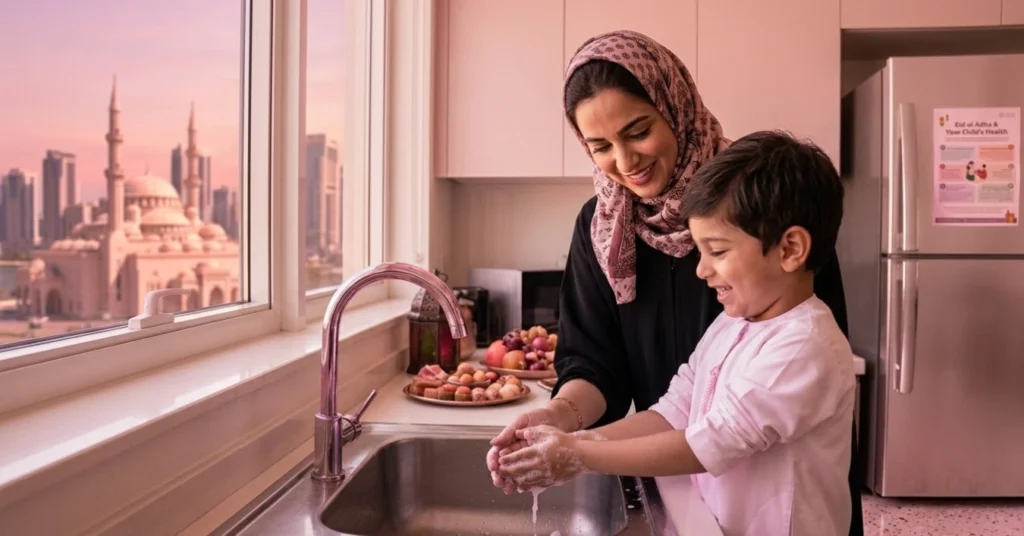
Child health during Eid in UAE is shaped by a combination of factors that rarely occur together at any other time of year. Eid ul Adha 2026 falls on May 27, right at the peak of UAE summer. This year, children are managing a combination of factors that rarely occur together at any other time. Significantly higher red meat consumption than usual. Disrupted sleep patterns across multiple days. Meal times that shift entirely. Intense UAE heat during morning prayers and family gatherings. Celebrations happening while daily routines are completely relaxed.
None of these things is a problem on its own. Together, they create conditions for some predictable, very manageable health challenges for child health during Eid. Being aware of them in advance means you can keep the celebration going smoothly from the first morning of Eid to the last.
Red Meat and Little Stomachs: Finding the Balance
The heart of Eid ul Adha is the tradition of sharing meat. It is a blessed time, but for a young child, a sudden increase in beef and mutton can be a considerable challenge for the digestive system. Red meat is high in protein and fat, which naturally slows digestion. According to Harvard Health, high-fat foods take significantly longer to empty from the stomach than lower-fat alternatives, which is why children often feel uncomfortable after heavy meat-based meals.
What Happens Inside a Child’s Digestive System During Eid
When a child who usually eats a varied diet suddenly consumes large amounts of red meat for two or three consecutive days, their body responds in a few predictable ways.
Constipation is the most common complaint our team at ESMC sees after Eid. Red meat contains very little dietary fibre. Without enough water and vegetables alongside it, a child’s digestive system can slow down significantly, and they may not pass a stool for several days.
Bloating and cramps are particularly common in children under five. Eating heavy, fatty meat in a single sitting stretches the stomach in a way their systems are not accustomed to, leading to visible discomfort and tummy aches that can last through the night.
Loose stools are paradoxically also possible. Some children react to rich, spicy gravies with mild diarrhoea rather than constipation. If your child develops this after Eid food, read our dedicated guide on summer diarrhea in children in UAE for step-by-step guidance on managing child health during Eid at home and knowing when to come in.
Loss of appetite by Day 2 or 3 is very common and is generally not a cause for concern. It is often the body’s way of signalling that it needs time to process what it has already taken in before accepting anything more.
Age-Specific Guidance for the Eid Table
The goal is not to restrict your child from Eid food. It is to make sure they enjoy it without feeling unwell afterwards to protect child health during Eid.
Children under 2 should be offered only small amounts of very well-cooked, soft, unseasoned meat. Their digestive systems are not ready for heavy spices or fatty cuts of any kind.
Children aged 2 to 5 should have portions kept small, roughly two to three tablespoons of meat per meal. Always serve meat alongside plain rice, bread, or a few slices of cucumber or yogurt to aid digestion and slow fat absorption.
Children aged 6 and above can enjoy most Eid foods, but encourage them to have one serving of salad or fruit alongside every meat dish to keep the digestive system moving normally for your child health during Eid.
Food Safety in the UAE Summer: The Rules That Protect Your Child Health During Eid
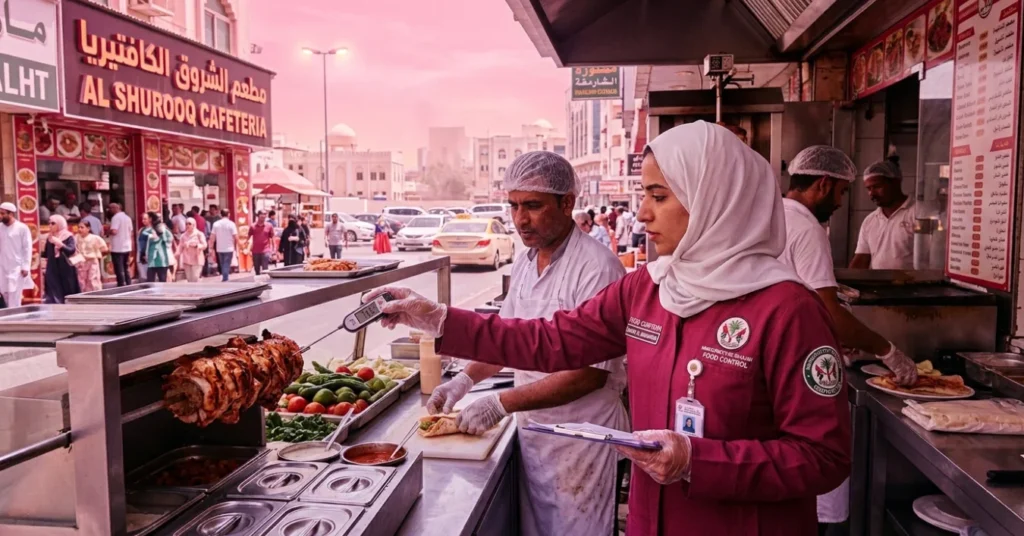
With Eid 2026 falling in late May, temperatures in UAE will easily exceed 40 degrees Celsius. The UAE Government’s food safety guidelines specifically address the importance of strict food handling during summer heat, when the risk of foodborne illness in children rises significantly.
The 2-Hour Rule
The bacterial danger zone sits between 5 and 60 degrees Celsius. In UAE’s May heat, cooked meat sitting at room temperature becomes unsafe for young children within just two hours. At many Eid gatherings, food is laid out at midday and guests continue arriving throughout the afternoon. By 3pm, that food has been out too long for a toddler’s sensitive stomach. Always serve children first, from freshly plated hot portions directly from the cooking pot to protect the child health during Eid.
Reheating Correctly
If you are serving leftovers, ensure the meat is piping hot throughout before giving it to a child. Cold spots in the center of a piece of meat are where bacteria survive and multiply. Reheat meat only once. Never reheat it a second or third time for a child.
Handling and Sharing Between Households
Children often play near the kitchen during Eid preparation. Ensure they wash their hands thoroughly with soap before eating, particularly if they have been near raw meat surfaces, drip trays, or preparation areas. If you receive a dish from a neighbor or relative, reheat it thoroughly before giving it to a baby or toddler, as you do not know how long it was in transit or at what temperature it was stored to protect your child health during Eid.
The Rice Risk
Cooked rice left at room temperature is one of the most significant bacterial risks at any Eid gathering. Bacillus cereus, a bacteria that thrives in cooked rice, multiplies rapidly in warm conditions. Refrigerate all rice dishes immediately after the main meal rather than leaving them out for later to safeguard your child health during Eid.
The Sleep Factor: More Important Than Parents Often Realise
Eid nights are late. Between family visits and the excitement of Eidi, sleep feels like an afterthought for most children. This is part of the magic of childhood, but it has a measurable physical impact.
According to the American Academy of Sleep Medicine, adequate sleep is directly linked to immune function in children. Even two or three nights of disrupted sleep can lower a child’s immune response, making them more likely to pick up a cough, cold, or stomach bug at a large family gathering than a well-rested child would be. This connects directly to what we see at ESMC in the week following every Eid, a noticeable increase in children presenting with illness that began during the holiday. Our guide on recurrent coughs, colds, and ear infections in UAE children explains how immune system load affects susceptibility in detail.
Overtired children often do not look sleepy in the way adults expect. They become hyperactive, irritable, or prone to sudden crying. Many parents interpret this as bad behaviour, when it is actually a signal that the child’s body needs rest urgently.
Managing the Sleep Recovery
Late nights are a normal and joyful part of Eid. Keep them within one to two hours of the usual bedtime where possible rather than allowing completely open-ended nights. Offer a 15-minute quiet time with low lighting before sleep, even on exciting Eid nights, to help the nervous system wind down. Allow daytime naps during the break, especially for children under five. Start moving back to the normal bedtime at least two nights before school or nursery begins again to safeguard your child health during Eid.
Beating the Heat: Outdoor Safety During Eid

From morning prayers to visiting relatives across the city, Eid involves more transitions in and out of direct sun than a typical day. Even at 7am or 8am in UAE during late May, the humidity and heat are already significant.
Morning Prayers and the Qurbani
If children are attending outdoor prayers, ensure they drink a full glass of water before leaving the house. Dehydration begins well before a child feels thirsty, particularly in the morning heat. If children are present for the qurbani, keep their sun exposure brief and move them back into an air-conditioned space as soon as possible to shield your child health during Eid. Our guide on dehydration signs in children in UAE is essential reading before the holiday begins, covering age-specific signs from babies through to school-age children to safeguard your child health during Eid.
Car Safety Between Visits
When visiting multiple homes across the day, the car heats up incredibly fast while parked in the sun. Always check the temperature of the car seat surface and the metal buckles with your hand before strapping a child in to avoid skin burns. Metal buckles in a parked car in UAE summer can reach 70 to 80 degrees Celsius.
Recognising Early Overheating
If a child becomes unusually quiet, has a very flushed or very pale face, stops playing, or complains of a headache after outdoor time, get them into shade and give them water immediately. If symptoms do not resolve within 15 to 20 minutes of cooling, this requires a medical assessment. Read our full guide on heatstroke in children in UAE which covers the exact difference between heat exhaustion and heatstroke and what to do in the first five minutes for your child health during Eid.
Skin Rashes After Eid: A Common and Overlooked Issue
Many children develop skin rashes during the Eid break that parents do not immediately connect to the holiday itself. New clothing fabrics, exposure to direct sun, moving between extreme AC and outdoor heat, and heat trapped in car seats and pram seats all contribute to prickly heat and contact rashes in babies and toddlers.
If you notice clusters of small red, brownish, or purple-toned bumps on your baby’s neck, chest, or skin folds during Eid, our guide on prickly heat in babies in UAE explains every type of heat rash, what actually works to soothe it, and exactly which products to avoid, including talcum powder, which is still commonly offered by well-meaning relatives and is not safe for babies under any circumstances and is against your child child health during Eid.
Managing a Sick Child During the Eid Holiday
Your Home Eid Health Kit
Before the holiday begins, check your medicine cabinet for these essentials:
Paracetamol and ibuprofen: Check they are not expired and confirm the correct dose for your child’s current weight. Dosing is by weight in children, not by age to shield your child health during Eid.
ORS sachets: Keep at least four sachets of oral rehydration solution at home. According to UNICEF, ORS is the most effective first-line treatment for dehydration caused by diarrhea and vomiting in children. These are available without a prescription at any UAE pharmacy and are the single most important thing to give a child with diarrhea or vomiting before you can reach a clinic to guard your child health during Eid. For guidance on using ORS correctly, read our guide on summer diarrhea in children in UAE.
A working digital thermometer with fresh batteries: Check this before Eid begins, not at 11pm when you need it.
An antihistamine appropriate for your child’s age: Useful for mild allergic reactions to new foods, sweets, or fabric dyes in new Eid clothing.
When to Visit ESMC During Eid: The Red Flags
If your child is mildly unwell, rest and fluids at home are often sufficient. However, come to our Paediatrics Department at ESMC without delay if you notice any of the following:
- Any baby under 3 months with a fever above 38 degrees Celsius. This is always a same-day clinical assessment with no exceptions
- A fever above 40 degrees Celsius in any child that does not come down within one hour of the correct dose of paracetamol or ibuprofen
- Signs of dehydration: the child is not drinking, has no tears when crying, or has not urinated in over eight hours. Our guide on dehydration signs in children in UAE covers age-specific signs in detail to guard your child health during Eid
- Vomiting that prevents keeping any fluids down, or more than three vomiting episodes in six hours
- Severe or persistent stomach pain that is sharp, does not resolve, or is accompanied by a rigid abdomen
- Any confusion, unusual limpness, difficulty waking, or difficulty breathing. These are emergency signs. Call 998 first, then contact ESMC
Book an Appointment or Walk In at ESMC
The Eid Health Checklist: Screenshot and Share
Before Eid Begins
- Stock your home kit: paracetamol, ibuprofen, ORS sachets, digital thermometer, age-appropriate antihistamine
- Confirm your child’s current weight so you know their exact medication dose
- Try to get children one to two hours of extra sleep for the two nights before Eid begins
- Save ESMC’s number: +971 50 665 9064. Open every day of Eid from 8AM to 11:30PM
- Read our Paediatrics Department page so you know exactly what care is available
During Eid
- Serve children’s food fresh and hot, directly from the cooking pot
- Apply the 2-hour rule: do not let cooked food sit out in the heat to guard your child child health during Eid
- Offer water every 20 to 30 minutes even if the child does not ask for it
- Check car seat and buckle temperatures with your hand before every journey
- Balance rich meat meals with fruit, cucumber, yogurt, or plain rice to preserve your child health during Eid
If Your Child Becomes Unwell
- Use ORS immediately for any diarrhoea or vomiting
- Monitor temperatures closely and record them with times
- Visit ESMC immediately for babies under 3 months with any fever
- For any life-threatening emergency, call 998 first
Frequently Asked Questions
Is it normal for children to get constipated after Eid?
Yes, and it is one of the most common post-Eid complaints our paediatric team sees every year. The sudden increase in red meat combined with reduced vegetable and fruit intake, less regular meal timing, and often reduced water intake in the excitement of the holiday creates the perfect conditions for constipation. Encourage water and fruit intake from Day 1 of Eid rather than waiting for symptoms to appear. If your child has not passed a stool in three days and is uncomfortable, come to ESMC for an assessment.
My child ate at multiple houses during Eid and now has an upset stomach. What should I do?
Start ORS immediately, offering small sips every five minutes rather than large gulps. Keep your child in a cool, well-ventilated space. Monitor for the red flags listed above: blood in the stool, fever above 38.5 degrees Celsius, inability to keep any fluid down, or no urination in eight hours. Our guide on summer diarrhea in children in UAE gives a complete step-by-step home management guide and explains exactly when to come to ESMC.
How do I know if my child is just tired from Eid or actually unwell?
A tired child is irritable, clingy, and difficult to settle but responds to comfort and eventually sleeps. An unwell child may have a fever, refuses to drink, has an unusual cry, is difficult to wake, or has other physical symptoms alongside the tiredness. When in doubt, take a temperature. A reading above 38 degrees Celsius in a child under three months or above 39 degrees Celsius in any child who is also refusing fluids is a prompt to come to ESMC rather than wait.
My baby has a rash after Eid. Is it from the food or the heat?
Both are possible. New foods introduced during Eid can trigger allergic reactions, which typically appear as raised welts or hives anywhere on the body and are usually very itchy. Heat rash from sun exposure and car seat heat appears as clusters of small bumps in the neck folds, chest, and skin creases, without the raised hive appearance. Our detailed guide on prickly heat in babies in UAE includes a comparison table to help you identify which type of rash you are looking at and what to do for each.
My child had a fever after a recent vaccination. Is this related to the Eid celebrations?
If your child received a vaccination in the days around Eid, a mild fever within 24 to 48 hours is a common and expected immune response. However, a high fever combined with a widespread rash, unusual drowsiness, or refusal to feed needs a same-day clinical assessment regardless of vaccination timing. Our guide on baby fever after vaccination in UAE explains exactly which post-vaccination reactions are normal and which are red flags.
My child developed an ear ache after swimming in the pool during Eid. What should I do?
Pool-related ear infections are very common during Eid when children spend extended time in shared pools during the holiday. The CDC notes that warm pool water with reduced chlorine levels is a significant risk factor for outer ear infections. The key test is to gently press the small bump in front of the ear canal. If your child winces or pulls away, it is very likely swimmer’s ear requiring antibiotic ear drops. Do not use cotton buds. Come to ESMC’s paediatric team for an assessment. Our full guide on swimmer’s ear in children in UAE covers every sign, the tug test, and when to seek same-day care.
A Blessed Holiday for Every Family
Child health during Eid in UAE is something every parent can manage confidently with the right preparation. Eid ul Adha is one of the most beautiful times of the year, and with a little preparation there is no reason it cannot be healthy as well as joyful. By keeping an eye on food safety, the heat, and the sleep, you are protecting those precious family memories that your children will carry with them for life preserving your child health during Eid.
From all of us at Erum Saba Medical Center, Eid Mubarak to you and your loved ones. May your homes be full of laughter, your tables full of good food, and your children full of health.
ESMC Sharjah, Al Zahra Street, Maysaloon.