Eid toothache prevention Sharjah starts with one simple appointment before May 25 — and yet every year, hundreds of families spend the holiday managing dental pain that was entirely avoidable.
It is Eid morning. The family is dressed. The house smells incredible. You reach for a piece of mithai — the first sweet of the holiday — and the moment it touches one particular tooth, there it is. That sharp, searing jolt of pain that ruins everything.
Here is the thing about Eid toothaches: they almost never start on Eid. The problem was already there. A small cavity, a worn filling, a crack that had not bothered you enough to do something about. But Eid gives it everything it needs to become unbearable: six consecutive days of dates, mithai, chocolate, sugary drinks, and no dentist available to fix it.
This guide explains exactly why Eid is the highest-risk time of year for dental pain, and what to do right now, before May 25, to make sure it does not happen to you or your children.
Table of Contents
Why Eid ul Adha Is Uniquely Dangerous for Your Teeth
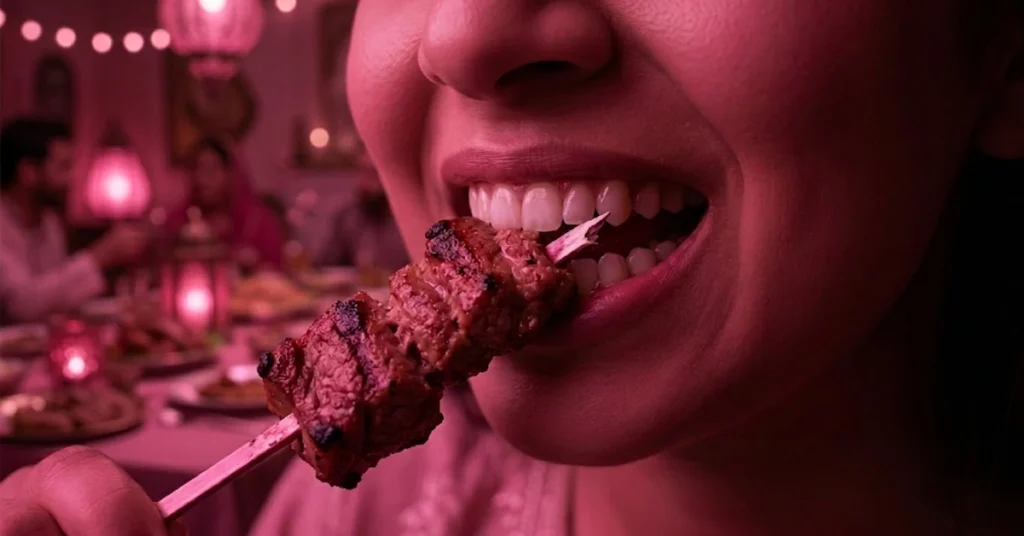
Most people know that sugar is bad for teeth. What most people do not realise is that it is not just the amount of sugar that causes damage. It is the relentless, all-day exposure to it that makes Eid ul Adha unlike any other time of year.
Think about a typical Eid day. Dates before the prayer. Mithai at the first family visit. Barfi at the second. Gulab jamun at the third. Sheer khurma at lunch. Chocolates from the children’s goody bags. Eid biscuits with afternoon chai. Sweetened drinks throughout. A person who normally has a biscuit with their coffee is now consuming sugar at virtually every moment of the day, across multiple days.
According to the World Health Organization’s oral health guidelines, when sugar enters the mouth, bacteria feed on it and produce acids as a byproduct. These acids remain active on tooth surfaces for up to 30 minutes after each bite. At Eid, the next sweet arrives before the acid attack from the last one has even finished. Your teeth barely get a moment’s rest.
Dates deserve a special mention, because many families assume that natural sugars are gentler on teeth. According to the NHS guidance on sugar and oral health, sugar is sugar regardless of its source, and the bacteria in your mouth do not distinguish between natural and refined varieties. Dates carry an additional risk beyond their sugar content: they are sticky. They cling to tooth surfaces and wedge between teeth, giving acid-producing bacteria extended contact time rather than a brief encounter.
The final piece of the picture is availability. Many dental clinics in Sharjah operate on reduced hours during the Eid public holiday. A toothache that begins on Eid Day 1 can mean five days of pain management with no professional treatment available. This is what turns a manageable dental issue into a genuinely miserable holiday.
What Is Actually Happening Inside the Tooth
If you have ever wondered why sweets can make a tooth hurt so sharply, the answer lies in the structure of your teeth.
The outer layer of every tooth is enamel, the hardest substance in the human body. Beneath it is dentine, a softer and more porous layer containing thousands of microscopic channels that lead directly to the tooth’s nerve. When enamel is intact, the nerve is protected and you feel nothing. When enamel is weakened, eroded, or missing due to decay, grinding, acid erosion, or simply age, dentine is exposed.
When you eat something sweet, the sugar interacts with bacteria in your mouth to produce acids that attack the teeth. If dentine is exposed anywhere, those acids reach the channels, travel toward the nerve, and produce the sharp, familiar jolt you feel when biting into chocolate or mithai. According to a clinical review published on NCBI, dentinal hypersensitivity is one of the most commonly reported dental complaints and is directly linked to enamel loss from acid exposure over time.
Sensitive toothpaste can reduce symptoms temporarily. It does not fix what is underneath. Any pain triggered by sweets is a warning sign worth addressing before Eid begins.
The 4 Dental Problems Most Likely to Become Unbearable at Eid
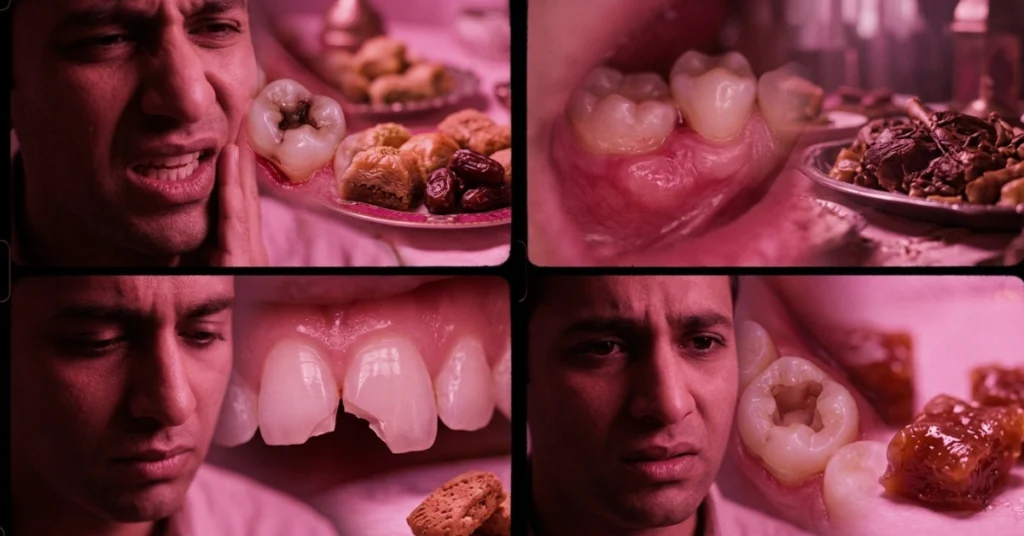
Eid does not create dental problems. It reveals them and turns mild, ignorable discomfort into acute pain. These are the four most common conditions that the Eid sugar load pushes from manageable to unbearable.
1. The Ignored Cavity Most people with a cavity know it is there. They have felt the occasional twinge and made a mental note to book an appointment. Eid sugar reaches the cavity, feeds the bacteria inside, accelerates decay, and turns mild sensitivity into constant throbbing pain. When the nerve becomes involved, what could have been a simple 30-minute filling in May becomes a root canal in June. At ESMC, fillings start from AED 99 and take approximately 30 minutes. A root canal starts from AED 299 and takes significantly longer.
2. The Old or Loose Filling Fillings do not last forever. They gradually wear down, develop micro-gaps at the edges, and eventually allow bacteria access to the tooth underneath. Biting into a hard Eid sweet such as a nut-filled barfi or a hard biscuit can dislodge a weakened filling entirely, exposing the tooth to sugar and pressure with nothing left to protect it.
3. Enamel Erosion and Sensitivity Enamel erosion happens gradually from acidic foods and drinks, from teeth grinding at night, or from aggressive brushing over many years. When enamel thins or gums recede, the sensitive dentine underneath is exposed and every sweet thing on the Eid table triggers an immediate pain response. What starts as a mild ache on Eid Day 1 often becomes constant discomfort by Day 3.
4. A Hidden Crack Many people have hairline cracks in their molars that cause no noticeable pain under normal circumstances. Changes in pressure from biting into a hard toffee or nut-filled sweet, or sudden temperature changes from cold drinks, can cause sharp shooting pain that seems to come from nowhere. One Eid biscuit can reveal a crack that has been quietly sitting there for months.
If any of these sounds even mildly familiar, your tooth is already telling you something. A 20-minute check-up at ESMC’s Dental and Facial Aesthetics Department before Eid is far easier than five days of pain management during it.
Your Children’s Teeth and Eid: What Every Parent Needs to Know

Children and Eid sweets are inseparable. That is completely fine. Eid is a celebration and sweets are part of the joy. But children’s teeth are more vulnerable to sugar damage than adult teeth, and Eid’s sugar volume is unlike anything else in the year.
Children’s enamel is thinner and softer than adult enamel. Baby teeth also have larger pulp chambers relative to their size, meaning decay reaches the nerve faster and causes more pain. Many children in the UAE have early cavities that parents are completely unaware of, because the early stages produce no pain at all.
The frequency of eating is the biggest danger. It is not one sweet that damages teeth but the constant grazing on sweets throughout the day across six days. Every time a child eats sugar, acid attacks the teeth for 30 minutes. At Eid, those acid attacks barely have time to pause between them.
Sticky sweets are the worst offenders. Mithai, jalebi, toffees, and caramel stick to tooth surfaces and wedge between teeth, giving bacteria hours of contact time. As the NHS explains in its guidance on sugar and dental health, sticky foods cause prolonged acid attacks compared to foods that are quickly rinsed away by saliva.
Dates carry the same stickiness risk as mithai. Parents who give their children dates in place of mithai are still exposing their teeth to prolonged sugar contact, just with a different texture.
Bedtime brushing becomes more critical than ever during Eid, precisely when it is most likely to be skipped. Late nights, disrupted routines, and tired children mean teeth often go unbrushed after an entire day of sweets. This is one of the single most damaging habits during the holiday.
Practical guidance for parents over Eid:
- Set a rule: sweets at mealtimes rather than continuously throughout the day. This limits the number of acid attacks significantly
- Offer water between sweet treats to rinse sugar off tooth surfaces
- Make teeth brushing non-negotiable at bedtime, even on late Eid nights
- Check your child’s teeth for white spots. White patchy areas on enamel are the first visible sign of decay and can be reversed if caught early
- Book a pre-Eid dental check for your child at ESMC Sharjah before May 25. Early cavities caught now are simple fillings. Left until after Eid, they often become extractions
If You Already Have Tooth Pain: What to Do Until You Can See a Dentist
If you are already experiencing dental discomfort, or if pain starts during Eid before you can reach the clinic, the following steps will help manage it. These are temporary measures only. They manage pain. They do not treat the problem.
1. Warm salt water rinse Dissolve half a teaspoon of salt in a glass of warm water. Swish gently for 30 seconds, then spit. This reduces inflammation and cleans the area around the tooth. Repeat every few hours.
2. Ibuprofen or paracetamol Standard over-the-counter pain relief at the correct dose for your weight. Ibuprofen is generally more effective for dental pain because it has anti-inflammatory properties in addition to pain relief. Do not exceed the stated dose.
3. Cold compress Apply a cloth-wrapped ice pack to the outside of the cheek near the painful tooth for 10 to 15 minutes at a time. This reduces swelling and temporarily numbs the area.
4. Clove oil A small amount applied on a cotton ball to the affected tooth provides temporary numbing relief. Available at most UAE pharmacies. Do not swallow. Do not apply directly to gum tissue.
5. Avoid the trigger side Eat on the other side of the mouth where possible. Avoid extremely hot, cold, or sweet foods near the affected tooth.
Important: Do NOT place aspirin directly on the tooth or gum. This is a widely repeated myth and causes chemical burns to gum tissue. These steps manage pain only. Any dental pain that lasts more than 48 hours needs a dentist. ESMC Sharjah dental clinic is open through the Eid holiday.
When It Is a Dental Emergency: Come In Today
Some dental situations cannot wait even for the next day. Come to ESMC dental clinic immediately if you or your child experience any of the following:
- Severe throbbing pain that does not respond to ibuprofen or paracetamol
- Swelling of the face, jaw, or neck alongside tooth pain. This indicates an abscess which can become dangerous and spread rapidly
- Fever alongside dental pain. A sign of spreading infection that requires urgent treatment
- A tooth has been knocked out. This is a 60-minute emergency. Store the tooth in milk or the patient’s own saliva, handle it by the crown only and not the root, and come to ESMC immediately
- A tooth is cracked or broken with exposed nerve: extreme sensitivity to air and temperature that does not ease
- A child is in significant dental pain and distress
Dental swelling spreading to the face or neck is not a normal toothache. It is a medical emergency. Come to ESMC immediately or call 998.
The Pre-Eid Dental Checklist: What a Check-Up at ESMC Actually Covers
Many people avoid dental visits simply because they are not sure what to expect. A pre-Eid dental check at ESMC Sharjah with Dr. Aisha Jamil takes approximately 20 to 30 minutes and covers the following:
For adults: Visual examination of all teeth looking for cavities, cracks, and worn enamel. Assessment of existing fillings and crowns identifying any that are loose, worn, or developing gaps. Gum assessment checking for inflammation or recession that increases sensitivity. X-ray if needed to identify cavities between teeth or below the gum line. Scale and polish if needed, removing plaque and tartar buildup that increases sensitivity and gum irritation. Clear professional advice on anything that needs attention before the holiday. Scaling starts from AED 49 at ESMC.
For children: Gentle examination of all milk and permanent teeth for early decay. Fluoride application: a painless 5-minute treatment that, according to the World Health Organization, significantly strengthens enamel and reduces cavity risk. Fissure sealants for back molars if appropriate: a thin protective coating that prevents food and bacteria from entering the deep grooves where decay starts most often.
Most issues found at a pre-Eid check-up are small and quick to fix. A small filling takes 30 minutes. A scale and polish takes 20. The problem only becomes expensive and painful when it is left until after Eid.
If your children have also been experiencing heat-related skin or health complaints alongside dental concerns during the Eid break, our child health during Eid in Sharjah guide covers food safety, hydration, and when to bring a child to our paediatric team.
Quick Guide: Eid Sweets and Your Teeth
| Eid Sweet | Risk Level | Why |
|---|---|---|
| Dates | HIGH | Sticky, clings to tooth surfaces for hours |
| Mithai and Barfi | HIGH | Very high sugar content, sticky texture |
| Gulab Jamun | HIGH | High sugar plus syrup that soaks into teeth |
| Jalebi | HIGH | Extremely sticky, pure sugar syrup |
| Milk Chocolate | HIGH | Sticky and high in sugar |
| Dark Chocolate | MODERATE | Less sticky than sweets, melts quickly |
| Hard Biscuits and Cookies | MODERATE | Risk of cracking weak or filled teeth |
| Nuts | MODERATE | Can crack weak fillings or existing hairline fractures |
| Dried Fruit | HIGH | Same stickiness risk as dates |
| Water | SAFE | The best Eid drink for your teeth |
The rule is simple: sticky plus sweet equals highest risk. Eat sweets at mealtimes rather than continuously throughout the day, and brush within 30 minutes of the last sweet of the evening.
Book Before May 25: Do Not Let a Tooth Ruin Your Eid
You have until May 25 to book a pre-Eid dental check at ESMC Sharjah. That is enough time to fix the small things quietly before they become the kind of toothache that sits at the Eid table with you all week.
For adults: Book your pre-Eid dental check at ESMC Sharjah. 20 minutes. Walk in worry-free.
For parents: Book your child’s pre-Eid dental check and fluoride application at ESMC Sharjah. Quick, painless, and the best thing you can do for their teeth before the sweet season.
Erum Saba Medical Center, Al Zahra Street, Maysaloon, Sharjah. Open 8AM to 11:30PM daily including through the Eid holiday.
Frequently Asked Questions
Is it normal for teeth to hurt when eating dates?
Yes, and it is a sign worth paying attention to. Dates are sticky and high in natural sugar, both of which place significant stress on teeth. The NHS confirms that sticky foods cause prolonged acid attacks because they cling to tooth surfaces rather than being quickly rinsed away by saliva. If eating dates causes a sharp or lingering ache, it usually means there is an underlying issue: a cavity, worn enamel, or gum recession that is worth getting checked before Eid.
Can I wait until after Eid to see a dentist if the pain is mild?
You can, but it carries real risk. Mild dental pain at the start of Eid has a way of becoming severe dental pain by Day 3, once continuous sugar exposure has aggravated the underlying problem. Most issues that are easy and inexpensive to treat now become more complex and costly if left until after the holiday. ESMC Sharjah is open throughout the Eid holiday from 8AM to 11:30PM so you never have to wait.
My child has never complained of a toothache. Do they still need a pre-Eid check?
Yes, because the early stages of tooth decay in children rarely cause pain. By the time a child complains, the decay is already well advanced. A quick check at ESMC’s dental clinic can catch problems that have no symptoms yet, and a fluoride application takes just five minutes to significantly strengthen enamel before the Eid sweet season begins. The WHO specifically recommends fluoride as a primary preventive tool for childhood dental decay.
Are dates actually bad for teeth if they are natural?
Natural sugar and refined sugar cause the same acid reaction in the mouth. The bacteria in your mouth do not distinguish between the two. What makes dates particularly problematic is not just the sugar content but the texture. Their stickiness means they cling to tooth surfaces and between teeth for hours, giving acid-producing bacteria extended contact time. Eat dates at mealtimes rather than as a continuous snack, and rinse with water afterwards.
What is a fissure sealant and does my child need one?
A fissure sealant is a thin protective coating applied to the chewing surfaces of back teeth, where the deep grooves collect food and bacteria and decay starts most easily. It is quick, painless, and can significantly reduce cavity risk in children. Whether it is appropriate depends on your child’s age and tooth development. The dentist at ESMC will advise during the check-up without any pressure.
How long does a pre-Eid dental check actually take?
Approximately 20 to 30 minutes for a standard examination. If a small filling or scale and polish is needed, add another 20 to 30 minutes. Most people are in and out well within an hour and many find they need far less treatment than they expected.
Is ESMC dental open during Eid?
Yes. ESMC Sharjah is open 8AM to 11:30PM daily, including through the entire Eid holiday. For dental emergencies such as severe pain, facial swelling, or a knocked-out tooth, come in immediately without waiting for an appointment.
What is the cheapest way to protect my teeth before Eid?
A scale and polish at ESMC starts from AED 49. This removes the plaque and tartar buildup that accelerates decay and increases sensitivity, and it is the single most cost-effective preventive treatment you can have before the holiday. Combined with a standard dental check-up, it gives your teeth the best possible starting point before six days of Eid sweets.
My child is scared of the dentist. Will ESMC’s dental team be gentle with them?
Yes. Dr. Aisha Jamil and our dental team at ESMC are experienced in working with children and anxious patients. The pre-Eid check for children involves no drilling and no injections unless a specific treatment is needed. It is a gentle visual examination, a fluoride application, and a conversation. Most children leave relaxed and without distress.
The Bottom Line
There is a tooth you have been meaning to get checked. You know the one. It twinges occasionally. It does not like the cold. You have been eating on the wrong side of your mouth and hoping for the best.
Eid is coming. Six days of mithai, dates, gulab jamun, and sheer khurma. And that tooth.
The good news is that you have until May 25 to do something about it, quietly, quickly, before the holiday. Eid toothache prevention in Sharjah starts with one 20-minute appointment. Most problems found at a pre-Eid check-up are straightforward to fix. A small filling. A polish. A fluoride treatment for the kids. Things that take 20 minutes and leave you walking into Eid with nothing to worry about.
Do not share the Eid table with a toothache. Book your appointment at ESMC Sharjah and enjoy the mithai.
ESMC Sharjah, Al Zahra Street, Maysaloon. Open 8AM to 11:30PM daily including all Eid holidays.