Prickly heat in babies in Sharjah is one of the most common concerns parents bring to our team at Erum Saba Medical Center every summer. You are changing your baby’s nappy and you notice it. A cluster of tiny red bumps in the neck folds, maybe spreading to the chest. Your baby is fussier than usual, pulling at their clothes and struggling to settle for a nap.
You have already changed the nappy brand, switched the baby wipes, and asked three people in your mum’s WhatsApp group. One said it is heat rash. One said it is an allergy. One said it is a milk rash from breastfeeding. You are still not sure, and as the Sharjah humidity climbs, the rash seems to be getting angrier.
If this sounds familiar, take a deep breath. Skin rashes in babies during UAE summer are extremely common and the vast majority are completely harmless. Knowing which rash you are looking at, what actually helps, and what to stop putting on it makes all the difference for your baby’s comfort. This guide will help you identify the most common summer rashes, understand how they behave in our unique Sharjah climate, and know with confidence when home care is enough and when it is time to visit the clinic.
Table of Contents
Why UAE Summer Is So Hard on Baby Skin
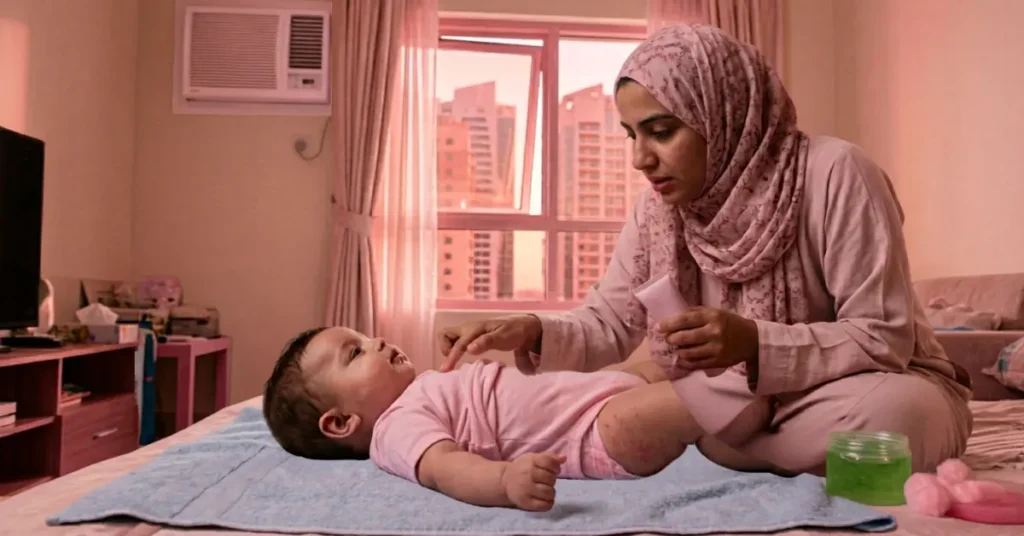
The transition into May in Sharjah brings a specific kind of environmental stress for a newborn or infant. According to the NHS, babies are born with immature sweat glands and simply cannot regulate their body temperature the way adults can. When the mercury hits 40 degrees Celsius, their bodies struggle to keep up.
The humidity factor is the real culprit. In Sharjah, humidity often peaks above 60 percent. High humidity means sweat cannot evaporate from the skin’s surface. Instead of cooling the baby down, moisture sits on the skin and clogs sweat ducts far faster than it would in a dry desert climate.
The constant AC-to-heat transition is a hidden trigger that most parents do not think about. Moving your baby from a chilled 22 degree Celsius living room into the midday heat to get into the car causes a sudden sweat surge. According to Nemours KidsHealth, heat rash develops specifically when the openings of sweat glands become blocked, trapping sweat underneath the skin. This process is accelerated significantly by rapid temperature changes.
Cultural practices also play a role specific to Sharjah families. Whether it is a beautiful hand-knitted blanket from a grandmother or layering clothes in the AC to prevent the baby catching a cold, these extra layers trap heat against a temperature regulation system that is already overwhelmed. This is one of the most consistent patterns our paediatric team at ESMC sees every summer.
What Is Prickly Heat? The 3 Types Every Parent Should Know
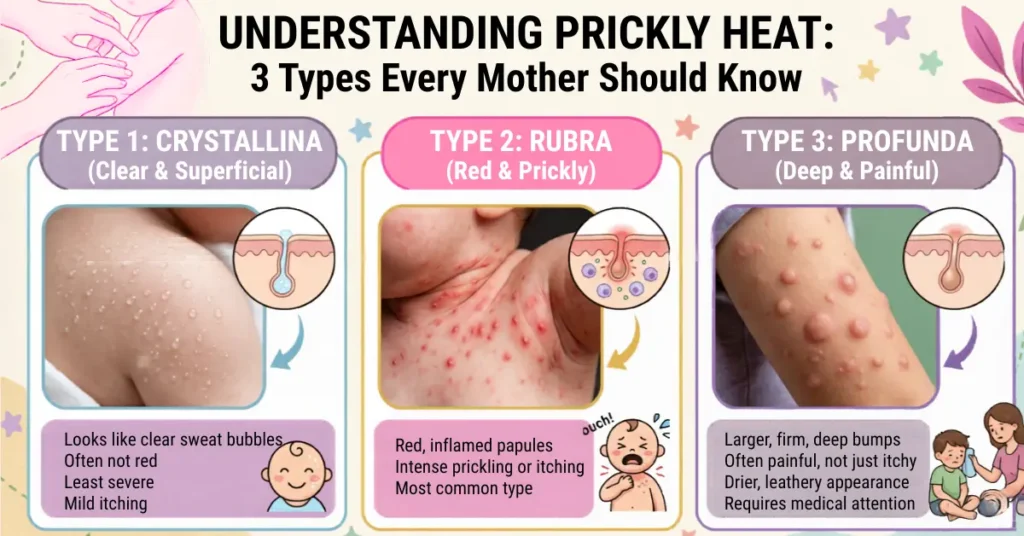
Prickly heat, medically known as miliaria, happens when sweat gets trapped under the skin because the tiny openings of the sweat ducts become blocked. According to the Mayo Clinic, instead of escaping through the skin surface, the sweat builds up underneath and causes bumps or blisters depending on how deep the blockage is.
Type 1: Miliaria Crystallina This is the mildest form. It looks like tiny clear fluid-filled blisters sitting right on the surface of the skin, almost like beads of sweat that will not wipe away. On brown or South Asian skin tones, these can be very hard to see. The Cleveland Clinic notes that on darker skin, heat rash bumps may appear grey or white rather than the classic clear appearance seen on lighter skin. The blisters break easily and do not usually itch or hurt. This type typically resolves on its own once the baby is cooled down and the sweat duct blockage clears.
Type 2: Miliaria Rubra (Classic Prickly Heat) This is the most common form and the one most parents mean when they say heat rash. It occurs deeper in the skin and causes inflamed bumps. On brown skin, the bumps may not appear bright red. According to the clinical dermatology resource Don’t Forget the Bubbles, this form causes a prickling or burning sensation, which is why affected babies become noticeably fussier or prone to scratching at their clothing. Look for clusters that appear darker red, brownish-red, or even purple-toned, with the surrounding skin looking generally irritated or dusky.
Type 3: Miliaria Profunda This is the least common form and affects the deeper dermis layer of the skin. The Mayo Clinic describes it as producing firm flesh-coloured bumps resembling goosebumps, which are generally less itchy but more persistent. If a rash looks like firm skin-coloured lumps that do not improve with cooling measures within 48 hours, it is time for a clinical assessment at ESMC’s Paediatrics Department.
Important note for Sharjah parents: On brown or dark baby skin, heat rash may not look red at all. Look for bumps that are darker than the surrounding skin, slightly purplish, or skin-coloured with visible fluid. The texture of the skin and your baby’s level of discomfort are more reliable clues than colour alone.
Where Prickly Heat Appears: A Body Map for Babies
According to the American Academy of Pediatrics via HealthyChildren.org, heat rash in infants and young children concentrates in specific areas where sweat becomes trapped. In babies under 18 months, check these areas first:
- Neck folds: The number one location, especially in chubby babies where skin-on-skin contact traps moisture continuously
- Chest and upper back: Often where the fabric of a onesie or car seat strap rubs throughout the day
- The nappy area: A perfect storm of heat, moisture, and friction working together
- Armpits and leg creases: Anywhere a skin fold exists, sweat will struggle to evaporate
- Forehead and scalp: Particularly if your baby wears a hat or sweats heavily during feeding
Heat Rash vs Diaper Rash vs Allergic Rash: How to Tell Them Apart
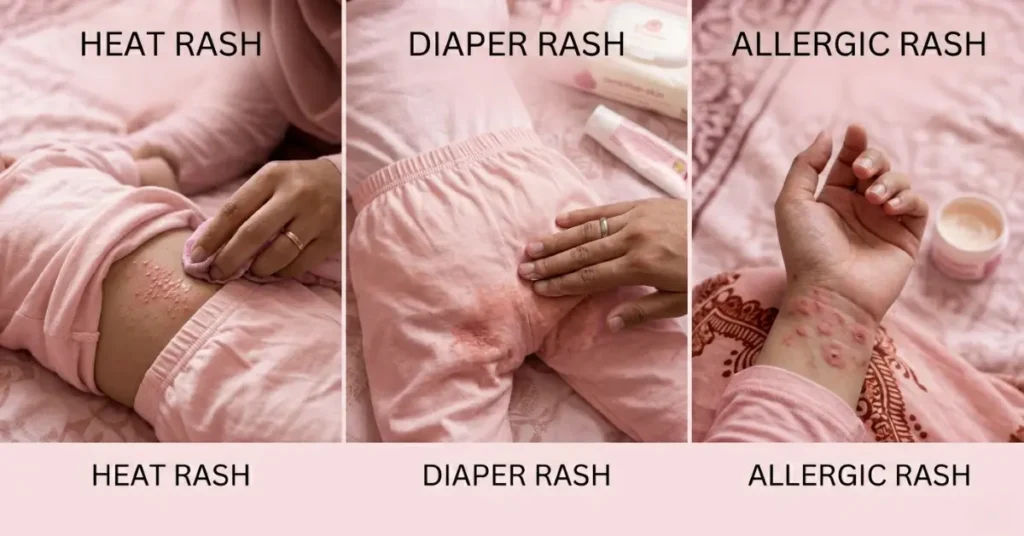
This is the most common question our team at ESMC’s Paediatrics Department hears every summer.
| Heat Rash (Prickly Heat) | Diaper Rash | Allergic Rash | |
|---|---|---|---|
| Appearance | Tiny bumps or blisters, red, brown, or purple-toned | Raw, patchy, reddened skin | Raised welts or hives |
| Location | Neck, chest, folds, armpits | Only the nappy area | Anywhere the trigger touched |
| Trigger | Heat, humidity, sweating | Wet nappies, new wipes or foods | New soap, fabric, or medicine |
| Itchy? | Yes, baby is fussy and scratchy | Usually painful and stinging | Very itchy and distressing |
| Skin Folds | Often worse in the folds | Usually spares the deep folds | Variable |
| Improves With | Cooling and air circulation | Frequent changes and barrier cream | Removing the allergen |
Note on darker skin tones: In South Asian and Arab babies, a healing diaper rash may leave the skin looking lighter than the surrounding area. The Mayo Clinic confirms this is post-inflammatory hypopigmentation, a well-documented response to skin inflammation in babies with brown or Black skin. It is temporary and is not a fungal infection. Please do not apply antifungal creams to this without a doctor’s advice. The EthnoMed resource on skin conditions in children notes that superficial inflammatory conditions including diaper dermatitis frequently result in hypopigmentation that resolves over a period of a few months. For parents curious about how skin tone and inflammation interact more broadly, our melasma and pigmentation treatment guide covers this in detail for adults with South Asian and Arab skin.
The Nappy Area: The Most Vulnerable Zone in UAE Summer
In the UAE summer, the nappy area is the most vulnerable part of your baby’s body. It functions as a micro-climate, wrapped in plastic or thick fabric, pressed against the skin, and exposed to the changing pH of urine throughout the day.
When a heat rash develops under a nappy, the skin cannot breathe. According to Skinsight’s clinical resource on Miliaria Rubra, two key complications of heat rash are secondary bacterial infection from scratching and heat exhaustion when the condition is left unmanaged. If bacteria or yeast take hold in already inflamed nappy area skin, a simple heat rash can turn into a painful infection requiring medical treatment.
To protect this area during Sharjah’s peak summer months:
Nappy-free time is essential. Aim for 15 to 20 minutes of air time after every nappy change. Nemours KidsHealth specifically recommends leaving the diaper open or off as much as possible until a rash heals. This single habit makes a significant difference to skin health during the summer months.
Change at the very first sign of wetness. Do not wait for the nappy to be full. In the UAE heat, even a brief period of trapped moisture accelerates skin breakdown.
Choose breathable nappies. Avoid plastic-backed nappy covers during summer. Look for breathable cotton-feel options which allow better air circulation against the skin.
If the nappy area rash is accompanied by fever, this is not a straightforward heat rash. Read the warning signs in our section on when to visit the clinic below, and consider checking our guide on heatstroke in children in Sharjah if your baby also appears overheated or unusually lethargic. If your baby appears to also be dehydrated alongside the rash, our guide on dehydration signs in children in Sharjah provides immediate action steps while you travel to the clinic.
Soothing Remedies: What Actually Works
When your baby is suffering from prickly heat, the goal is to cool the skin and allow the blocked sweat ducts to open. Here is what works and why:
Cool the environment first. Move into a room with the AC set to a comfortable 22 to 24 degrees Celsius. Cooling the skin is the only way to stop the sweat-blockage cycle that drives the rash. No topical product will help if the baby remains in a hot environment.
Lukewarm baths. Bathe the baby in plain, slightly cool water. Nemours KidsHealth recommends bathing without soap on the rash, as soap strips the skin’s natural oils and causes further irritation. Pat dry gently and let the skin air if possible.
Loose 100 percent cotton clothing only. According to Skinsight, loose-fitting clothing is a core part of treating and preventing miliaria rubra. Breathable cotton allows air to circulate against the skin in a way synthetics and polyesters cannot.
Calamine lotion. A thin layer applied to the affected area can soothe the itch and provide relief. It is safe for babies over six weeks of age but should only be applied to intact skin, not to broken blisters.
Cool compress. Nemours KidsHealth recommends applying a thin clean cloth dipped in cool water to the rash a few times a day, removing it once it is no longer cool, as an effective immediate relief measure.
What NOT to Do: The Safety List
No talcum powder, ever. This is the most important rule in this entire guide. A published case report in PMC via the National Institutes of Health confirms that acute talcum powder aspiration is a very dangerous condition in childhood, with documented cases of severe respiratory distress, collapsed lung segments, and the need for mechanical ventilation. The American Academy of Pediatrics advises against the use of any baby powders containing talc. Talcum powder also clogs pores further, making a heat rash significantly worse. If you have been told to use it, discard it immediately.
No coconut oil on an active rash. While coconut oil is excellent for moisturising healthy baby skin, it acts as a sealant on heat rash. It traps the sweat beneath the skin and makes the blockage worse rather than better.
No heavy creams or Vaseline on the rash area. Nemours KidsHealth specifically states that thick creams or ointments should not be applied to heat rash because they further block the clogged ducts.
No steroid creams without a prescription. Never apply hydrocortisone or any other steroid cream to a baby’s skin unless it has been specifically prescribed by a paediatrician after a proper examination. Our Aesthetics and Dermatology team at ESMC and our paediatric team work together on skin cases where both clinical perspectives are relevant.
Critical safety note: Talcum powder is not safe for babies under any circumstances. It is not a heat rash remedy. It is a documented respiratory hazard. Clinical reports describe a pattern where an infant appears fine for several hours after inhaling powder, then develops severe respiratory distress requiring emergency intervention. If anyone in your circle has suggested it, please discard it immediately.
Safe Products for Baby Skin in UAE Summer
Zinc oxide barrier creams such as Sudocrem are excellent for the nappy area specifically, creating a physical shield between the skin and moisture without clogging pores. Note these are too thick for heat rash on the neck or chest, where calamine lotion is the better choice.
Fragrance-free everything. Fragrance is the number one irritant for baby skin. Switch to hypoallergenic and fragrance-free washes, wipes, and laundry detergents for all baby clothing and bedding throughout the summer.
100 percent cotton clothing. Always check the label carefully. Many value packs sold in UAE pharmacies and supermarkets are poly-cotton blends. You want pure cotton for any baby experiencing heat rash during summer.
When to See a Doctor: The Red Flags
Most heat rashes clear within 24 to 48 hours of proper cooling. Book an appointment at Erum Saba Medical Center today if:
- The rash is spreading rapidly across the body rather than staying localised
- The blisters are filled with yellow or white pus, which is a sign of secondary bacterial infection. Skinsight confirms that infected areas showing pus, redness, crusting, swelling, or tenderness require antibiotic treatment
- Your baby has a fever above 38 degrees Celsius alongside the rash. Heat rash alone does not cause fever. The combination means something else is happening
- The baby is extremely distressed, refusing to feed, or unable to sleep
- The rash in the nappy area has not improved after three days of consistent home care
- Your baby is under four weeks old. Any rash in a newborn needs a professional assessment regardless of how mild it appears
Heat rash alone does not cause fever. If your baby has both a rash and a fever, it is likely a different type of infection or illness. Come to ESMC for a same-day assessment.
Prevention: Keeping Baby Skin Healthy All Summer
The Plus One dressing rule. Dress your baby in one layer more than you yourself need to be comfortable. Not two or three more. One. This is the clinical guideline and it prevents the over-layering that causes the majority of avoidable heat rashes we see at ESMC.
The fold check at every nappy change. At every change, quickly wipe and dry the neck folds and armpits. This takes ten seconds and prevents moisture buildup between the skin surfaces.
Nursery ventilation overnight. Ensure the baby’s room is cool and well-ventilated throughout the night. A fan directed away from the baby circulates air without creating a draught.
Car seat awareness. Car seats are notorious for trapping heat against a baby’s back and neck. Remove any extra blankets or inserts before buckling your baby in. Check the seat temperature with your hand on hot days before placing the baby in it.
Fragrance-free laundry for all baby fabrics. Wash all bedding, muslin cloths, and baby clothing in a detergent free from perfumes and dyes throughout the summer months.
Frequently Asked Questions
Is prickly heat painful for my baby?
The mildest form, Miliaria Crystallina, is not typically painful. The most common form, Miliaria Rubra, causes a prickling, itchy, or stinging sensation. According to Skinsight, the rash can cause intense itching and stinging that worsens in the heat. This is why babies with heat rash become irritable, fuss during nap time, or pull at their clothing. The discomfort is real even when the rash looks mild to an adult observer.
Can I use Sudocrem or barrier creams on heat rash?
Sudocrem and similar zinc oxide barrier creams are excellent for the nappy area as a protective barrier against wetness. However, they are generally too thick for heat rash on the neck, chest, or skin folds because the heavy consistency can further block the sweat ducts causing the rash. Nemours KidsHealth specifically advises against applying thick creams to heat rash. For these areas, calamine lotion or simply cooling the skin with water is the more appropriate choice.
Why does my baby’s rash look purple or dark instead of red?
On South Asian and Arab skin tones, inflammation frequently presents as a darkening or purplish hue rather than the bright strawberry red visible on lighter skin. The Cleveland Clinic confirms that on darker skin, heat rash bumps may look grey or white rather than red. Trust the texture and your baby’s behaviour. If the skin feels bumpy and the baby is uncomfortable, it is likely heat rash regardless of the exact colour you see.
How long does baby heat rash last in the UAE?
With proper cooling, loose cotton clothing, and a cool environment, most heat rashes begin to fade within 24 to 48 hours. Nemours KidsHealth states that keeping the skin cool to ease sweating can help the rash go away within a few days. If the rash persists beyond three days despite consistent cooling measures, it may be a different type of rash or a secondary infection developing. A clinic visit at ESMC at this point is the right call.
Can recurrent heat rashes cause lasting skin damage in babies?
Individual episodes of heat rash do not cause permanent skin damage when managed correctly. However, repeated skin inflammation in the same area, particularly in the nappy region, can cause temporary pigmentation changes. The EthnoMed resource on pigmented skin notes that superficial inflammatory conditions like diaper dermatitis frequently result in hypopigmentation that resolves over a period of a few months. If you notice lasting dark or light patches on your baby’s skin after repeated rash episodes, our Aesthetics and Dermatology team at ESMC can advise on safe skin tone recovery for brown and darker infant skin.
My baby was vaccinated recently and now has a rash. Is this related?
A rash appearing within 24 to 48 hours after vaccination is often a normal local reaction at the injection site rather than heat rash. However, a widespread rash across the body alongside fever after vaccination needs to be assessed. Our guide on baby fever after vaccination in Sharjah explains what is normal post-vaccination, what the red flags are, and when to bring your baby in.
Is it safe to take my baby to a pool during a heat rash episode?
No. Pool water, particularly shared outdoor pools in Sharjah’s summer heat, introduces bacteria to already compromised and inflamed skin. A heat rash with broken blisters is an entry point for infection. Wait until the rash has fully cleared before any pool exposure. When you do return to the pool, read our guide on swimmer’s ear in children in Sharjah to understand how to protect your baby’s ears and skin during summer swim sessions.
My baby seems very dehydrated as well as having a rash. What should I do?
A baby who has a heat rash and is also showing signs of dehydration needs immediate attention. Come to ESMC without delay. While you are getting ready, read our guide on dehydration signs in children in Sharjah to identify the specific age-appropriate signs to watch for during the journey to the clinic.
The Bottom Line
Navigating your first UAE summer with a baby can feel like a steep learning curve. When those tiny bumps appear in the folds of your baby’s neck or across their chest, anxiety sets in fast, especially when advice from different sources starts pulling in different directions.
The most important thing to remember is that heat rash is a sign that the skin needs to breathe. By choosing 100 percent cotton, embracing nappy-free time, keeping your home comfortably cool, and knowing exactly what not to put on the skin, you are already doing everything right.
At Erum Saba Medical Center, our paediatric team led by Dr. Momina Mahmood has guided thousands of Sharjah families through the summer months. We know the difference between a simple heat rash and something that needs medical attention. If you are ever in doubt, or if something does not feel right, we are here every day of the week to give you a clear, medical answer rather than a WhatsApp group opinion.
Book your baby’s skin assessment at ESMC Sharjah, Al Zahra Street, Maysaloon. Open 8AM to 11:30PM every day.