
Dehydration symptoms in children in UAE are easier to miss than most parents realize. Your child has been indoors all morning with the AC on. They have had half a glass of orange juice at breakfast and a few sips of water at lunch. They seem fine playing, watching TV, not complaining. So they must be hydrated, right?
Not necessarily. In UAE, this is the invisible danger. We often think dehydration symptoms only happens at the park or the beach under the midday sun. But indoor AC environments are actually one of the leading causes of quiet, invisible dehydration in UAE children, and most parents have no idea it is happening until the signs become impossible to ignore.
Air conditioning acts as a powerful dehumidifier. It pulls moisture from the air and, consequently, from your child’s body. Children can lose significant fluids through their skin and airways without ever breaking a sweat or stepping outside. The signs are easy to miss because they do not always look like thirst. This guide will teach you exactly what to look for, age by age and what to do about it.
Table of Contents
Why UAE Children Are at Higher Risk for Dehydration Symptoms
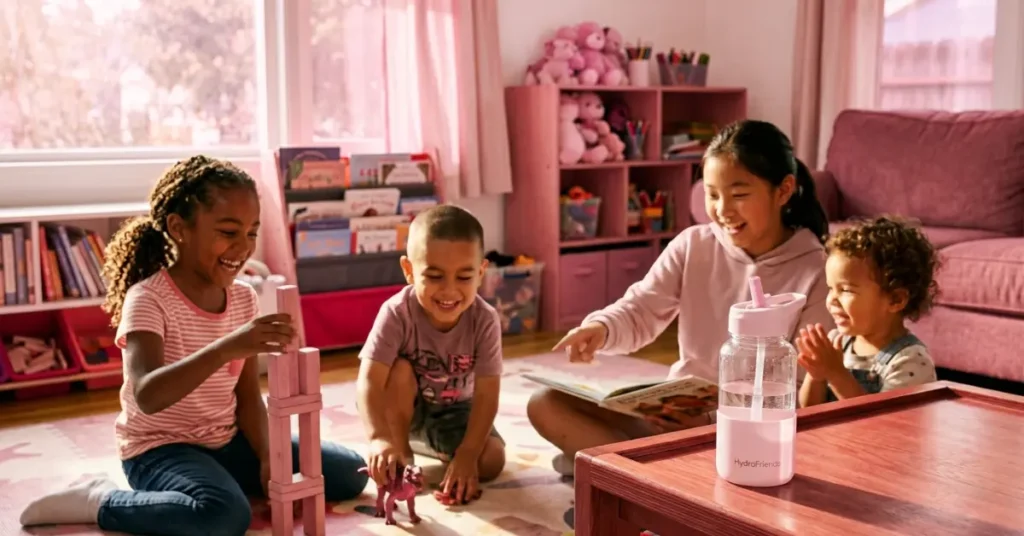
Living in UAE presents unique hydration challenges that generic international health guides simply do not account for. It is not just about the heat, it is about the lifestyle, the climate pattern, and several specific local factors that accelerate fluid loss in children.
Extreme Heat and Humidity Together From May to September, UAE’s combination of high temperatures and high humidity creates conditions, increases dehydration symptoms where the body struggles to cool itself through sweating. Fluid loss through perspiration accelerates significantly even during light activity outdoors, and the body’s thirst signal often lags behind actual fluid loss — meaning your child may not feel thirsty until they are already mildly dehydrated.
The AC Dry-Out Effect This is the risk most families do not know about. Air conditioning systems remove moisture from indoor air continuously. Every hour your child spends in an AC room, they lose fluid through their skin and respiratory tract what medical professionals call insensible fluid loss, without any visible sign of sweating. A child who has spent an entire school day in an AC classroom followed by an AC car ride home can arrive with dehydration symptoms despite never feeling hot.
Thermal Shock from Temperature Transitions UAE children move between 22°C AC interiors and 42 to 45°C outdoor heat multiple times a day — the school run, the car, the mall, the playground. Each transition forces the body to rapidly adjust its temperature regulation, and this constant switching accelerates overall fluid loss in ways that a child staying in one consistent environment would not experience.
The Juice and Milk Trap Many families in UAE offer juice, flavored milk, or sweet drinks throughout the day, assuming these count as full hydration. They do not. Full-strength juice contains concentrated sugars that can actually draw water out of cells and worsen dehydration symptoms. Milk provides important nutrition but does not replace the role of plain water. In UAE summer, only plain water and oral rehydration solutions effectively replace what is lost.
School Schedules and Short Recess Many schools in UAE have short recess windows or restrict outdoor drinking during class time. Children become absorbed in lessons, forget to drink from their bottles, and arrive home with most of their water untouched. By mid-afternoon, mild dehydration symptoms are already affecting their concentration and mood — often blamed on tiredness or behavior rather than the actual cause.
How Much Water Does My Child Actually Need?
One of the most common questions at ESMC’s Pediatrics Department is: how many glasses is enough? Standard international guidelines provide a baseline, but in UAE’s summer they need a meaningful buffer on top to avoid dehydration symptoms.
| Age Group | Daily Water Intake | UAE Summer — Add This |
|---|---|---|
| Under 6 months | Breast milk or formula only | Extra feeds if sweating or unwell |
| 6 to 12 months | 120 to 180ml (approx. half a cup) | Offer water between feeds |
| 1 to 3 years | 1 to 1.3 litres (approx. 4 cups) | Add 200 to 300ml extra |
| 4 to 8 years | 1.2 to 1.5 litres (approx. 5 cups) | Add 300ml extra |
| 9 to 13 years | 1.6 to 2 litres (approx. 8 cups) | Add 400 to 500ml extra |
The Urine Colour Rule — The Most Practical Tool You Have Pale yellow means your child is well hydrated. Dark yellow means they need a glass of water right now. Orange or amber means they are already dehydrated and need immediate fluids — or a visit to the clinic if they cannot keep fluids down.
Dehydration Symptoms: Babies (0 to 12 Months)
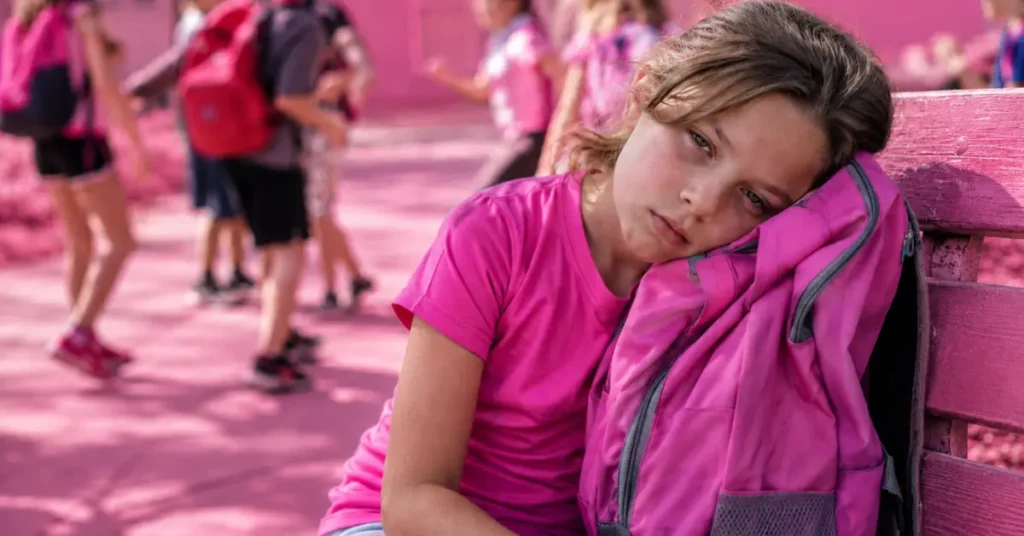
Because babies cannot tell you they are thirsty, you have to look for physical signals. These are the dehydration symptoms to watch for:
Fewer wet nappies than usual. A healthy, well-hydrated baby produces six to eight wet nappies in 24 hours. Fewer than three or four is a warning sign that should not be ignored.
A sunken fontanelle. The soft spot on the top of your baby’s head should feel flat or very slightly raised. If it appears visibly dipped inward, this is a sign of significant dehydration and requires same-day medical attention.
No tears when crying. If your baby cries without producing tears, their fluid levels are low. This is an easy dehydration symptoms to check during any crying episode.
Unusual sleepiness or limpness. A baby who is difficult to wake, seems unusually floppy, or is not responding normally to stimulation needs to be seen by a doctor immediately — do not wait.
Dry or cracked lips. Lips that look drier than usual, particularly combined with any of the above signs, indicate dehydration.
Any baby under six months showing dehydration symptoms needs to see a doctor the same day. Book an appointment at ESMC immediately.
Dehydration Symptoms: Toddlers (1 to 3 Years)
Toddlers are often too absorbed in play to notice thirst — and they cannot reliably communicate it even when they do feel it. You have to observe by yourself for dehydration symptoms.
The sticky mouth test. Run a clean finger along the inside of your toddler’s cheek. If the surface feels dry or tacky rather than slippery and moist, they need water now.
The dehydration tantrum. Extreme irritability with no obvious cause — particularly in the late morning or afternoon — is one of the most frequently missed signs of dehydration in toddlers. Before assuming it is tiredness or a behaviour issue, offer a full cup of water and observe.
The skin pinch test. Gently pinch a small fold of skin on the back of their hand, hold for two seconds, and release. In a well-hydrated child it springs back flat immediately. If it returns slowly or holds the pinched shape even briefly, it’s one of the dehydration symptoms.
Reduced activity and flat energy. A toddler who suddenly loses interest in play, wants to sit down, or seems unusually quiet may simply need fluids rather than a nap.
Dehydration Symptoms: School-Age Children (4 to 12 Years)
School-age children are better at communicating symptoms but often do not connect how they feel to their water intake.
Afternoon headaches. These are one of the most common and most overlooked signs of dehydration in this age group. If your child regularly complains of a headache after school or during homework time, dehydration during the school day — not screen time — is very frequently the cause.
Difficulty concentrating. Even mild dehydration causes measurable drops in focus, memory, and processing speed. A child who seems mentally foggy after school has often simply not drunk enough during the day.
Muscle cramps. Watch for complaints of leg pain or cramping during or after physical activity, PE class, or sports. This is a classic sign of dehydration combined with electrolyte loss.
Fatigue out of proportion to activity. If your child seems exhausted after a school day that did not involve unusual physical exertion, check their water bottle — an untouched bottle is a very common finding.
If these symptoms persist consistently despite good hydration habits, it is worth visiting our paediatric team at ESMC to rule out other causes such as nutritional deficiencies or anaemia. A Basic Health Package check can identify these quickly.
UAE-Specific Risk Scenarios Every UAE Parent Must Know
The After-School Car Rush The 15 minutes between school dismissal and arriving home is one of the highest-risk dehydration windows of the day. Your child has likely not drunk enough during school, they step from an AC building into peak afternoon heat, enter a car that has been parked in the sun, and the transition is rapid and intense. Make it a non-negotiable rule: a full glass of water the moment they get into the car, every single day.
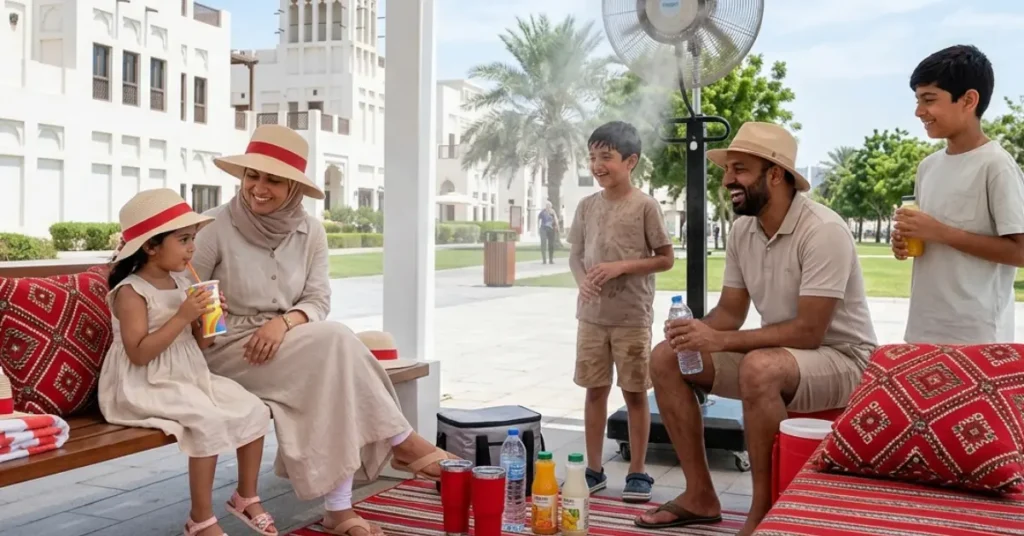
Eid and Family Gathering Days Large outdoor or semi-outdoor family gatherings during Eid involve children running between adults, playing with cousins, and losing track of everything including water intake. Adults are socialising and supervision of individual children’s hydration slips. Designate one person per gathering specifically to monitor the children’s water intake and bring a clearly labelled water bottle for each child.
Ramadan Households In families observing Ramadan, the household rhythm around food and drink changes completely. Young children who are not fasting can inadvertently go long periods without drinking because water is not visible or offered as frequently as usual. Keep a dedicated child-specific water station visible and accessible throughout the day regardless of the family’s fasting schedule.
Swimming Pool Days Children swimming in UAE outdoor or indoor pools lose more fluid than they realise. The combination of physical activity, heat, and the fact that children cannot feel themselves sweating in the water creates a significant dehydration risk. Enforce water breaks every 20 to 30 minutes during any pool session regardless of whether your child says they are thirsty.
The Mall Trap Spending hours in an air-conditioned mall feels cool and comfortable, but the dry AC air continues pulling moisture from your child’s body the entire time. A full day at the mall with only juice or a soft drink is more dehydrating than most parents expect. Always carry plain water, not just snacks and sugary drinks.
School and Nursery Tips for UAE Parents
Getting enough water into a child during the school day requires a specific strategy — good intentions at home are not enough if the system breaks down once they leave.
Send the right bottle. A one-litre refillable bottle with a wide mouth and a straw lid is easier for children to drink from quickly during short breaks than a narrow-necked bottle. Label it clearly and ensure it is cleaned daily — a bottle that smells stale is one a child will avoid.
The morning routine drink. Before your child leaves the house, make drinking a full glass of water part of the non-negotiable morning routine alongside brushing teeth. Starting the school day already hydrated reduces the total volume they need to catch up on during school hours.
Talk to the nursery or school. Ask your child’s school specifically whether children are reminded to drink during class and whether water is accessible at all times or only during break times. Many UAE schools have improved their policies but asking the question signals to the school that it matters to parents.
Infuse the water if needed. For children who resist plain water, add two or three slices of strawberry, cucumber, or lemon to their bottle the night before. By morning the water has a subtle flavour that most children find more appealing without any added sugar.
The after-school check-in. When your child returns home, check how much water remains in their bottle. If it is mostly full, they did not drink enough during the day. Use this as a calm, non-punitive conversation starter — not a scolding — about how they feel and whether they had a headache or felt tired.
What to Give and What to Avoid
Give: Plain water — always the first choice. Oral rehydration solutions if your child is unwell or already showing dehydration symptoms. Water-rich foods like watermelon, cucumber, and oranges as a supplement to drinking.
Avoid: Full-strength juice — the sugar concentration draws water out of cells and worsens dehydration. Sports drinks — these contain excessive sodium and sugar not designed for children’s bodies. Caffeinated drinks including some iced teas — caffeine increases fluid loss. Fizzy drinks — carbonation can cause stomach discomfort and reduce how much a child is willing to drink.
Prevention Checklist: Keeping Your Child Hydrated All Summer
- Start every morning with a full glass of water before school or any activity
- Send a minimum one-litre bottle to school every day — check it on return
- Offer water every 20 to 30 minutes during any outdoor activity, not just when your child asks
- Make the after-school car drink non-negotiable — water first, snacks second
- Keep a visible jug of water on the kitchen counter at all times as a visual reminder
- Check urine colour at least once a day during summer — pale yellow is the target
- Never leave a child in a parked car — temperatures inside can reach 70°C within minutes
- At pools or outdoor gatherings, enforce a water break every 20 to 30 minutes
- For children with chronic conditions such as asthma, diabetes, or heart issues — lower your threshold to seek medical advice at the first sign of dehydration
- Book a summer health check at ESMC before the hottest months peak to assess your child’s baseline health
What to Do If Your Child Is Already Dehydrated
Mild dehydration: Offer small sips — not large gulps — of plain water or an oral rehydration solution every five minutes. Keep your child in a cool AC room. Check urine colour every hour — it should begin turning pale yellow within two hours of consistent fluid intake.
Come to ESMC immediately if:
- Your child is under one year old and showing any dehydration symptoms
- They have not urinated in eight hours
- They are unusually limp, drowsy, or difficult to wake
- They cannot keep any fluids down due to vomiting
- There is no improvement after 30 minutes of giving fluids at home
Frequently Asked Questions
What are the first signs of dehydration in a child in UAE summer?
The earliest signs depend on age but the most universal ones are dark yellow urine, a dry or sticky mouth, and unusual irritability or fatigue. In babies, watch for fewer wet nappies — fewer than three or four in 24 hours is a warning. In toddlers, extreme crankiness with no obvious cause is frequently a hidden sign of dehydration. In school-age children, an afternoon headache or difficulty concentrating after school is often dehydration, not tiredness. In UAE’s summer, these signs can appear even in children who have been indoors all day due to the dehydrating effect of air conditioning.
Can air conditioning cause dehydration in children?
Yes — and this is one of the most commonly missed causes of dehydration in UAE children. Air conditioning systems remove moisture from indoor air continuously. Children lose fluid through their skin and respiratory tract without any visible sweating. A child who has spent the whole day in an AC environment without drinking regularly can still be significantly dehydrated by evening. Offer water every 20 to 30 minutes regardless of whether your child has been outdoors.
Can I give my baby water in UAE summer to keep them hydrated?
Not if your baby is under six months. Babies under six months should only receive breast milk or formula — both are approximately 80% water and provide complete hydration. Giving plain water to a baby under six months can interfere with nutrient absorption and in some cases cause a dangerous condition called water intoxication. For babies six to twelve months, small amounts of water between feeds are appropriate. If your baby is showing any signs of dehydration, bring them to ESMC’s paediatric team the same day.
Does juice count as hydration for children in summer?
No. Full-strength juice contains concentrated sugars that can draw water out of cells and worsen dehydration. Milk provides nutrition but does not replace plain water. Coconut water is a better option for children over one year as it contains natural electrolytes, but it should supplement plain water rather than replace it. In UAE summer, only plain water and oral rehydration solutions effectively replace fluid losses.
When should I take my child to a doctor for dehydration in UAE?
Come to ESMC’s Pediatrics Department without delay if your child is under one year and showing any dehydration symptoms, if they have not urinated in eight hours, if they are unusually limp or drowsy, if they cannot keep fluids down, or if there is no improvement after 30 minutes of giving fluids at home. Our paediatric team is available every day from 8AM to 11:30PM.
The Bottom Line
Dehydration in children is almost always preventable, but in UAE’s summer, it can happen faster than any parent expects and in places you would not anticipate, including your own living room. Now that you know the signs age by age, the local risk scenarios, and exactly what to do when you spot them, you are already one step ahead.
If you are ever unsure about your child’s hydration levels, Dr. Momina Mahmood and our paediatric team at ESMC are here for your family every single day.
Book Your Child’s Summer Health Check at ESMC Sharjah
Visit us on Al Zahra Street, Maysaloon. Open 8AM to 11:30PM daily to keep your little ones healthy and active.