
It started after dinner. One loose stool, then another. Now it is 10 pm, your child has had summer diarrhea three times, they are grumpy and clingy, and their forehead feels warm. You are Googling. You are not sure if you should wake everyone up and drive to a clinic or just wait it out until morning.
You are not alone. Summer diarrhea in children in UAE is one of the most common situations our pediatric doctors at Erum Saba Medical Center see every single summer. As the May heat climbs, so does the risk of tummy bugs. Between the rising temperatures and the upcoming Eid gatherings where food, variety, and visitors are everywhere, parents often find themselves in this exact midnight dilemma.
This guide will tell you exactly when summer diarrhea in a child is something you can manage at home, and when it is a sign you need to be seen by a doctor today.
Table of Contents
Why Summer in Sharjah Increases the Risk
In Sharjah, summer is not just a season — it is a high-speed environment for bacteria. While families in cooler climates might have a four-hour window to leave food out safely, the UAE heat changes the rules entirely.
The 2-Hour Rule The bacterial danger zone sits between 5°C and 60°C. In the Sharjah heat of May and June, food left out can reach dangerous bacterial levels within just two hours. This is a detail many families miss during weekend picnics, outdoor playdates, or Eid buffets.
Eid Al Adha Risks With Eid Al Adha approaching in late May 2026, the risk of food-related illness in children rises sharply. Large quantities of fresh meat are prepared and shared across households. Research across the region shows a measurable spike in childhood summer diarrhea following Eid Al Adha, linked to home slaughtering practices, improper meat storage, and large shared buffet-style meals where temperatures are difficult to regulate. The UAE Government recommends strict food handling rules during summer heat specifically to prevent foodborne illness during large celebrations.
Pool Water and Gatherings As families head to shared pools to escape the heat, exposure to norovirus and rotavirus increases significantly. If one child in a shared building pool has a stomach bug, it spreads rapidly through the water. Combined with family gatherings where children share snacks and utensils, the summer months create a perfect storm for gut illness.
The AC-to-Outdoors Cycle Children in Sharjah move repeatedly between cold AC environments and extreme outdoor heat throughout the day. This constant thermal transition weakens the gut’s normal immune response over time and increases susceptibility to infections picked up at school, nursery, or play areas. If your child is also showing signs of dehydration alongside their stomach symptoms, read our guide on dehydration signs in children in Sharjah — the two conditions frequently overlap in UAE summer.
Stomach Bug vs Food Poisoning: What Is the Difference?

Parents often use these terms interchangeably, but knowing the difference helps you understand the timeline of recovery and what to expect.
| Stomach Bug (Viral Gastroenteritis) | Food Poisoning (Bacterial) | |
|---|---|---|
| Cause | Virus — Norovirus, Rotavirus | Bacteria — Salmonella, E. coli |
| Onset | 12 to 48 hours after exposure | 1 to 6 hours after eating |
| Main Symptoms | Summer Diarrhea, vomiting, mild fever | Intense vomiting, cramps, sudden onset |
| Duration | 3 to 7 days | Usually 24 to 48 hours (acute phase) |
| Common Source | Schools, play areas, shared pools | Buffets, undercooked meat, Eid meals |
| Treatment | Rest, fluids, ORS | Rest, fluids, ORS (sometimes antibiotics) |
In most cases the immediate home treatment is the same: hydration. Food poisoning tends to be much more sudden and intense, while a viral bug lingers longer. If the whole family who shared the same Eid meal falls ill within a few hours, suspect food poisoning. If only your child is unwell a day after nursery, suspect a viral bug.
Managing at Home: The ORS Guide
If your child is alert and keeping some fluid down, your primary goal is rehydration. Many parents instinctively reach for fruit juice, 7UP, or sports drinks. These are the wrong choice. They contain too much sugar and the wrong balance of salts, which can actually pull more water into the gut and make summer diarrhea worse.
What Is ORS? Oral Rehydration Solution (ORS) replaces the specific electrolytes — salts and sugars — lost during illness in the correct proportions. Brands like Pedialyte or generic ORS sachets are available at any pharmacy in Sharjah without a prescription.
How to Give ORS Correctly:
- Start immediately. Give ORS as soon as the first loose stool happens. Do not wait for visible signs of dehydration to appear.
- Small, frequent sips. For babies, give one to two teaspoons every two to three minutes. For toddlers, small sips every five minutes.
- Avoid large gulps. Gulping a full cup at once triggers a stretch reflex in the stomach, causing the child to vomit it straight back up — which defeats the purpose entirely.
- The four-hour window. Continue small sips for three to four hours. If urine stays pale yellow and the child is not lethargic, the hydration plan is working.
- Do not stop breastfeeding. If you are breastfeeding, continue as normal. Breast milk is highly hydrating and contains antibodies that actively fight the infection.
Do NOT Give:
- Fruit juice — high sugar content worsens summer diarrhea
- Sports drinks — formulated for sweating adults, not sick children
- Fizzy drinks — carbonation and sugar irritate the gut lining
- Plain water for babies — lacks the electrolytes needed to stay stable
- Anti-diarrhea medications — these stop the body from flushing out the infection and should never be given to children unless specifically prescribed by an ESMC pediatrician
When to Wait: Signs This Is Manageable at Home

It is safe to stay home and monitor your child if all of the following apply:
- The summer diarrhea is watery but contains no blood or mucus
- Your child is alert, making eye contact, and able to play even if tired
- They are keeping most of the ORS or breast milk down
- Their urine is pale yellow, not dark or concentrated
- Their temperature is below 38.5°C
- They are over one year old and otherwise healthy with no chronic conditions
Most stomach bugs in healthy children resolve on their own within three to five days. Your job is to keep them hydrated while their immune system does the work.
When to Worry: The Red Flags
This is the most critical section of this guide. CDC guidelines emphasise that persistent vomiting in infants requires immediate medical attention because small bodies dehydrate far faster than adults. If your child shows any of the following, do not wait until morning.
Go to the clinic today if:
- Blood or mucus in stool — this indicates a bacterial infection or gut inflammation that requires testing
- Fever above 38.5°C combined with summer diarrhea — suggests a more systemic infection
- Unable to keep any fluid down for four or more hours — dehydration will set in rapidly
- No urine or wet nappy in eight hours — a key sign of significant dehydration
- Unusual limpness or difficulty waking — this is an emergency, not a wait-and-see situation
- Any child under three months with summer diarrhea — needs to be seen immediately regardless of other symptoms
- Summer Diarrhea lasting more than seven days without improvement
Fever plus summer diarrhea together in a child under two years old = come to the clinic the same day. Do not wait until morning.
Also watch for signs covered in our heatstroke in children Sharjah guide — a child who is already hot and dehydrated from the summer heat and then develops a stomach bug faces compounded risks that escalate faster than either condition alone.
Book an Urgent Appointment at ESMC Sharjah
Eid-Specific Food Safety: Protecting Your Child This May
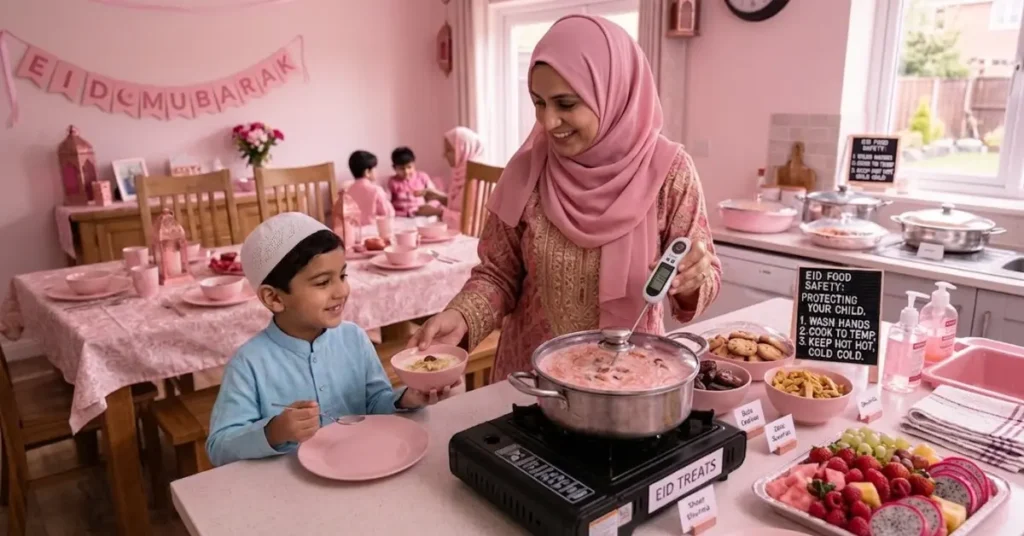
Eid Al Adha is a time for family and celebration. These specific steps protect children without dampening the occasion.
The 2-Hour Rule in Practice In May’s heat, cooked meat left at room temperature becomes unsafe in as little as two hours. If lunch was served at 1pm and meat is still on the table at 3pm — do not give it to young children.
Serve Children First Plate your children’s food directly from freshly cooked, still-hot pots rather than from communal dishes that have been sitting out and repeatedly handled.
The Rice Risk Cooked rice is a significant bacterial breeding ground at room temperature. Refrigerate all rice dishes immediately after the main meal — do not leave them on the counter.
Handwashing Before Eating Children playing near food preparation areas can easily touch raw meat surfaces or contaminated utensils. Ensure a thorough handwash with soap before every meal, especially at large gatherings where kitchen access is busy and less supervised.
No Rare Meat for Children Under Five Children under five should only eat meat that is fully cooked through. No pink, no rare, regardless of adult preferences at the same table.
What to Feed a Recovering Child
The old advice — starve a fever, strict BRAT diet only — has been updated by modern paediatric medicine.
Do not withhold food. The gut heals faster when it has nutrients to work with. Restricting food unnecessarily prolongs recovery.
Early feeding after vomiting settles. Once vomiting has not occurred for a few hours, offer simple foods: boiled potatoes, plain crackers, pasta without sauce, or plain rice.
Keep it plain for 48 hours. Avoid fatty foods, spicy dishes, and anything heavily seasoned until stools are firming up. This is not the time for biryani or oily snacks.
Dairy is generally fine. Unless you notice a specific and clear spike in summer diarrhea after milk, there is no need to cut out dairy. Continuing dairy provides important nutrition and calories during recovery.
Prevention: Reducing the Risk All Summer
Hand hygiene. Teach children to wash hands for the duration of two rounds of “Happy Birthday” — after using the toilet and before every snack or meal. This single habit reduces transmission of most gut viruses significantly.
Post-pool shower. Ensure children shower with soap after swimming in public or shared pools, including building pools. This removes surface contamination before children touch their faces or food.
Rotavirus vaccination. Ensure your child has received the Rotavirus vaccine. It will not prevent every stomach bug, but it significantly reduces the risk of severe, hospital-grade summer diarrhea from rotavirus — one of the most common causes of serious childhood illness in this age group. If you are unsure whether your child has received this vaccine, our pediatric team at ESMC can check and advise.
The 48-hour return-to-school rule. Keep your child home from school or nursery for at least 48 hours after their last episode of summer diarrhea. Returning too soon is one of the most common ways a single case spreads through an entire class.
When to Visit ESMC Sharjah
At Erum Saba Medical Center, our paediatric team understands the specific health patterns of Sharjah families. We see the post-Eid spikes and the summer illness cases every year. You should never have to guess when it comes to your child’s health.
Why families in Sharjah choose ESMC:
Extended hours — open every day from 8AM to 11:30PM, including during Eid holidays. Specialist paediatric care from Dr. Momina Mahmood, trained at the National Institute of Child Health Karachi with expertise in paediatric emergencies and infectious illness. On-site testing — stool samples and blood tests for infection are handled at the clinic, no additional trips required. Central location on Al Zahra Street, Maysaloon, accessible from across Sharjah.
If your child has a fever, blood in their stool, or your parental instinct is telling you something is not right — trust yourself. Come in.
Book an Appointment or Walk In — ESMC Maysaloon, Sharjah
Frequently Asked Questions
What are the red flags for summer diarrhea in a child that mean I should go to the clinic today?
Take your child to a pediatrician the same day if you see any of the following: blood or mucus in stool, fever above 38.5°C alongside summer diarrhea, vomiting that prevents keeping any fluid down for four or more hours, no urine or wet nappy in eight hours, unusual limpness or difficulty waking, or any child under three months with summer diarrhea. The most critical combination is fever plus summer diarrhea together in a child under two years — this always warrants same-day assessment. ESMC’s pediatric team is available every day from 8AM to 11:30PM.
What is the correct way to give ORS to a child with summer diarrhea?
Start ORS as soon as the first loose stool appears — do not wait for visible dehydration signs. For babies, give one to two teaspoons every two to three minutes. For toddlers, small sips every five minutes. Never give a large gulp at once as this often triggers vomiting. Continue for three to four hours and monitor urine colour — pale yellow means the plan is working. ORS sachets are available without prescription at any Sharjah pharmacy.
Can I give my child 7UP, juice, or sports drinks instead of ORS?
No. These all contain sugar concentrations that worsen summer diarrhea by drawing more water into the gut. Sports drinks are formulated for sweating adults, not sick children, and their sodium levels are inappropriate for an unwell child’s digestive system. Only ORS, plain water for older children, and continued breastfeeding for infants are appropriate during active summer diarrhea.
How is a stomach bug different from food poisoning in children?
Food poisoning begins one to six hours after a specific meal, involves sudden intense vomiting and cramping, and typically resolves within 24 to 48 hours. A viral stomach bug develops gradually over 12 to 48 hours, involves milder but longer-lasting symptoms, and runs for three to seven days. If the whole family who shared an Eid meal falls ill within a few hours, suspect food poisoning. If only your child is unwell a day after nursery, suspect a viral bug. Initial home treatment — ORS and hydration — is the same for both.
Should I stop feeding my child when they have summer diarrhea?
No. Modern paediatric guidance recommends continuing to feed normally because the gut heals faster with nutrients. Once vomiting has settled for a few hours, offer simple foods like boiled potatoes, plain crackers, or pasta. Avoid fatty and spicy food for 48 hours. Continue breastfeeding without interruption — breast milk contains antibodies that actively help fight the infection.
Can I give my child Imodium or anti-diarrheal medication?
No. Imodium and similar medications prevent the body from expelling the infection, which can prolong illness and cause complications in children. Never give anti-diarrheal medication to a child unless specifically prescribed by a pediatrician after examining them. If symptoms are severe enough that you are considering these medications, come to ESMC for a proper assessment instead.
How long does summer diarrhea last in children in Sharjah?
Most viral cases last three to seven days with proper hydration. Food poisoning is usually more intense but shorter — resolving within 24 to 48 hours. If symptoms are not improving after 48 hours, are getting worse at any point, or are still present after seven days, visit ESMC’s Paediatrics Department for assessment.
How do I keep my child safe from food poisoning during Eid Al Adha?
Apply the two-hour rule — cooked meat left out for more than two hours in May heat should not be given to young children. Plate children’s food directly from hot pots. Refrigerate rice immediately. Ensure thorough handwashing before eating. Give children under five only fully cooked meat with no pink.
The Bottom Line
It is never easy being the parent awake at 10 pm, watching a sick child and wondering if you are doing enough. Summer diarrhea in children in Sharjah is a common part of the season, but it still requires a watchful eye and the right response.
Stay calm. Use ORS correctly. Watch for the red flags. And remember that you are never alone in managing your child’s health. Whether it is a complication from an Eid feast or a stubborn viral bug from the pool, Dr. Momina Mahmood and our paediatric team at ESMC are here to help your family have a healthy summer.
Expert Paediatric Care with Dr. Momina Mahmood
Don’t let summer bugs bring them down. Visit ESMC on Al Zahra Street, Maysaloon. Open 8AM to 11:30PM daily for your peace of mind.